
Walk into almost any sports medicine clinic in England right now and ask what’s keeping the caseload full, and artificial turf will come up fast. The 3G pitch revolution has been genuinely brilliant for grassroots football access, more hours, more weather resilience, more sessions squeezed out of a single facility, but UK physios are increasingly clear-eyed about the trade-off. Training and competing exclusively on artificial surfaces carries real biomechanical consequences, and for players who never get near natural grass, those consequences stack up over a season in ways that aren’t always obvious until something snaps or swells.
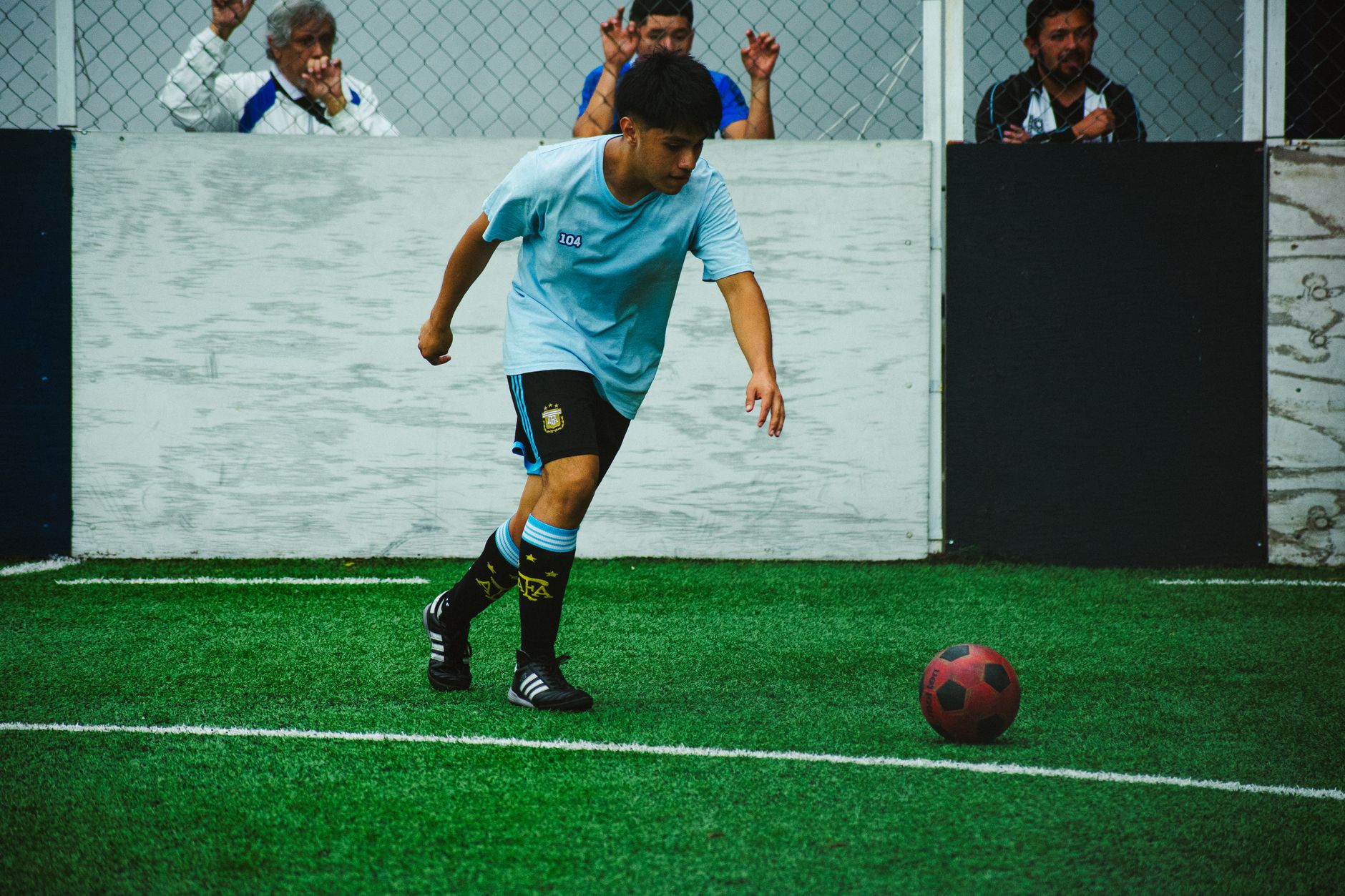
How artificial turf actually loads your joints differently
Natural grass compresses, tears and gives way under load. That’s not a flaw; it’s a feature. When you plant your foot to change direction on a grass pitch, the surface yields slightly, distributing force and allowing a small degree of rotational slip. Third-generation artificial pitches are engineered to be consistent and durable, which means they don’t give in the same way. The rubber crumb infill provides some cushioning, but the overall stiffness of a 3G surface is measurably higher than turf, and that difference travels straight up the kinetic chain.
Research published in journals reviewed by the Chartered Society of Physiotherapy has highlighted increased ground reaction forces on artificial surfaces compared to natural grass. In practical terms, your ankle, knee and hip joints absorb more impact per stride. Do that across a 90-minute match twice a week, and over a 40-week season you’re accumulating a significant additional load that simply wasn’t in the design spec of those joints.
I’ve spoken to several physios working in academy settings across the Midlands and the North West who describe a consistent pattern: players who train primarily on 3G come in with a higher incidence of shin splints, patellar tendinopathy and lower-limb stress-related complaints than those who rotate between surfaces. It’s not universal, and individual biomechanics matter enormously, but the pattern is there.
The friction problem: why traction is a double-edged thing
One of the selling points of modern 3G is reliable traction. Your studs grip consistently regardless of the weather. For performance, that’s useful. For injury risk, it’s more complicated.
Natural grass offers what biomechanists call rotational traction variance. In plain English, the surface releases under twisting loads. When you pivot on grass and your knee takes the torque, the ground sometimes slips just enough to reduce the rotational stress on the joint. On a high-friction 3G pitch, that release doesn’t happen. The foot stays planted and the knee takes the full force of the rotational load. This is one reason anterior cruciate ligament (ACL) injury rates in players training exclusively on artificial surfaces remain a concern among UK sports medicine practitioners, even as the pitches themselves have improved technically.
Skin friction injuries are a separate issue entirely. Carpet burns from sliding on 3G are nastier than grass equivalents. The rubber infill and synthetic fibres create an abrasive surface that strips skin quickly and can introduce bacteria into open wounds. Any player who spends time on the deck needs to clean those wounds immediately and properly, not just slap a plaster over them at full time.
Boot selection on 3G: what UK physios actually recommend
Wearing the wrong boots on 3G is one of the most preventable contributors to astroturf injuries, and yet I see it at amateur level constantly. Long aluminium-tipped studs designed for soft ground have no place on a 3G pitch. They don’t penetrate correctly, they create uneven pressure points under the foot, and they increase rotational resistance in exactly the way we want to avoid.
The general guidance from UK physios is to use a shoe specifically labelled for artificial turf (AG) or a multi-ground (MG) boot on 3G surfaces. AG soles have a larger number of shorter, more evenly distributed studs that interact with the surface more safely. Turf trainers with rubber nubs are suitable for training on older, harder astroturf but can feel unstable on modern 3G. Firm ground (FG) boots with moulded studs are acceptable on good quality 3G but should be tested carefully, since stud length and pattern vary significantly between manufacturers.
A proper boot fit also matters more on artificial surfaces. 3G generates more heat friction than grass, which means your foot moves inside the boot differently as a match progresses. Blisters and hotspots are more common on artificial pitches, so the fit that feels snug in the dressing room needs to account for a slightly warmer, slightly more mobile foot by the 70-minute mark.
Protecting your body when natural grass isn’t available
For most recreational and semi-professional players in the UK, access to natural grass is genuinely limited, especially during winter. Community 3G facilities are often the only bookable surface within a reasonable distance, which makes total avoidance impractical. The better question is how you manage the cumulative load intelligently.
Surface rotation where possible makes a real difference. Even a handful of natural grass sessions per month helps reset the stress pattern on your joints. If you’re doing structured fitness work around your football, choosing softer surfaces for that training is valuable. Trail running, for example, loads the lower limbs very differently from tarmac or artificial turf. The article on hiking as cross-training on UK fells is worth a read for anyone thinking about lower-impact conditioning options away from the pitch.
Strength and conditioning work specifically targeting the muscles around the knee and ankle reduces joint stress on any surface. Hip abductor strength, in particular, is consistently flagged by UK physios as protective against the kind of valgus knee collapse that artificial pitch traction can provoke during cutting movements. This sits neatly alongside the kind of explosive lower-body work discussed in guides on plyometric training for UK team sport players, with the caveat that plyometric sessions on 3G should be managed carefully given the surface stiffness.
Recovery protocols also need adjusting for regular artificial turf play. Ice application to knees and ankles post-match, compression garments, and careful monitoring of any shin tenderness are basic but genuinely effective responses to the higher load environment. Players who train on 3G multiple times per week and then ignore recovery are the ones physios see most regularly.
What the 3G debate means for how UK clubs plan training
Clubs at every level are now thinking harder about surface management. Some Premier League academies have strict protocols limiting the number of hours per week any age group trains on artificial turf, recognising that developing players face the greatest long-term risk from repeated joint loading during growth phases. At non-league and grassroots level, those protocols rarely exist, which means the responsibility sits largely with individual players and coaches.
The technology inside pitches is also developing fast. Some newer 3G installations are incorporating longer pile lengths and different infill materials, including organic alternatives to rubber crumb, which slightly improve surface give. UK physios I’ve spoken to are cautiously positive about the direction of travel, but clear that better pitches don’t eliminate the need for better player education. Understanding the surface you’re playing on, wearing the right kit, managing your training load and staying on top of recovery are still the levers that actually move injury rates. The pitch can get better; the human body still needs looking after.
There’s a broader conversation here about how the physical demands of the sport interact with the environments we’ve built for it. Sustainable pitch design and player welfare are increasingly linked concerns, and anyone interested in how UK sporting venues are rethinking their infrastructure can find relevant context in how UK stadiums are using sustainable energy tech on matchday. The surface underfoot is part of that same conversation.
Play on 3G. Enjoy it. But go in with your eyes open about what it asks of your body, and make sure your boots, your strength work and your recovery are keeping pace with the demands it puts down.