
From Sunday league to the Champions League, football GPS vests and other wearables have become part of the modern kit list. Those black vests, smart boots and glowing heart rate straps are not just for show – they are quietly transforming how players train, recover and perform on match day.
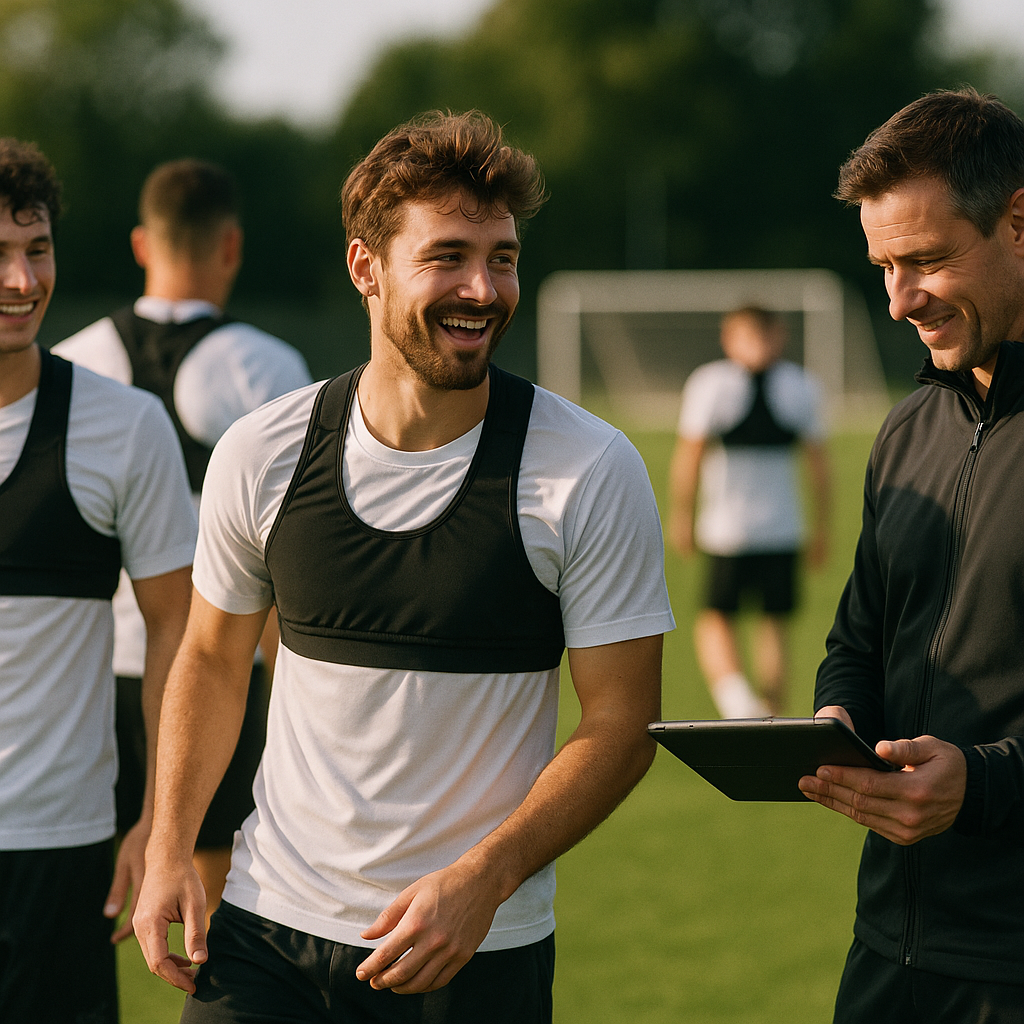
What do football GPS vests actually track?
At the heart of football GPS vests is a small sensor unit between the shoulder blades. It uses satellite positioning, accelerometers and gyroscopes to build a live picture of what a player is doing on the pitch. The most common metrics include:
- Total distance covered and distance in specific speed zones
- Number of sprints and top speed reached
- Accelerations and decelerations
- Player load – a combined score of movement intensity
- Heat maps showing typical positions and movement patterns
At pro level, coaches see this data live on tablets during training. At grassroots, it is usually synced afterwards via an app, but the core insights are very similar.
How heart rate trackers and smart boots add extra insight
GPS tells you what a player is doing. Heart rate trackers and smart boots help explain how hard it feels and how well the body is coping. Chest straps and optical armbands track:
- Average and maximum heart rate
- Time spent in different heart rate zones
- Recovery time between high intensity efforts
Smart boots and insoles add another layer, measuring things like stride length, foot strike, number of ball touches and even impact forces when changing direction or landing from a jump. When combined with data from football GPS vests, coaches gain a 360-degree view of physical performance.
How coaches use data to shape tactics and style of play
Wearables are not just about fitness – they quietly influence tactics too. Analysts can compare physical data with match footage to see whether a team is pressing as aggressively as planned, or if a high defensive line is causing extra sprinting for the centre backs.
For example, if wide forwards are consistently hitting very high sprint numbers, a coach might tweak the system to bring the full backs higher and share the running load. Midfielders who cover huge distances but rarely enter high intensity zones might be encouraged to make more forward runs or adjust their positioning in build up play.
At grassroots level, the same principles apply in a simpler way. A coach might notice that younger players are burning themselves out in the first 15 minutes and use that information to teach smarter movement, better pressing triggers and improved game management.
Managing player load and preventing injuries
One of the biggest benefits of football GPS vests is smarter control of training load. Instead of guessing who is tired, staff can see:
- Which players have had a heavy week of high speed running
- Who is not hitting their usual numbers and may be fatigued
- Whether a player returning from injury is ready for full intensity
When heart rate and recovery data show a player is struggling to bounce back between sessions, coaches can dial back pitch size, drill intensity or total minutes. Over time, this reduces soft tissue injuries and keeps squads available for selection.
Even in amateur football, simple rules like capping sprint distance for players coming back from a hamstring strain can be built around wearable data, rather than relying purely on how someone feels on the day.
Wearable tech features everyday players should look for
You do not need a Premier League budget to benefit from this tech. For most players and small clubs, the sweet spot is a simple GPS pod, a comfortable vest and a basic heart rate monitor. Useful features to prioritise include:


Football GPS vests FAQs
Are football GPS vests allowed in competitive matches?
In many leagues, football GPS vests are permitted as long as the units are safely secured and approved by the competition organisers. At elite level, they are widely used in both training and matches. At amateur level, it depends on local rules, so teams should always check with their league before wearing them in official games.
Do grassroots players really benefit from football GPS vests?
Yes, grassroots players can gain a lot from football GPS vests, even with basic models. Simple metrics like total distance, sprint count and top speed help players see if their fitness is improving and whether they are pacing themselves well. Coaches can also use the data to design smarter conditioning drills and manage tired players more carefully.
How accurate are consumer football GPS vests compared to pro systems?
Top tier professional systems are usually more accurate and offer more detailed metrics, but modern consumer football GPS vests are impressively close for most practical purposes. For club and personal use, they provide consistent, reliable trends over time, which is what coaches and players really need to guide training load and track progress.