

There’s a camera system at a Championship football club in the Midlands that can tell you, in real time, whether a player’s left knee is tracking badly enough to put them on the physio table within a fortnight. Not after the injury. Before it. That’s the pitch the companies selling AI injury prevention to sports clubs across the UK are making right now, and more clubs are listening. I’ve been watching this space for the past few months and the pace of adoption has genuinely surprised me.
The technology sits at the intersection of computer vision, biomechanics research and machine learning. Multiple fixed cameras capture player movement at high frame rates, software maps joint angles, stride patterns, load distribution and fatigue signatures, and an algorithm flags anything that falls outside safe parameters. The whole loop from capture to alert can happen in under two seconds. For a physio standing on the touchline, that’s a fundamentally different kind of information.
How the AI camera systems actually work
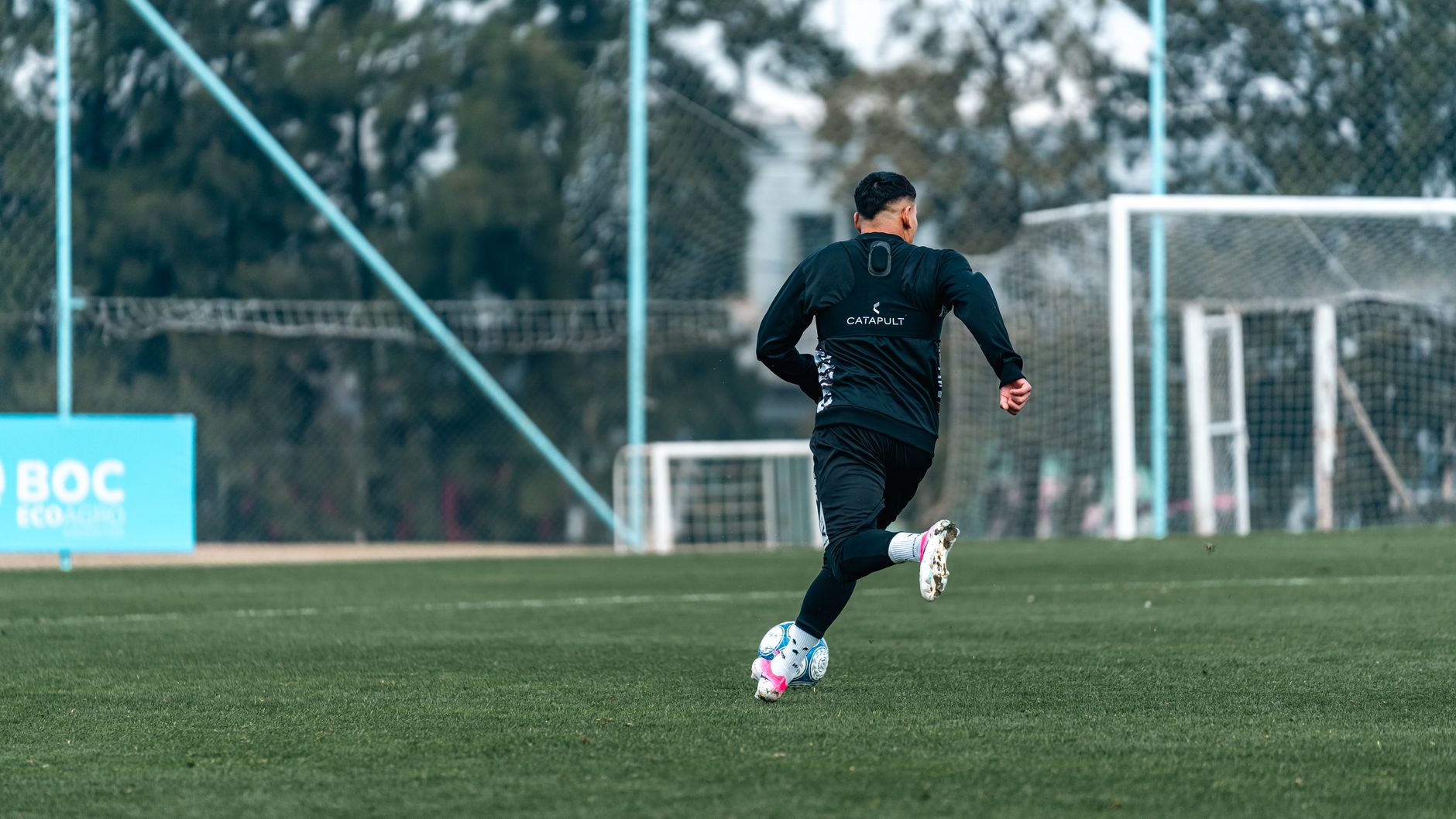
The core technology is sometimes called markerless motion capture, because players don’t need to wear any sensors at all. The cameras do all the work. Systems like those from Spiideo, Catapult Vision and the UK-developed StrideLight platform use skeletal tracking models trained on millions of hours of sport footage. The software learns what a healthy movement pattern looks like for each individual player and then measures every session against that baseline.
Acute spikes in asymmetry are often the first warning sign of a soft tissue injury brewing. If a centre-back is subtly offloading weight from their right hamstring across three consecutive training sessions, that pattern gets flagged. A physio might notice it eventually through observation, but they’re also managing 25 other players, running recovery sessions and filling in paperwork. A camera doesn’t blink.
Rugby clubs have been early adopters partly because the collision data is so rich. GPS vests already give clubs workload data (I covered how British rugby clubs are using GPS tracking vests to manage player workload in detail earlier this year), but camera-based biomechanical analysis adds the layer that wearables miss: how a player moves, not just how far or how fast. Sale Sharks and Saracens are among the Premiership sides understood to be trialling integrated systems that combine both data streams.
Which UK clubs are leading adoption
In football, the Premier League is unsurprisingly ahead of the curve. Brighton and Hove Albion have been open about their use of computer vision tools as part of their broader data operation. Brentford’s analytics department has long been cited as one of the most technically sophisticated outside the established elite clubs. Below the top flight, several Championship clubs working with smaller budgets are using cloud-based versions of these platforms that reduce the hardware cost considerably.
Hockey is a genuinely interesting case. England Hockey has been working with performance technology partners since the lead-up to Paris 2024, and the national programme uses video-based biomechanical screening at its centralised training base in Bisham Abbey. The relatively small squad sizes in elite hockey make the cost-per-athlete calculation much more favourable than in a 30-person football squad.
At grassroots and semi-professional level, the picture is different. Cost is the obvious barrier. A full multi-camera installation with ongoing software licensing can run to between £40,000 and £150,000 depending on the system and the number of cameras required to cover a full pitch. That’s out of reach for League Two clubs on tight budgets, let alone non-league sides. Some providers are starting to offer single-camera entry-level packages in the £8,000 to £15,000 range, which makes the conversation more realistic for a wider group.
What the accuracy figures actually look like
The marketing materials from vendors will always present the most flattering numbers, so I’d encourage anyone evaluating these systems to press hard on the peer-reviewed evidence. The honest picture is that the science is promising but still maturing. A 2023 study published in the British Journal of Sports Medicine found that markerless motion capture systems showed strong agreement with traditional laboratory-based analysis for lower limb kinematics, but accuracy dropped in high-speed, high-contact situations. That’s relevant in rugby particularly.
The UK’s own physio community has been measured in its enthusiasm. The Chartered Society of Physiotherapy has noted that AI diagnostic tools can support clinical decision-making but shouldn’t replace it. My read of the position is exactly right. If you’re interested in how UK physios are integrating AI more broadly, the piece we ran on how UK physios are using AI diagnostic tools to spot injury risk before athletes break down goes into that clinical debate in more depth.
False positives are still a problem. Flag too many players for intervention and you erode trust in the system. Flag too few and you’ve missed the point entirely. The clubs getting the most out of these tools seem to be the ones that treat the AI output as a prompt for human assessment rather than a binary decision engine.
The data privacy side of things
Something that doesn’t get discussed enough in the enthusiasm around sports tech: the data these cameras generate is covered by UK GDPR, which is enforced by the ICO. Video footage that can identify individuals counts as personal data. Clubs have obligations around consent, data retention and security that are non-trivial to comply with when you’re running high-resolution camera systems over training pitches. The PFA (Professional Footballers’ Association) has raised questions about who owns performance data generated by players, and that negotiation is still very much ongoing at contract level in the top divisions.
The BBC Sport technology desk ran a solid overview of the data ownership debate in early 2026, and the BBC Sport coverage gives a good sense of how player representatives are pushing back on blanket data collection without meaningful consent frameworks.
Is the investment worth it for most clubs?
For a Premier League club where a single hamstring injury to a key player can cost millions in lost performance and wages, the return on investment calculation is relatively straightforward. Even one major injury prevented across a season pays back the system cost several times over. The further down the pyramid you go, the harder that maths gets.
What I think is genuinely exciting is the potential for these systems to feed better physical preparation at the amateur end of the game over the next five years, as costs fall and cloud-based processing makes the infrastructure lighter. The link to how teams are already thinking about physical load is clear enough. From my perspective, the clubs that are building integrated data cultures now, combining wearables, camera AI and strong physio relationships, are building a meaningful long-term advantage. The technology works. The question is always whether the humans using it have the literacy to act on what it tells them.
If your club is exploring the space, it’s worth pairing any camera-based system with a solid understanding of how recovery and movement quality connect. The piece on how UK athletes are using heat exposure for performance and recovery is a useful adjacent read for anyone building a comprehensive player welfare programme.
Frequently Asked Questions
What is AI injury prevention in sports clubs and how does it work?
AI injury prevention uses fixed cameras and machine learning software to track player movement in real time, analysing joint angles, stride patterns and load distribution. When the system detects a biomechanical pattern associated with injury risk, it alerts coaching or medical staff before any breakdown occurs.
How much does an AI camera system for injury prevention cost UK sports clubs?
Full multi-camera installations from established providers typically range from £40,000 to £150,000 including hardware and software licensing. Entry-level single-camera packages are now available from around £8,000 to £15,000, making the technology more accessible to Championship and lower-league clubs.
Which UK football and rugby clubs are using AI cameras to prevent injuries?
Brighton and Hove Albion and Brentford are among the most openly data-forward Premier League clubs using computer vision tools. In rugby, Sale Sharks and Saracens are understood to be trialling integrated camera and GPS systems. England Hockey has also used biomechanical screening technology at Bisham Abbey.
How accurate are AI biomechanical injury prediction systems?
Research published in the British Journal of Sports Medicine shows strong agreement between markerless camera systems and laboratory analysis for lower limb movement, though accuracy reduces in high-speed contact situations. Most sports science practitioners treat the AI output as a prompt for human clinical assessment rather than a standalone diagnosis.
Do GDPR and data privacy rules apply to AI camera systems at sports clubs?
Yes. Identifiable video footage of players is personal data under UK GDPR, overseen by the ICO. Clubs must have proper consent frameworks, data retention policies and security measures in place. The PFA has raised questions about player data ownership, and this remains an active discussion in professional football contracts.
Leave a Reply