

There is a small black rectangle sitting between the shoulder blades of almost every professional rugby player in England right now. It weighs less than 100 grams, but the data it produces has quietly transformed how clubs decide who trains, who rests, and who starts on Saturday. Rugby GPS tracking vests are no longer a novelty piece of kit reserved for the elite end of the Premiership. Championship sides are pulling them on at every session, and the numbers they generate feed directly into coaching decisions that were previously made on gut feeling and a coach’s eyeball.
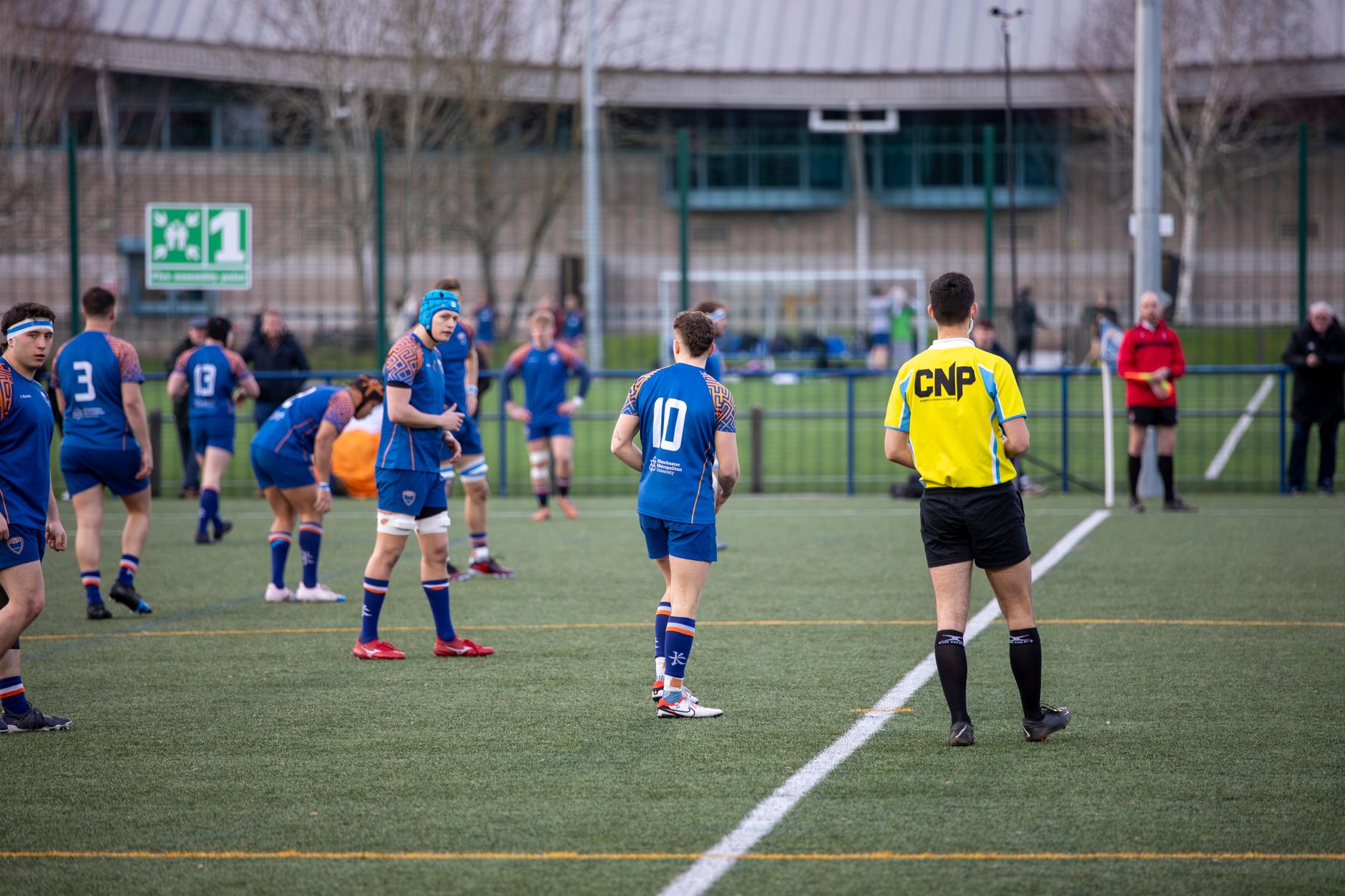
I’ve spent some time looking at how this technology works in practice, speaking to conditioning staff and reading published load-management research from UK sports science institutions. What’s clear is that the shift from intuition-based training management to data-led workload control has been one of the most significant changes in British rugby over the past five years, and it’s accelerating.
What the vests actually measure
A GPS vest used in rugby typically combines a GPS chip running at 10 or 15 Hz with a triaxial accelerometer, a gyroscope, and a magnetometer. Together, those sensors track where a player is on the pitch every fraction of a second, how fast they’re moving, what direction they’re accelerating in, and how hard their body is being hit or stressed. The raw outputs include total distance covered, high-speed running distance (usually above 5.5 metres per second for rugby), player load (an accelerometer-based composite score), and collision count. Some vests add heart rate telemetry via a chest strap pairing.
Catapult Sports and STATSports are the two dominant suppliers in British rugby, and both systems allow analysts to watch a live dashboard during training. A number flashing red next to a flanker’s name is a conversation with the conditioning coach before it becomes a hamstring pull the following week.
Preventing overtraining and soft-tissue injuries
The link between training load spikes and soft-tissue injuries is well established. Research published by sports scientists at Loughborough University has shown that a rapid increase in acute workload relative to a player’s chronic baseline significantly raises injury risk, the so-called acute:chronic workload ratio (ACWR). Rugby clubs are now tracking this ratio in real time. If a prop’s ACWR jumps above 1.5, his conditioning coach pulls him back. Simple in principle, genuinely difficult to manage across a 35-man squad without the vest data feeding into a central system.
Bath Rugby’s head of performance, in interviews with The Rugby Paper, has described how monitoring allowed the club to cut soft-tissue injury rates measurably over a two-season period by identifying players who were habitually underreporting fatigue. Athletes lie on questionnaires. Accelerometers do not.
The technology also catches the opposite problem. Underloading a player before a big match leaves them underprepared for the physical demands of 80 minutes at Premiership pace. Clubs use the vest data to build progressive loading blocks through the week, heavy contact Tuesday and Wednesday, lower volume Thursday, a sharpener Friday, with thresholds set for each position. A tighthead prop and a winger have completely different load profiles, and training plans now reflect that with granular specificity.

How the data feeds team selection
This is where it gets genuinely interesting. GPS and accelerometer data is now part of the selection conversation at many Premiership clubs. If two players are competing for the same position and one has consistently produced higher sprint distances and player load scores in training over a six-week block, that information goes to the head coach alongside video analysis and the coaching staff’s own observations.
Harlequins and Saracens have both been public about using performance data to inform selection, particularly after injury lay-offs. Getting a returning player back into competitive shape requires evidence that their physical outputs in training have returned to pre-injury benchmarks. Without vest data, that judgement was subjective. Now it is measurable. A player who insists they are fully fit but whose acceleration profiles have not recovered gets more time, not because anyone doubts their honesty, but because the numbers have not caught up with the claim.
Championship clubs, working with tighter budgets, are increasingly adopting the same approach. London Scottish and Coventry have both invested in tracking systems, recognising that injury prevention at a lower salary cap level has proportionally greater financial impact. One serious anterior cruciate ligament injury at Championship level can derail a season’s budget. The vest pays for itself if it prevents one.
The role of sports analytics platforms
Raw GPS data is just numbers. The value comes from the software layer that contextualises it. Catapult’s Vector platform and STATSports’ Apex system both produce automated wellness summaries, flagging players whose data deviates from their personal baselines. Some clubs have layered additional analytics tools on top, feeding outputs into integrated performance management dashboards. It is the kind of multi-source data environment where AI recommendation tracking software specialists are increasingly operating, building systems that spot patterns across complex datasets and surface actionable signals for coaching staff who do not have time to read spreadsheets at midnight.
The BBC Sport website has a solid overview of rugby union’s evolving professional landscape that puts the performance technology arms race into broader context for anyone wanting background on where the sport is heading structurally.
Position-specific load targets in professional rugby
One detail I find particularly compelling is how granular position-specific benchmarks have become. A Premiership number eight might be targeting 6,500 metres total distance and 800 metres of high-speed running per training session mid-week, while a loosehead prop’s targets look almost nothing like that. Scrummaging load, measured through high-impact accelerometer events, is tracked separately for front-rowers and can be the single most predictive metric for neck and shoulder injury risk.
This kind of specificity connects directly to broader principles in elite sport conditioning. The same logic driving rugby clubs to individualise training load is behind the high-performance training centre model increasingly available to amateur athletes across the UK, where physiological testing creates personal benchmarks rather than one-size-fits-all programming. And if you follow sports injury prevention closely, you will have noticed how UK physios are combining AI diagnostic tools with physical assessment to catch overuse patterns before they become structural problems, an approach that dovetails neatly with what vest data does at training level.
What Championship clubs are doing with limited budgets
Not every club can afford a full-time performance analyst. But the cost of GPS vest hardware has dropped considerably. A basic STATSports system for a squad of 30 now costs a fraction of what it did in 2018, and the software subscriptions are tiered. Championship clubs are making smart choices: tracking every session during the week, focusing analyst hours on the ACWR flags rather than reviewing every player’s complete data output, and using the information primarily for injury prevention rather than the full performance benchmarking that Premiership sides run.
That pragmatic approach still yields real results. Reduced soft-tissue injury rates mean fewer players on the treatment table, smaller physio bills, and more consistent squad availability. For a club chasing promotion on a shoestring, that can be the difference between a top-four finish and a mid-table slog. My reading of where this technology is heading suggests it will become as standard in the Championship within three years as it already is in the Premiership. The data is too useful and the cost is dropping too fast for any ambitious club to ignore it for much longer.
The wearable tech revolution in sport has found one of its most practical and measurable applications here. Rugby GPS tracking vests are not gadgetry. They are workload science that protects players, informs decisions, and increasingly, wins rugby matches.
Leave a Reply