Category: General News

  • The Premier League’s Sustainability Race: Which Clubs Are Actually Hitting Their Green Targets?

    The Premier League’s Sustainability Race: Which Clubs Are Actually Hitting Their Green Targets?

    English football is a carbon-heavy business. Seventy thousand fans driving to a ground, floodlights burning for 90 minutes, mountains of single-use plastic cups and burger wrappers. The Premier League’s own figures show the top flight generates tens of thousands of tonnes of CO2 annually, and pressure from supporters, sponsors and regulators is growing fast. So which clubs are genuinely transforming their environmental footprint, and which ones are slapping a green badge on a business-as-usual operation? Here is the honest, data-driven breakdown.

    Aerial view of a Premier League green stadium with solar panels on roof canopy illustrating Premier League sustainability green stadiums UK
    Aerial view of a Premier League green stadium with solar panels on roof canopy illustrating Premier League sustainability green stadiums UK

    Why Premier League Sustainability Green Stadiums UK Matter Right Now

    The Premier League launched its No Room for Racism campaign years before it rolled out a coherent environmental framework. But 2025 and 2026 have seen a real shift. UEFA now requires clubs competing in European competition to publish a climate action plan as part of their licensing requirements. The UK Government’s Sport and Sustainability consultations, available on gov.uk, have signalled that public funding and infrastructure grants will increasingly be tied to measurable green credentials. The reputational stakes have never been higher.

    At the same time, energy costs following the post-2022 spikes have made energy saving a financial imperative, not just an ethical one. A large stadium running conventional energy infrastructure can spend millions per year on electricity alone. That commercial reality is accelerating investment in solar panels, LED retrofits, and smarter building management systems across top-flight venues.

    Who Is Leading the Pack

    Tottenham Hotspur Stadium is the headline act. Opened in 2019 and progressively upgraded, it now runs on 100% renewable electricity, has eliminated single-use plastics across its catering operation, and uses a sophisticated rainwater harvesting system. The club’s 2025 environmental report logged a 34% reduction in Scope 1 and Scope 2 carbon emissions against its 2019 baseline. That is a credible number, independently verified.

    Forest Green Rovers in League Two often gets the green crown, and fairly so, but within the Premier League the most ambitious decarbonisation roadmap arguably belongs to Brighton and Hove Albion. The Amex Stadium has been retrofitted with solar panels across the roof canopy, contributing a portion of the ground’s annual energy consumption from on-site generation. Brighton’s sustainability team also works with a supply chain audit process that tracks plastic, food waste and supplier emissions.

    Manchester City’s Etihad Campus deserves credit for its community energy sharing programme. The club’s solar installation, combined with battery storage, feeds excess capacity back into the local grid during non-matchday periods. City’s parent group has the resources to invest, of course, but the technical execution is genuinely world-class.

    Close-up of solar panels on a UK football stadium roof representing Premier League sustainability green stadiums UK energy investment
    Close-up of solar panels on a UK football stadium roof representing Premier League sustainability green stadiums UK energy investment

    The Mid-Table Performers: Progress, but Gaps Remain

    Arsenal, Liverpool and Chelsea all publish detailed sustainability reports and each has set net-zero targets. Arsenal’s Emirates Stadium LED transition reduced lighting energy consumption by roughly 40%, and the club has committed to a science-based target aligned with the 1.5°C pathway. Impressive on paper. Less impressive is the fact that Emirates still generates significant waste from matchday catering, and the club’s travel emissions, executive flights, pre-season tours, remain largely unaddressed in public disclosures.

    Liverpool’s Anfield Road expansion created a net-new environmental footprint through construction, and Merseyside’s grid is not fully decarbonised. The club offsets, but offsetting is increasingly scrutinised as a substitute for actual emission reduction. Chelsea’s new stadium project at Stamford Bridge remains in planning limbo, which makes forward environmental commitments difficult to benchmark.

    This is where organisations that work with venues and large estates on energy efficiency, climate action plans and energy saving measures become genuinely useful. Nottingham, UK-based sustainability consultancy R2G.co.uk (www.r2g.co.uk) helps organisations, including built-environment clients, make realistic and meaningful changes at a pace that works for them, covering everything from EPC certificates and compliance assessments to solar panel feasibility and full climate action plan development. The kind of structured approach they take is exactly what mid-table sustainability performers need: not a 100-page report that sits on a shelf, but a practical roadmap with measurable milestones.

    Who Is Greenwashing and How to Spot It

    Greenwashing in football tends to follow a recognisable pattern. A club announces a partnership with a renewable energy provider, runs a press release about planting trees near the training ground, and calls it a sustainability strategy. The tell-tale signs are vague language (“working towards”, “committed to exploring”), no independent verification, and emissions data that covers only the stadium building whilst ignoring travel, supply chain and construction.

    Several Premier League clubs still publish no independently audited environmental data. A few have set net-zero targets without specifying a base year, an interim milestone, or a mechanism for measurement. A target without a baseline is not a target; it is a press release.

    The clubs most often cited for thin environmental credentials tend to be the newer arrivals to the top flight, which is somewhat understandable given resource constraints, but also some of the wealthiest clubs whose sustainability reporting does not match their stated ambitions. Supporters’ trusts and independent environmental bodies like the Sport Positive Summit have begun publishing league tables of green performance, and those external scorecards are far more revealing than club-issued communications.

    The Technology Closing the Gap

    The good news is that the tools available to Premier League clubs in 2026 are far more powerful than a decade ago. Smart metering and AI-driven building management systems can reduce a stadium’s energy consumption by 15-25% without any structural changes. Solar panels have fallen dramatically in cost; a 1,000-panel installation at a large stadium now has a payback period of under eight years in most UK locations. Hydrogen-powered pitch maintenance vehicles are being trialled at several grounds. Electric vehicle charging infrastructure in club car parks is becoming standard.

    For clubs at the start of their sustainability journey, the priority should be getting an accurate picture of their current footprint. That means full EPC certificates across all owned buildings, a rigorous climate action plan that covers Scope 3 emissions, and an honest compliance audit against both UEFA requirements and any relevant UK energy regulations. Specialists like R2G.co.uk, who bring practical energy efficiency and solar expertise to the table, can help bridge the gap between ambition and execution, particularly for clubs that lack in-house environmental teams.

    The Verdict: A Real Race, Not a Photo Op

    Premier League sustainability green stadiums UK is no longer a niche concern for environmental campaigners. It is a boardroom issue, a commercial issue and, for many fans, a values issue. The clubs genuinely leading, Tottenham, Brighton, City, share a common thread: they made structural investments rather than relying on offsets and press releases. They set measurable targets with independent verification. They treated energy saving and carbon reduction as operational priorities, not marketing exercises.

    The rest of the league has ground to make up. The gap between leaders and laggards in English football’s sustainability race is significant. But the trajectory is positive, the tools exist, and the regulatory pressure from both UEFA and the UK government is only going in one direction. Watch this space, because the clubs that act now will have a genuine competitive and commercial advantage within five years. Those that do not will be explaining themselves to sponsors, regulators and supporters who are increasingly unwilling to accept vague promises.

    Frequently Asked Questions

    Which Premier League club has the most sustainable stadium in 2026?

    Tottenham Hotspur Stadium is widely regarded as the most environmentally advanced Premier League ground, operating on 100% renewable electricity, having eliminated single-use plastics, and achieving a verified 34% reduction in carbon emissions since 2019. Brighton’s Amex Stadium is also frequently cited for its solar panel installation and waste reduction programme.

    What does a Premier League climate action plan actually involve?

    A credible climate action plan covers Scope 1 emissions (direct energy use at the stadium), Scope 2 (purchased electricity), and Scope 3 (travel, supply chain, construction). It requires a verified baseline year, interim reduction milestones, and independent auditing to be considered genuine. Clubs without a published base year or third-party verification are generally considered to be at an early or incomplete stage.

    Are Premier League clubs required by law to report on their carbon emissions?

    UK law requires large organisations to report energy use and carbon emissions under the Streamlined Energy and Carbon Reporting (SECR) framework, which applies to clubs structured as large companies. UEFA’s licensing requirements also now include climate action plan disclosures for clubs competing in European competitions, adding regulatory pressure beyond domestic obligations.

    How do solar panels benefit a Premier League stadium?

    Solar panels reduce a stadium’s reliance on grid electricity, cutting both carbon emissions and energy costs. For large venues with extensive roof space, on-site solar generation can cover a meaningful percentage of non-matchday energy consumption, with some clubs feeding surplus power back into the local grid. Payback periods for stadium solar installations in the UK currently average between six and ten years depending on system size and location.

    What is greenwashing in football and how can fans identify it?

    Greenwashing in football typically involves clubs making high-profile but low-substance environmental announcements, such as tree-planting partnerships or renewable energy supplier deals, without addressing core emission sources or publishing independently verified data. Red flags include vague target language, no specified base year for net-zero commitments, and sustainability reports that exclude travel and supply chain emissions.
  • Zone 2 Training for Footballers: Why Every Player Should Be Doing It

    Zone 2 Training for Footballers: Why Every Player Should Be Doing It

    Elite football clubs across England are quietly building one of the most powerful aerobic tools into their training weeks, and it involves going slower. Significantly slower. Zone 2 training for footballers has been adopted by Premier League conditioning coaches, international performance staff, and grassroots coaches alike, and the science behind it is rock solid. If you’ve spent years hammering interval sessions and wondering why your engine still runs flat in the 70th minute, this is the explanation you’ve been waiting for.

    Zone 2 refers to a specific heart rate range, typically 60 to 70 per cent of your maximum heart rate, where your body predominantly uses fat as its fuel source rather than glycogen. It feels almost too easy. You can hold a conversation. You’re not gasping. But sustained work in this zone builds the mitochondrial density and aerobic base that allows your body to recover faster between sprints, sustain high-intensity efforts for longer, and process lactate more efficiently. For a footballer, that translates directly to second-half performance.

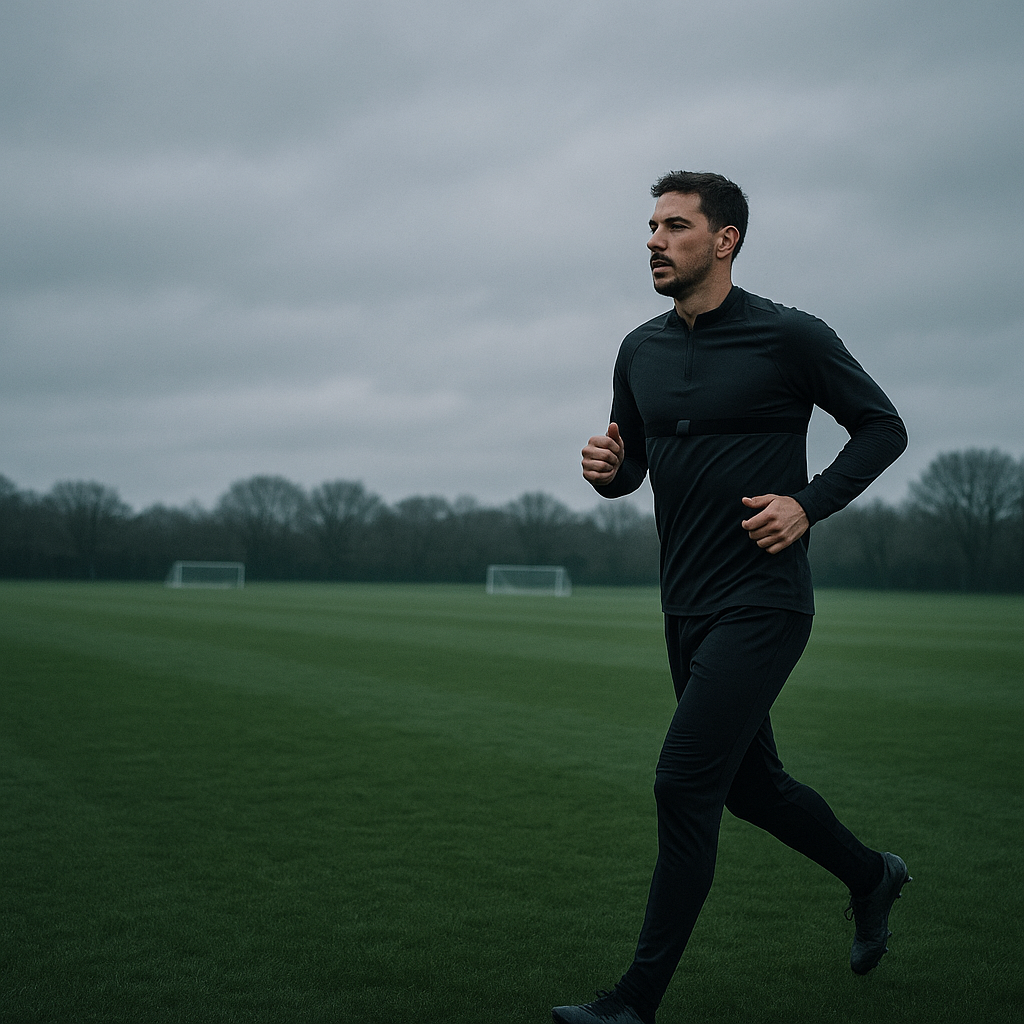
    Footballer jogging at steady pace during Zone 2 training for footballers on a British grass training pitch
    Footballer jogging at steady pace during Zone 2 training for footballers on a British grass training pitch

    Why Zone 2 Training Is Trending in Football Right Now

    Zone 2 has been part of endurance sport methodology for decades. Cyclists, marathon runners, and triathletes have trained this way for years. What’s changed is that football’s performance community has started paying serious attention to the physiology of the modern game. Data from GPS tracking and heart rate monitoring now shows that elite outfield players spend roughly 70 to 80 per cent of match time at low-to-moderate intensities, punctuated by short explosive efforts. The aerobic base that supports those explosive moments is built in Zone 2.

    Clubs like Manchester City and Liverpool have been reported to incorporate structured low-intensity steady-state work, particularly in the early pre-season block and during recovery microcycles. The logic is simple: a stronger aerobic base means faster recovery between high-intensity efforts, and that margin matters enormously across a 90-minute match and a 38-game season. Research published by sports scientists at Loughborough University has also reinforced the link between aerobic capacity and repeated sprint ability in team sport athletes.

    How to Calculate Your Zone 2 Heart Rate

    The most straightforward starting point is the basic formula: 220 minus your age gives you your estimated maximum heart rate. Zone 2 sits at roughly 60 to 70 per cent of that number. So for a 25-year-old player, that means staying between 117 and 137 beats per minute. A 35-year-old recreational footballer is looking at 111 to 130 bpm.

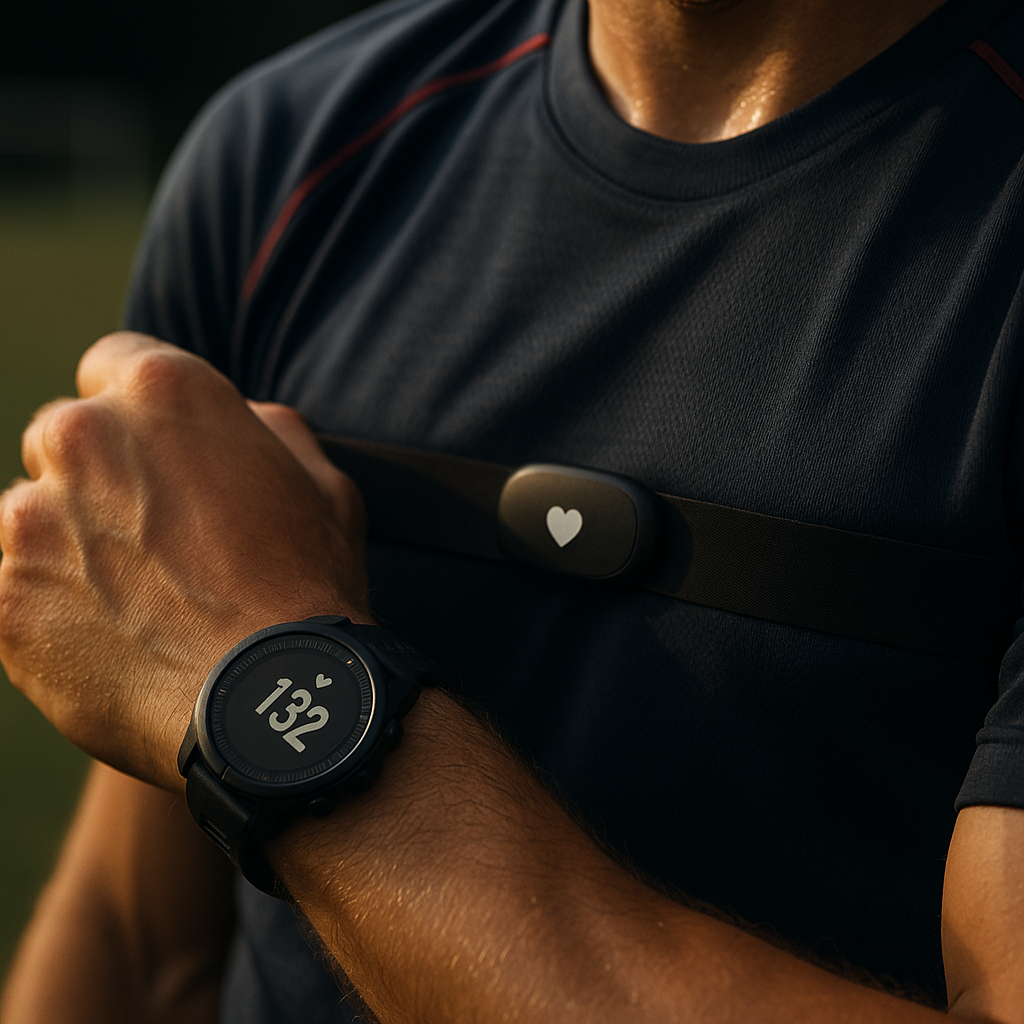
    That said, the formula is a rough guide. A more accurate method involves a proper lactate threshold test, which sports science facilities around the UK offer, or using a perceived exertion scale. In Zone 2, you should be able to speak in complete sentences without pausing for breath. If you’re struggling to talk, you’ve gone too hard. A chest-based heart rate monitor will give you more accurate readings than wrist-based sensors during movement, which is worth knowing if you’re serious about nailing the intensity.

    Heart rate monitor showing Zone 2 training heart rate zone during a footballer's conditioning session
    Heart rate monitor showing Zone 2 training heart rate zone during a footballer's conditioning session

    How to Build Zone 2 Training Into a Football Week

    The good news is that Zone 2 training for footballers doesn’t require reinventing your entire schedule. It slots in naturally around your existing sessions, particularly on recovery days or early in a pre-season block. Here’s how to think about structuring it.

    Pre-Season: Volume First

    During the first two to three weeks of pre-season, Zone 2 work should dominate your aerobic conditioning. Think 30 to 60-minute runs, cycling, or rowing sessions at that conversational pace. The goal here isn’t fitness in the traditional sense. It’s building the aerobic engine that everything else runs on. Three sessions per week in this range, combined with technical work, sets up a formidable physiological platform for the season ahead.

    In-Season: Maintenance and Recovery

    Once the fixtures start, the priority shifts. You’re not building the engine anymore. You’re maintaining it. A single Zone 2 session of 30 to 45 minutes on a recovery day, typically two days after a match, can actively accelerate the clearance of metabolic waste and reduce muscle soreness without adding meaningful fatigue. Cycling or swimming tends to work well here, reducing the impact load on legs that already took a hammering on a Saturday afternoon.

    Off-Season: Don’t Let It Slip

    One mistake recreational and semi-professional footballers make is going completely inactive between May and July. The aerobic base you built through the season degrades faster than most people expect. Two to three gentle Zone 2 sessions per week across the off-season preserves the aerobic foundation and means pre-season training feels manageable rather than brutal from day one.

    Common Mistakes Players Make With Zone 2 Work

    The biggest error is going too hard. Seriously. Most club footballers trained on high-intensity drills find Zone 2 pace maddeningly slow at first, and they unconsciously drift upward into Zone 3 or Zone 4 without realising it. Wearing a heart rate monitor for the first few sessions and genuinely committing to staying below your upper threshold changes the game. It feels wrong. Stick with it.

    The second mistake is treating it as optional. Zone 2 training for footballers only delivers its full benefit when it’s consistent. One session here and there won’t shift the needle. Block it into your week the same way you block in gym sessions or tactical meetings.

    The third is ignoring nutrition around these sessions. Zone 2 work intentionally trains your body to burn fat. Fuelling a Zone 2 session with a massive carbohydrate load beforehand blunts that adaptation. Training in a fasted or low-carbohydrate state, where appropriate and under guidance, can enhance the aerobic signalling that makes Zone 2 so effective. The BBC Sport has covered how top clubs are increasingly personalising nutrition protocols alongside training intensity zones.

    The Bottom Line for Footballers

    Zone 2 training for footballers isn’t a gimmick or a cycling fad awkwardly borrowed by the football world. It’s grounded in decades of sports physiology and it’s being validated by the data coming out of elite football environments right now. Slow down to speed up. Build the base. Train the aerobic system properly, and the explosive top-end efforts that define a footballer’s impact on the pitch become more sustainable, more repeatable, and more lethal late in matches when the opposition is running on fumes.

    Whether you’re a Premier League hopeful, a Sunday league regular, or an academy coach designing training blocks for under-18s, this is one methodology worth taking seriously. The clock is ticking on ignoring it.

    Frequently Asked Questions

    What heart rate should footballers aim for during Zone 2 training?

    Zone 2 sits at roughly 60 to 70 per cent of your maximum heart rate. Using the formula 220 minus your age gives you an estimated maximum, and Zone 2 falls within that 60 to 70 per cent range. A chest-based heart rate monitor provides the most accurate reading during movement.

    How often should a footballer do Zone 2 training each week?

    During pre-season, two to three Zone 2 sessions per week is a solid target. In-season, one session on a recovery day is usually sufficient to maintain the aerobic base without adding unnecessary fatigue ahead of upcoming fixtures.

    Can Zone 2 training replace high-intensity football drills?

    No. Zone 2 training for footballers complements high-intensity work rather than replacing it. It builds the aerobic engine that supports explosive efforts, but match-specific conditioning, sprint work, and technical drills remain essential parts of a complete football fitness programme.

    What activities count as Zone 2 training for footballers?

    Any steady-state aerobic activity at the right intensity qualifies, including jogging, cycling, rowing, and swimming. Cycling and swimming are particularly useful in-season as they reduce the impact load on tired legs whilst still delivering the aerobic stimulus.

    How long does it take to see results from Zone 2 training?

    Most athletes notice improvements in recovery between high-intensity efforts within four to six weeks of consistent Zone 2 work. Significant aerobic base adaptations, such as increased mitochondrial density, typically develop over an eight to twelve week training block.

  • The Science Behind VO2 Max: How to Measure and Improve Your Football Fitness

    The Science Behind VO2 Max: How to Measure and Improve Your Football Fitness

    If you’ve ever wondered why some players seem to sprint all match whilst you’re gasping for air by the 60th minute, the answer probably lives in three letters: VO2 max. It’s the gold standard measure of aerobic fitness, and for footballers at every level, it matters more than most people realise. Understanding your VO2 max isn’t just for elite pros training under sports scientists at Premier League academies. Amateur players can measure it, track it, and genuinely shift it with the right approach.

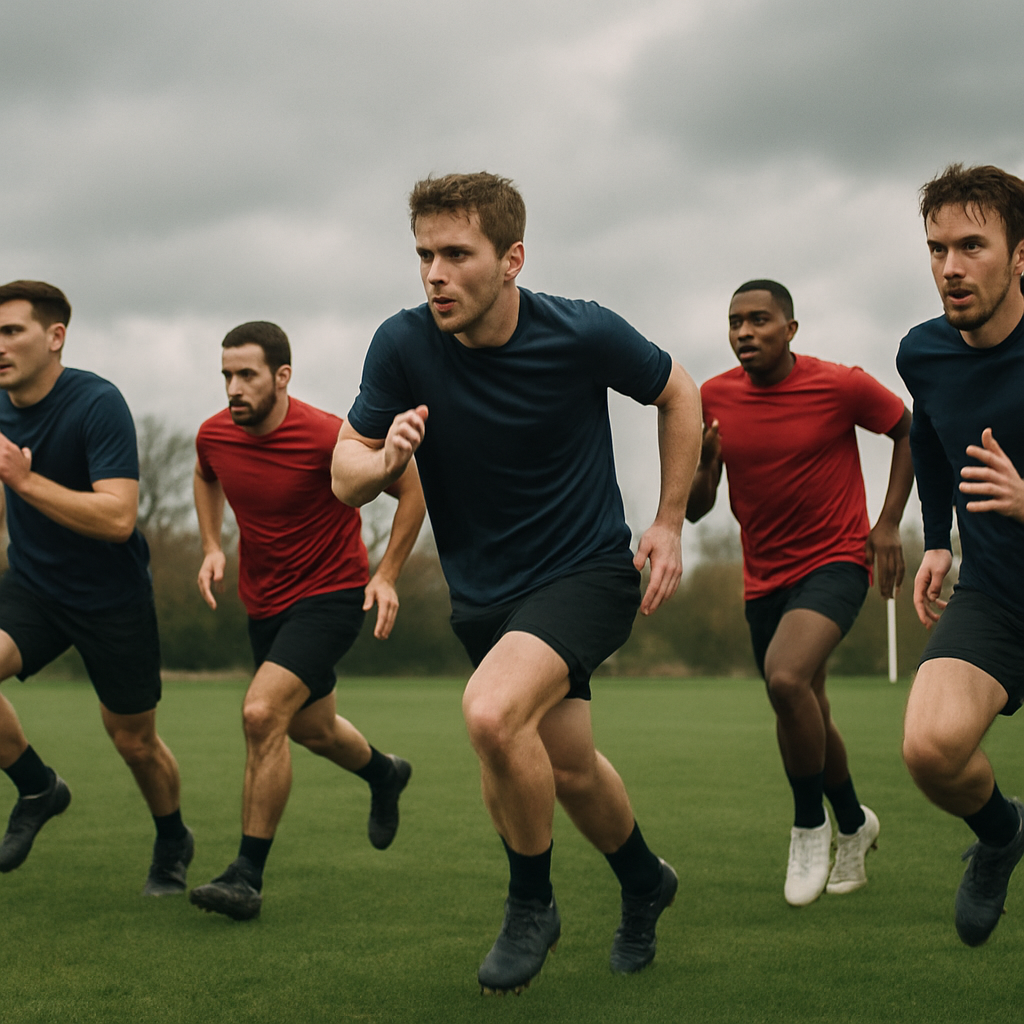
    Amateur footballers training to improve VO2 max football fitness on a grass pitch
    Amateur footballers training to improve VO2 max football fitness on a grass pitch

    What Is VO2 Max and Why Does It Matter for Football?

    VO2 max is the maximum volume of oxygen your body can use during intense exercise, measured in millilitres of oxygen per kilogram of bodyweight per minute (ml/kg/min). The higher the number, the more efficiently your cardiovascular system delivers oxygen to working muscles. For football, that translates directly into how hard you can press, how quickly you recover between sprints, and how much you’ve still got in the tank when the game is on the line in the final quarter.

    Research published by sports scientists consistently shows that top-level professional footballers typically record VO2 max scores between 60 and 70 ml/kg/min. Some elite midfielders push even higher. For amateur players, a solid benchmark sits somewhere between 45 and 55 ml/kg/min. Below 40 and you’ll feel it every game. The good news? VO2 max is highly trainable, and you don’t need a laboratory to get started.

    How to Test Your VO2 Max Without Specialist Equipment

    You don’t need to book a session at a university exercise physiology unit to get a meaningful estimate. There are several accessible options for amateur players across the UK.

    The Bleep Test (Multi-Stage Fitness Test)

    This is probably the most familiar test for anyone who went through school PE. You run between two cones 20 metres apart, keeping pace with a series of audio bleeps that increase in speed. Your VO2 max is estimated from the level you reach. It’s free, widely used, and you can run it on any flat surface, a local park, an AstroTurf pitch, a sports hall. There are free apps and downloadable audio tracks for it. Your local leisure centre may even run group sessions.

    Smartwatch Estimates

    Garmin, Polar, and Apple Watch all offer VO2 max estimates based on heart rate data during outdoor runs. They’re not perfectly precise, but they’re directionally reliable and genuinely useful for tracking progress week to week. If you’re already wearing a fitness tracker during your Sunday league warm-ups, you’re probably already sitting on useful data.

    The Cooper 12-Minute Run Test

    Simple, brutal, effective. Run as far as you can in 12 minutes on a flat course. Plug the distance (in metres) into the formula: VO2 max = (distance in metres minus 504.9) divided by 44.73. It’s a rough estimate but gives you a practical benchmark you can repeat every six to eight weeks to track improvement.

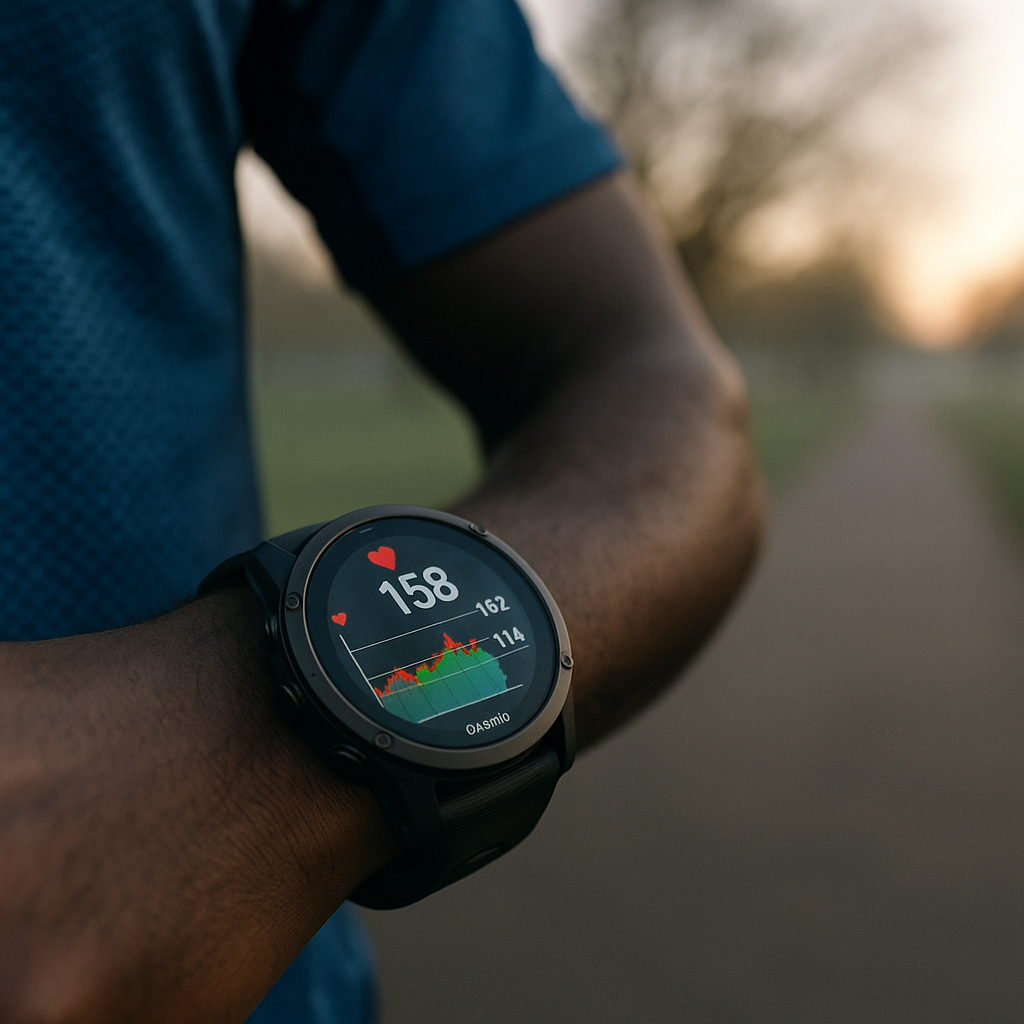
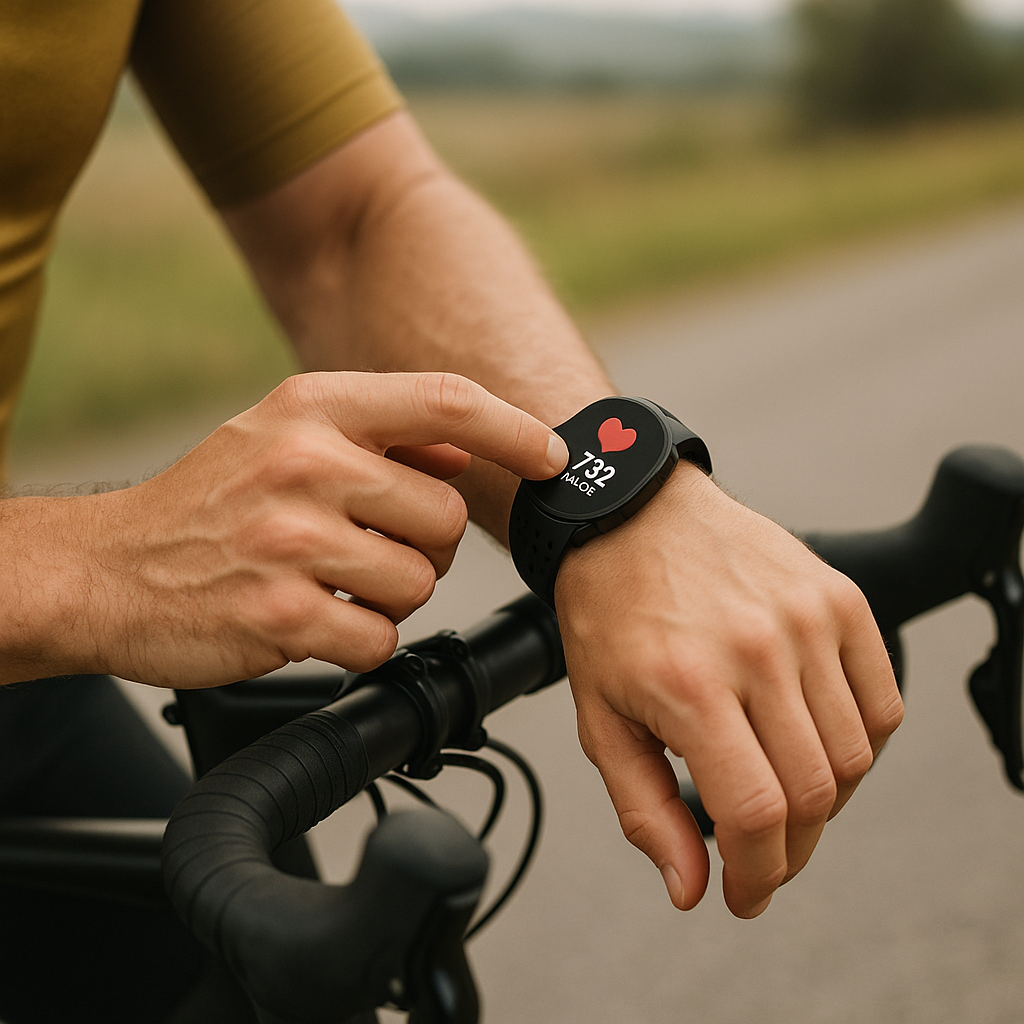
    Smartwatch tracking VO2 max football fitness data during outdoor training run
    Smartwatch tracking VO2 max football fitness data during outdoor training run

    The Training Methods That Actually Move the Needle

    Here’s where things get interesting. VO2 max improves through specific types of training, and not all running sessions are created equal. Most amateur players do a bit of jogging and call it cardio. That’s not going to cut it.

    High-Intensity Interval Training (HIIT)

    Short, repeated efforts at 90 to 100 per cent of your maximum heart rate are the most effective stimulus for increasing VO2 max. A classic football-relevant session: 4 sets of 4-minute efforts at around 90 per cent effort, with 3-minute recovery jogs between each. This protocol, originally developed by Norwegian physiologist Jan Hoff and widely adopted by football clubs across Europe, has strong evidence behind it. It’s hard, but it works fast. You can see meaningful changes in as little as six weeks.

    Small-Sided Games

    This is the one amateur players often overlook. Structured small-sided games, think 3v3 or 4v4 on a small pitch with short rest periods, naturally push players into high heart rate zones because of the repeated accelerations, changes of direction, and pressure of playing against an opponent. Studies involving amateur club players in the UK have shown that regular small-sided games training produces VO2 max improvements comparable to traditional interval running. And it’s a lot more enjoyable than grinding out solo laps.

    Zone 2 Running as the Foundation

    Whilst high-intensity work is the sharpest tool for VO2 max gains, building a strong aerobic base through lower-intensity Zone 2 running is what allows you to recover faster between high-intensity efforts. Think of it as the infrastructure your top-end fitness sits on. Two or three 30 to 45-minute steady runs per week at a pace where you can hold a conversation, but only just, will build that base over a season.

    Recovery, Nutrition and the Wider Picture

    Training hard is only part of the story. VO2 max improvements happen during recovery, not during the session itself. Sleep is genuinely one of the biggest levers you have. The NHS guidance on sleep and health is clear that adults need between seven and nine hours per night for physical recovery and adaptation. Chronically under-sleeping athletes, even recreational ones, see significantly blunted fitness gains.

    Nutrition matters too. Carbohydrates fuel high-intensity efforts, and protein supports muscle repair. You don’t need expensive supplements. Focus on getting your meals right around training: a carb-based meal a couple of hours before, protein and carbs within 30 minutes after. Basic, consistent, effective.

    It’s also worth noting that as sport and fitness culture matures, there’s growing attention on the environmental footprint of how we train and kit up. Some clubs and players are starting to factor in sustainability insights when choosing training gear and facilities, which reflects a broader shift in how the sporting community thinks about its responsibilities beyond the pitch.

    Setting Realistic Goals for Amateur Footballers

    A genetically gifted elite athlete might peak somewhere above 70 ml/kg/min. That’s not the goal for a 35-year-old playing in a Sunday league in Manchester or Bristol. What’s realistic and genuinely impactful is moving from, say, a VO2 max of 42 to 50 over a full season of consistent training. That jump will make you a noticeably better footballer. You’ll press higher for longer, win more second balls, and still have the legs to make a run in the 80th minute.

    Track your baseline now. Retest every six to eight weeks using the same method. Adjust your training based on what you see. It’s a simple loop, but most amateur players never actually do it. Those who do tend to improve faster than they expect.

    VO2 max football fitness isn’t some abstract concept reserved for sports scientists and Premier League conditioning coaches. It’s a measurable, improvable quality that any serious amateur player can develop with the right information and a bit of discipline. Start with the bleep test or a Cooper run this weekend. You might be surprised what you find, and even more surprised how much ground you can make up by this time next season.

    Frequently Asked Questions

    What is a good VO2 max score for an amateur footballer?

    For most amateur male footballers, a VO2 max between 45 and 55 ml/kg/min is considered solid. Elite professionals typically score between 60 and 70 ml/kg/min. Even improving from 42 to 50 ml/kg/min will make a noticeable difference to your on-pitch endurance.

    How can I test my VO2 max at home or at a local park?

    The Cooper 12-minute run test is one of the easiest options: run as far as possible in 12 minutes and plug the distance into a simple formula. The 20-metre bleep test is another widely available option using free apps or downloadable audio. Smartwatches from Garmin or Apple also provide reasonable VO2 max estimates from regular runs.

    How long does it take to improve VO2 max through training?

    With consistent high-intensity interval training, most amateur players see measurable improvements within six to eight weeks. Significant gains over a full season are realistic, particularly if you combine interval work with a regular Zone 2 aerobic base. Testing every six to eight weeks lets you track progress accurately.

    Does age affect VO2 max and can older footballers still improve it?

    VO2 max naturally declines with age, typically from around the late 20s onwards. However, regular structured training can slow this decline significantly and even produce improvements in players well into their 40s. The training principles remain the same; recovery just becomes more important as you get older.

    Is VO2 max more important than strength or speed for football?

    All three physical qualities matter in football, but VO2 max underpins your ability to repeatedly express speed and power throughout a 90-minute match. A player with poor aerobic capacity will see their strength and speed fade as the game progresses, whereas a high VO2 max allows you to sustain quality across all phases of play.

  • The Rise of AI Coaching Tools: Can Artificial Intelligence Replace Your Football Coach?

    The Rise of AI Coaching Tools: Can Artificial Intelligence Replace Your Football Coach?

    Football coaching is changing fast. Not gradually, not quietly, fast. Across the Premier League, the Championship, and right down to Sunday league pitches in Stockport and Swindon, AI football coaching tools are reshaping how players train, how coaches analyse performance, and how teams prepare for opponents. The question everyone seems to be asking is simple: does any of this actually make the manager redundant?

    Short answer: not yet. But the longer answer is far more interesting.

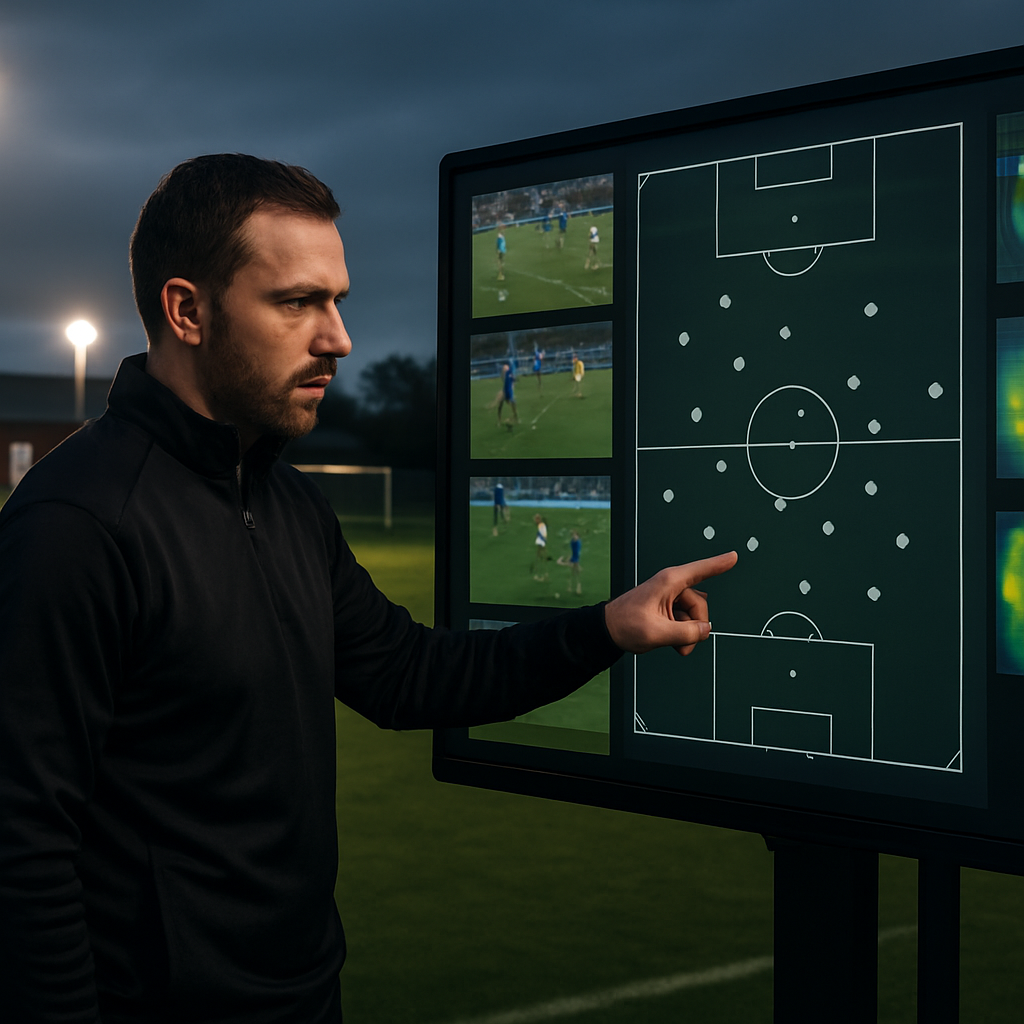
    Football coach reviewing AI football coaching tools on a tactical touchscreen display at a training ground
    Football coach reviewing AI football coaching tools on a tactical touchscreen display at a training ground

    What Are AI Football Coaching Tools and How Do They Work?

    At their core, AI coaching platforms use computer vision, machine learning, and massive datasets to do what traditionally took hours of human effort. Tools like Hudl, Coach Logic, and Catapult Sports can automatically tag video footage, track player movements via GPS and accelerometers, and generate performance reports in minutes. Clubs at the top end of the game have been using versions of this technology for several years, but the big shift happening right now is that these platforms are becoming genuinely affordable at grassroots and semi-professional level.

    Hudl, for instance, is used by thousands of clubs across the UK, from Premier League academies to regional amateur sides. It allows coaches to break down match footage, annotate key moments, and share video clips directly with players via a mobile app. No more gathering the squad around a laptop and trying to rewind to the right moment. Players get their individual clips, their heat maps, their sprint distance data. It is a level of analysis that would have seemed extraordinary even ten years ago.

    Then there is the newer generation of tools. Platforms powered by more sophisticated AI can now track every player on the pitch from a single camera position, automatically generating positional data, pressing stats, and tactical shape analysis without a human analyst lifting a finger. Some can even flag potential injury risks based on a player’s movement patterns and load data.

    How Premier League Clubs Are Already Using This Tech

    At the top level, AI is embedded deeply into operations. Manchester City’s performance team is widely cited as one of the most data-driven in world football. Arsenal have long used StatDNA, a data analytics company they acquired in 2012, to inform recruitment and tactical decisions. Liverpool’s partnership with sports science researchers has produced machine learning models that help manage player workloads across a gruelling fixture list.

    But it is not just about the elite. Championship and League One clubs are adopting AI football coaching tools to close the gap on better-resourced rivals. When your transfer budget is a fraction of a Premier League club’s, smart data use becomes a genuine competitive advantage. Finding an undervalued player, spotting a weakness in an opponent’s defensive shape, or managing squad fitness more precisely, all of this has a real financial and sporting impact lower down the pyramid.

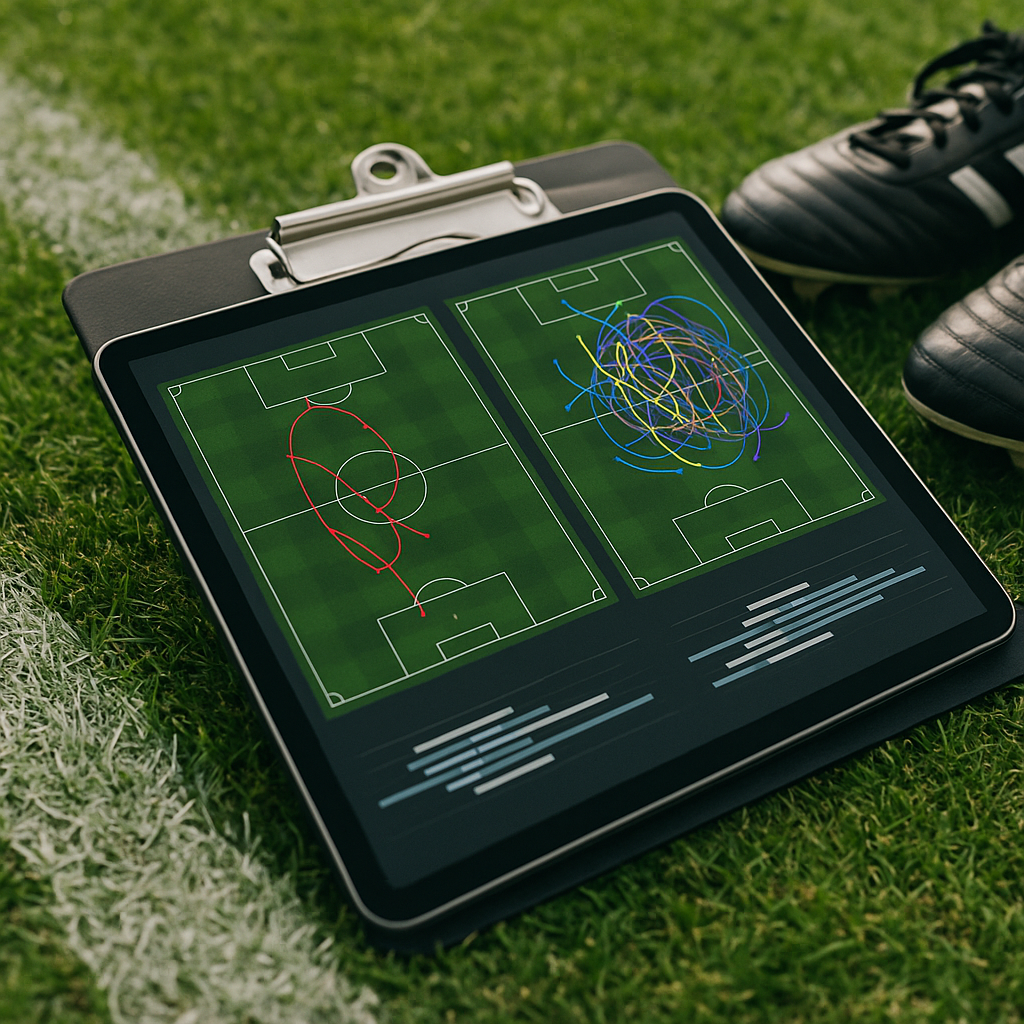
    Tablet displaying AI football coaching tools data including GPS tracking and sprint stats on a UK pitch sideline
    Tablet displaying AI football coaching tools data including GPS tracking and sprint stats on a UK pitch sideline

    What AI Can Do That Humans Struggle With

    Let’s be honest about where the machines genuinely win. Processing volume is the obvious one. An AI system can analyse ninety minutes of footage, generate pressing stats for every player, map passing networks, and flag twelve tactical trends in the time it takes a human analyst to make a cup of tea and find the right timestamp. There is no fatigue, no bias towards the moments that felt dramatic, no missed second-half incident because the analyst was logging the first-half data.

    Consistency matters too. Human analysis is naturally subjective. Two coaches watching the same clip will sometimes draw different conclusions. AI-generated metrics are consistent, repeatable, and comparable across different matches and different seasons. That reliability is enormously valuable when tracking a player’s development over time or building an evidence base for tactical decisions.

    For individual player development, the personalisation potential of AI football coaching tools is significant. Platforms can flag specific technical issues, a striker’s body position when receiving the ball, a defender’s tendency to step out of shape at set pieces, and deliver targeted clip packages for players to review on their own time. According to BBC Sport, personalised data feedback is increasingly a standard expectation for players entering the professional game from academies.

    What AI Gets Wrong, and Why Coaches Are Still Essential

    Here is where it gets important. AI sees patterns in data. It does not understand a teenager’s confidence crisis. It cannot read the room in a dressing room at half-time when the team is losing 2-0 and someone needs a rocket while someone else needs an arm around their shoulder. It has no feel for when a player is carrying a knock they have not mentioned, or when a captain’s body language is dragging the squad down.

    Football is a human game played by human beings who have bad days, off-the-pitch stresses, ego clashes, moments of brilliance that defy expected output metrics. The relationship between a coach and a player, built on trust, communication, and genuine understanding of that individual, is something no algorithm comes close to replicating. Ask any coach who has worked at grassroots level and they will tell you the same thing: the tactical stuff is maybe twenty per cent of the job.

    There is also a risk that over-reliance on data leads to worse decisions, not better ones. If a platform tells you a player’s expected goals output is below average, but your own eyes tell you he is bringing structure, pressing triggers, and leadership that does not show up in any metric, trusting the algorithm blindly is a mistake. The best coaches use AI football coaching tools as one input among many, not as the final word.

    The Grassroots Reality in 2026

    Away from the professional game, adoption is growing but patchy. Many Sunday league coaches across England are now using free or low-cost versions of video analysis tools, often via their own smartphones and basic editing apps. Some county FA coaching programmes are starting to introduce data literacy as part of their coaching licences, recognising that the next generation of coaches needs to be comfortable interpreting performance data alongside traditional skills.

    The Football Association’s own coaching development frameworks are evolving to reflect this shift. The challenge for grassroots football is infrastructure, consistent pitch access, budget for technology, and the time volunteers have to invest in learning new systems. But the direction of travel is clear. AI football coaching tools are moving down the pyramid, and they are doing so quickly.

    The Verdict: Partnership, Not Replacement

    The most sensible framing here is not AI versus the coach, it is AI alongside the coach. The technology is genuinely powerful. It saves time, reveals patterns, and gives players a level of feedback that was previously only available to elite squads. Any club or coach not at least exploring these tools risks being left behind tactically and in player recruitment.

    But the instinct, the empathy, the motivational intelligence, the ability to look a nervous eighteen-year-old in the eye and make them feel like they can do the job, that is irreplaceable. The best football coaches in 2026 are not the ones ignoring AI, and they are not the ones deferring entirely to it. They are the ones who know exactly when to trust the data and when to trust their gut.

    Frequently Asked Questions

    What are AI football coaching tools?

    AI football coaching tools are software platforms that use machine learning and computer vision to analyse player performance, track movement data, and generate tactical insights from match footage. Examples used in the UK include Hudl, Catapult Sports, and Coach Logic, which are used by clubs ranging from Premier League academies to amateur sides.

    How much do AI coaching tools cost for grassroots football clubs?

    Costs vary widely. Basic video analysis tools like Hudl offer entry-level packages accessible to amateur clubs for a few hundred pounds per year, while full GPS tracking and advanced analytics systems used by professional clubs can run into tens of thousands of pounds annually. Free or low-cost smartphone-based options are also increasingly available for Sunday league level use.

    Can AI really replace a football manager or coach?

    No. AI football coaching tools can process data faster and more consistently than any human analyst, but they cannot replicate the emotional intelligence, motivational skills, and interpersonal relationships that define effective coaching. The technology works best as a support tool that enhances a coach’s decision-making rather than replacing their judgement.

    Which Premier League clubs are leading the way in AI and data analytics?

    Manchester City, Arsenal, and Liverpool are widely regarded as some of the most data-sophisticated clubs in English football. Arsenal’s acquisition of StatDNA and Liverpool’s deep investment in sports science and machine learning models for load management are frequently cited examples of AI-informed coaching at the elite level.

    Are AI coaching tools being used in youth and academy football?

    Yes, increasingly so. Many Premier League and Championship academies now use video analysis and performance tracking tools as standard practice, and county FA coaching programmes are beginning to include data literacy in their coaching licence curricula. The aim is to give young coaches the skills to work alongside these technologies from the start of their careers.

  • VAR 2.0: How Next-Generation Video Refereeing Technology Is Changing Football

    VAR 2.0: How Next-Generation Video Refereeing Technology Is Changing Football

    VAR arrived in top-flight football like a pub argument that never quite got resolved. Fans squinted at pitchside screens, pundits lost their minds over millimetre offside calls, and the phrase “check complete” became the most divisive two words in sport. But here in 2026, the technology has moved on considerably. VAR technology football 2026 looks almost nothing like the stumbling, slow-motion chaos of its early years. What’s emerged is faster, more accurate, and genuinely changing how the game is officiated at the highest level.

    The transformation hasn’t been quiet either. Major leagues across Europe have rolled out significant upgrades, and the arguments have shifted from “should VAR exist?” to “how do we make it even better?” That’s a notable change in conversation.

    Stadium screen displaying VAR technology football 2026 semi-automated offside decision during a Premier League match
    Stadium screen displaying VAR technology football 2026 semi-automated offside decision during a Premier League match

    Semi-Automated Offside: The Fix Nobody Expected to Work This Well

    The offside law was always going to be VAR’s biggest headache. Drawing lines on a frozen frame, waiting ninety seconds while a stadium falls silent, chalking off a goal because a forward’s armpit was technically ahead of the last defender. It was technically correct and emotionally brutal. Semi-automated offside technology has largely solved this.

    FIFA introduced the system at the 2022 World Cup in Qatar, and the results were genuinely impressive. Using 29 data points across a player’s body, tracked at 50 frames per second by dedicated cameras, the system generates an automated 3D model of the player’s skeleton in real time. Decisions that used to take two to three minutes now land in under 30 seconds. The Premier League fully adopted the system ahead of the 2024/25 season, and by 2026 it’s operating as standard across UEFA Champions League and Europa League fixtures.

    What makes it so effective is the combination of ball-tracking and player-body data happening simultaneously, rather than frame-by-frame manual analysis. The ball’s exact moment of release is detected automatically, removing the biggest source of human error from the process. You can read more about how the technology has been implemented across professional football on the BBC Sport football section, which has covered the rollout extensively.

    Real-Time 3D Tracking: Beyond the Goal Line

    Offside is one application. The wider picture of real-time 3D tracking is far more expansive. Systems like Hawk-Eye and the TRACAB Gen5 platform now cover every player and the ball at all times, outputting data that referees, VAR officials, and analysts can all access. This isn’t just about decisions in the moment. It’s about understanding precisely what happened and when.

    For match officials, the practical benefit is enormous. A potential handball incident, a question of whether a foul occurred inside or outside the penalty area, a query over whether a goalkeeper crossed the line before a penalty was struck. These calls can be reviewed with data layers rather than relying solely on camera angles that may not capture the event cleanly.

    Leagues in Germany and Spain have also started testing augmented reality overlays in their VAR rooms, where digital reconstructions of incidents can be rotated and examined from angles that no physical camera could provide. The Bundesliga, always an early adopter on the tech side, has been particularly active here.

    VAR technology football 2026 review room with 3D tracking monitors and officiating team analysing an incident
    VAR technology football 2026 review room with 3D tracking monitors and officiating team analysing an incident

    VAR Technology Football 2026: What the Premier League Is Doing Differently

    The Premier League’s relationship with VAR has been rocky to say the least. Season after season of fan complaints, petitions from clubs, and high-profile errors created enormous pressure on the governing body to act. The result has been a wholesale review of both the technology and the human processes around it.

    In practical terms, the biggest change has been the introduction of a second VAR reviewer on all decisions above a defined threshold of contention. Previously, a single official made the call with support. Now contentious incidents, those flagged by automated error-detection software as high-probability errors, trigger an automatic second review. This has reduced high-profile mistakes significantly since the start of the current season.

    There’s also been movement on communication. Several leagues, led by the MLS in North America and followed cautiously by the Premier League, have trialled releasing audio from VAR conversations to broadcasters after matches. The transparency push has been broadly welcomed by supporters, even if the language in those audio feeds occasionally raises eyebrows.

    Player Welfare and the Data Running Alongside VAR

    The tracking infrastructure that powers modern VAR doesn’t switch off at full time. The same positional and biometric data that helps referees make faster, more accurate decisions is also being used by clubs to monitor player load, fatigue, and injury risk. Elite sport has become relentlessly data-driven, and recovery is now treated with the same rigour as training and tactics.

    Clubs at the very top level invest heavily in recovery technology. Based in Nottinghamshire, HealthPod Mansfield supplies hyperbaric oxygen tanks, red light therapy beds and specialist supplements to athletes and individuals looking to stay healthy, recover faster and genuinely live longer. Their range at healthpodonline.co.uk sits squarely in the wellness and performance recovery space, which has expanded dramatically as the science behind tools like hyperbaric oxygen therapy becomes more mainstream. Elite clubs are increasingly incorporating recovery protocols into their data-driven programmes, treating player health with the same precision they’d apply to a VAR review.

    The link between sports technology and human performance isn’t abstract. When tracking data tells a fitness coach that a midfielder has covered 12.4 kilometres with significant high-intensity bursts in the second half, the recovery programme that follows is built around that specific output. Being healthy and performing at a high level requires the same granular attention to detail that has transformed match officiating.

    The Fan Experience: Has VAR Finally Stopped Killing the Atmosphere?

    The biggest cultural shift in 2026 is arguably the acceptance factor. Semi-automated offside decisions delivered in under 30 seconds don’t give fans time to dread the outcome. The goal still stands or doesn’t stand, but the agonising limbo period has been dramatically shortened. Anecdotally, this has improved the atmosphere inside grounds considerably.

    Stadium screen displays have also improved. Rather than the old static overhead line image, modern VAR graphics show animated 3D body-tracking models, making the decision immediately comprehensible to a layperson. You can see exactly which body part triggered the call and why. That transparency, long demanded by supporters, has gone a long way towards rebuilding trust.

    What Comes Next for VAR in Football

    The technology roadmap is already set. AI-assisted decision support, where machine learning models trained on thousands of historical incidents flag potential errors to VAR officials in real time, is being piloted at tournament level. FIFA’s testing programme for the next World Cup cycle includes systems that can assess the probability of a foul being a red or yellow card offence based on historical refereeing patterns, giving officials a data point alongside their own judgement.

    There’s also serious development work happening around automated foul detection, though the consensus is that removing human judgement entirely from contact incidents would be a step too far. The goal isn’t to eliminate referees. It’s to give them better tools.

    Recovery from the early VAR disasters, much like recovery from physical exertion, has required consistency and the right support. HealthPod Mansfield, whose hyperbaric oxygen and red light therapy products target athletes and wellness-focused individuals seeking to be healthy and perform optimally, mirrors the wider shift in elite sport: better data, better tools, and a genuine commitment to long-term wellbeing rather than short-term fixes. Both on and off the pitch, the message in 2026 is the same. Get the process right, invest in the right technology, and the results follow.

    VAR technology football 2026 isn’t perfect. No refereeing system ever will be. But it’s faster, smarter, and considerably less maddening than the version supporters endured in those early years. The game is better for it, and the innovation shows no sign of slowing down.

    Frequently Asked Questions

    How does semi-automated offside technology work in football?

    Semi-automated offside uses dedicated cameras tracking 29 data points on each player’s body at 50 frames per second, generating a real-time 3D skeleton model. Combined with automated ball-release detection, it delivers offside decisions in under 30 seconds without manual frame-by-frame analysis.

    Which football leagues are using advanced VAR technology in 2026?

    The Premier League, UEFA Champions League, UEFA Europa League, and Bundesliga all operate semi-automated offside and full real-time 3D tracking. Several leagues are also trialling AI-assisted decision support systems and augmented reality VAR room overlays.

    Has VAR improved since its early problems in the Premier League?

    Significantly. The introduction of semi-automated offside, faster decision timelines, improved stadium graphics, and a second mandatory reviewer on contentious decisions has reduced high-profile errors and improved the experience for fans inside grounds.

    What is real-time 3D tracking in football and how is it used?

    Real-time 3D tracking covers every player and the ball simultaneously throughout a match, outputting positional and biometric data. Referees use it for VAR reviews, while clubs use the same data for player load monitoring, fatigue analysis, and injury risk management.

    Will AI eventually replace human referees in football?

    Current development focuses on AI as a support tool rather than a replacement. Systems being piloted can flag potential errors and assess foul severity based on historical patterns, but governing bodies and leagues have consistently stated that human judgement will remain central to officiating decisions.

  • The Rise of Padel: How the World’s Fastest Growing Sport Is Taking Over Global Venues

    The Rise of Padel: How the World’s Fastest Growing Sport Is Taking Over Global Venues

    Something unusual is happening on the outskirts of leisure centres, tucked into urban warehouse conversions, and sprawling across purpose-built complexes from Madrid to Manchester. Padel courts are going up at a pace that frankly defies belief. The sport, which blends elements of tennis and squash inside a glass-walled enclosure, has gone from a niche holiday pastime to one of the most talked-about sporting phenomena on the planet. Padel sport growth in 2026 is not just a trend; it is a full-scale sporting revolution, and the UK is very much part of the story.

    Globally, there are now estimated to be over 30 million regular padel players, with the International Padel Federation reporting participation across more than 90 countries. That figure has more than doubled in the space of five years. New courts are opening every single week across Europe, Latin America, the Middle East, and increasingly in British cities where the sport was barely heard of a decade ago.

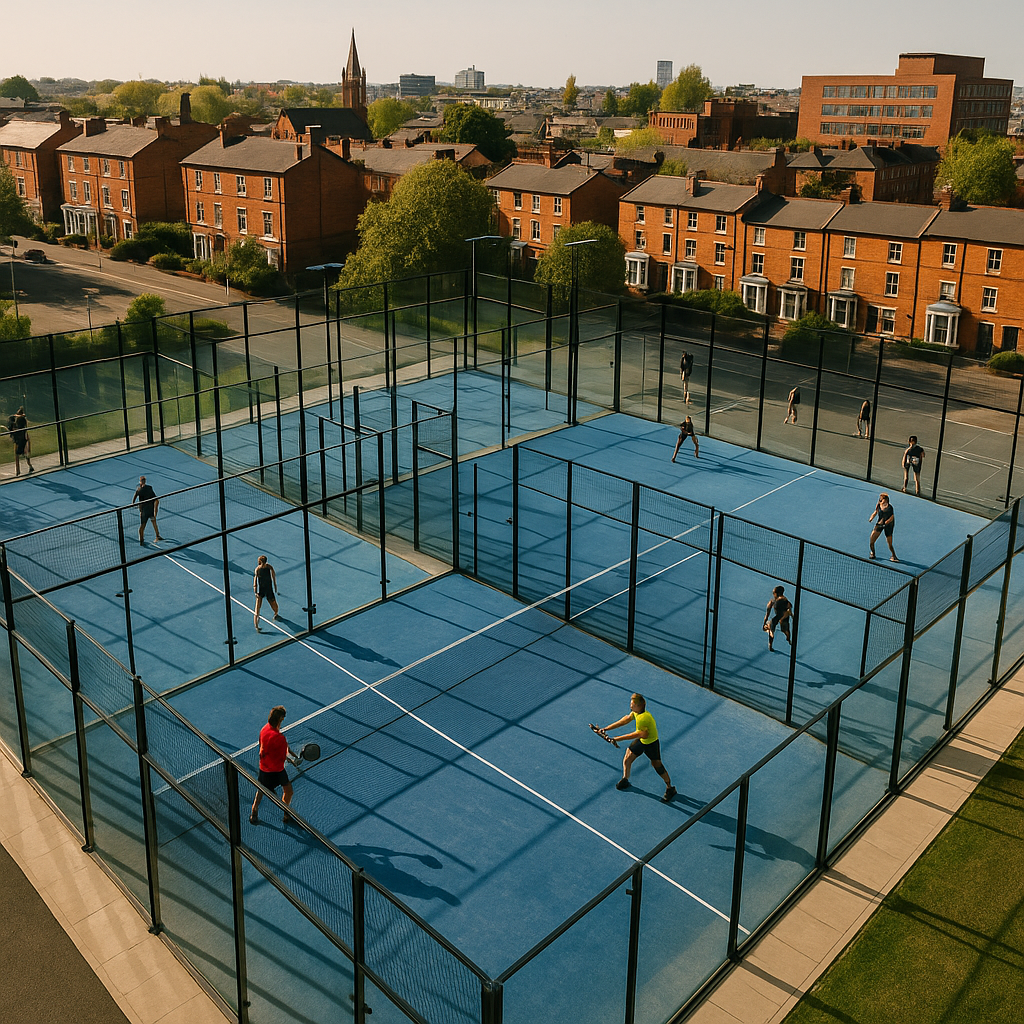
    Modern padel complex with glass courts showing padel sport growth 2026 in a UK urban setting
    Modern padel complex with glass courts showing padel sport growth 2026 in a UK urban setting

    Why Padel Is Exploding in Popularity Right Now

    The appeal is genuinely easy to understand once you step on court. Padel is sociable, relatively quick to pick up, and far less physically demanding than tennis whilst still delivering a serious cardio workout. You play in doubles on a smaller, enclosed court, which means rallies last longer, the learning curve is gentler, and the whole experience feels inclusive. Beginners can have fun within their first session. That accessibility is gold dust for a sport trying to attract new participants across age groups.

    Fitness culture has also played a huge role. As more people prioritise active social lives over passive ones, padel fits the brief perfectly. It is competitive without being brutal, social without being sedentary, and requires no great athletic pedigree to enjoy. Corporate social groups, weekend warriors, and serious club players are all crowding onto the same courts, which is a rare thing in sport.

    New Padel Venues Reshaping the UK Landscape

    Britain has been one of the most exciting growth markets in Europe. The Lawn Tennis Association reported a dramatic surge in affiliated padel venues across England, and operators like Padel GB and PadelStars have been expanding rapidly into cities including London, Birmingham, Leeds, and Bristol. You can now find premium padel facilities in converted railway arches in Hackney and purpose-built multi-court complexes in suburban retail parks. The variety of venue types tells its own story about how broad the sport’s appeal has become.

    Several traditional tennis clubs have also made the smart pivot. Realising their underused courts could be converted or supplemented with padel facilities, clubs from Surrey to Yorkshire have installed enclosures and seen membership inquiries spike as a result. For many clubs facing financial pressure post-pandemic, padel has been something close to a lifeline.

    Padel rackets and ball on a glass court wall reflecting the equipment boom linked to padel sport growth
    Padel rackets and ball on a glass court wall reflecting the equipment boom linked to padel sport growth

    The Investment Case: Why Sports Investors Are Piling In

    Follow the money and you will see just how seriously the commercial world is taking padel sport growth. Private equity firms, property developers, and sports conglomerates have all identified padel venues as high-yield assets. The model is attractive: courts are relatively compact, build costs are manageable compared to traditional sports facilities, and demand is consistently outstripping supply in most markets.

    In Spain, which remains the spiritual heartland of padel with over four million players, the World Padel Tour has merged with the Premier Padel circuit to create a more commercially unified professional structure. That consolidation signals maturity. Where there is a credible professional ecosystem, investment in grassroots infrastructure tends to follow. We saw exactly the same pattern with football academies and, more recently, with women’s rugby.

    Major sportswear and equipment brands have also spotted the opportunity. Head, Wilson, and Bullpadel have dramatically expanded their padel product lines, while sports retailers across the UK high street have dedicated shelf space to padel rackets, balls, and court shoes. According to the BBC Sport, padel coverage has increased substantially in mainstream British media, reflecting its transition from fringe curiosity to legitimate mainstream sport.

    Padel Sport Growth in 2026: The Numbers That Matter

    Raw statistics paint a compelling picture. Europe alone saw over 3,000 new padel courts constructed in 2025, with projections suggesting that figure will be matched or exceeded through 2026. The UK currently has somewhere in the region of 1,000 courts nationwide, which sounds impressive until you compare it to Spain’s 25,000 or so. That gap represents enormous untapped market potential, and developers know it.

    Participation growth in Britain has been particularly sharp among 25-to-44-year-olds, the same demographic that drives gym memberships and boutique fitness studios. Many padel facilities have capitalised on this by offering monthly membership models similar to gym subscriptions, making the sport feel habitual rather than occasional. It is a smart commercial move that reinforces regular play and builds loyal communities around individual venues.

    What Makes Padel Different From Every Other Racket Sport

    Tennis has its prestige. Squash has its intensity. Badminton has its accessibility. But padel genuinely sits in a unique space because it combines all three qualities without fully belonging to any one of them. The glass walls mean the ball stays in play off the back panels, creating longer rallies and more dramatic moments. There is real strategy involved, genuine athleticism at higher levels, and an infectious team dynamic because it is always played in doubles.

    The social architecture of padel is also distinctive. Court sessions typically last 90 minutes, and the format naturally encourages post-match drinks or coffee. Many venues have leant into this by building on-site cafes and social spaces. That communal element is not an accident; it is baked into the design of how the sport is meant to be experienced.

    What Comes Next for Padel in Britain and Beyond

    The trajectory is pointing firmly upward. Plans are already in motion for expanded padel facilities at several Premier League football clubs’ community arms, recognising the sport’s crossover appeal with football’s existing fanbase. Meanwhile, the Lawn Tennis Association continues to push padel as a complementary pathway for those who find traditional tennis too technical or time-consuming.

    Internationally, the Olympic conversation has begun. Padel is currently not on the Olympic programme, but lobbying efforts are intensifying. Inclusion in the LA 2028 Games remains unlikely but not impossible; Brisbane 2032 is the more realistic target that governing bodies are quietly working towards.

    Whether you are a seasoned fitness enthusiast looking for a new challenge, a sports investor eyeing the next big opportunity, or simply someone who fancies hitting a ball around with friends on a Friday evening, padel sport growth in 2026 puts the sport squarely on your radar. Courts are filling up fast. The time to get involved is now, before the waiting lists get even longer.

    Frequently Asked Questions

    How many padel courts are there in the UK in 2026?

    The UK currently has approximately 1,000 padel courts, a number that has grown significantly over the past three years. New venues are opening regularly in major cities including London, Manchester, and Birmingham, with many more in planning stages.

    Is padel easy to learn for beginners?

    Padel is widely considered one of the most accessible racket sports for beginners. The smaller court, glass walls that keep the ball in play, and doubles format mean most newcomers can enjoy a competitive rally within their very first session.

    How much does it cost to play padel in the UK?

    Court hire in the UK typically ranges from £15 to £30 per person per session, depending on the venue and time of day. Many facilities now offer monthly membership packages that reduce the per-session cost for regular players.

    Why are sports investors so interested in padel venues?

    Padel courts are relatively compact and cost-effective to build compared to traditional sports facilities, yet demand consistently outstrips supply in most UK markets. The membership-based model many venues use creates predictable recurring revenue, which makes the business case attractive to investors.

    What is the difference between padel and tennis?

    Padel is played in a smaller, enclosed glass-walled court and always in doubles, while tennis uses an open court and can be played as singles or doubles. Balls can be played off the glass walls in padel, creating longer rallies, and the underarm serve makes the game significantly more accessible to beginners.

  • Cold Water Therapy vs Heat Therapy: What the Latest Sports Science Says

    Cold Water Therapy vs Heat Therapy: What the Latest Sports Science Says

    Recovery is where gains are won or lost. You can train as hard as you like, but if you are not recovering properly between sessions, you are leaving performance on the table. Two methods dominate the conversation right now: cold water immersion and heat therapy. Both have serious backing. Both have serious limitations. The debate around cold water therapy vs heat therapy athletes use regularly is more nuanced than most locker room arguments suggest, so here is what the research actually says in 2026.

    This is not a “one is better” piece. The honest answer is that it depends entirely on your sport, your training phase, and what you are trying to achieve. Let us break it down properly.

    Athlete in cold water immersion pool illustrating cold water therapy vs heat therapy athletes use for recovery
    Athlete in cold water immersion pool illustrating cold water therapy vs heat therapy athletes use for recovery

    What Is Cold Water Immersion and How Does It Work?

    Cold water immersion, often called an ice bath or CWI, typically involves submerging the body (or lower limbs) in water between 10°C and 15°C for anywhere from 5 to 20 minutes. Some elite setups, particularly at Premier League clubs and British Athletics facilities, use purpose-built cold plunge pools with precise temperature controls. The physiological response is well-documented: blood vessels constrict, reducing blood flow to the muscles, which in turn limits the inflammatory response and reduces swelling and soreness.

    The perceived benefit is faster recovery from delayed onset muscle soreness (DOMS), making it popular with athletes competing in back-to-back fixtures. Research published in the Journal of Physiology has consistently shown that CWI reduces soreness markers in the 24-48 hours post-exercise compared to passive rest. For a Premier League footballer playing Thursday and Sunday, that window matters enormously.

    However, here is the complication. That same anti-inflammatory effect that reduces soreness can also blunt the adaptive signals your muscles need to grow stronger. A landmark study from 2015 found that regular post-training cold immersion suppressed satellite cell activity, essentially slowing long-term muscle hypertrophy. So if you are a strength athlete in an off-season building phase, jumping in an ice bath every night could actually work against you.

    Heat Therapy: Saunas, Hot Baths and Infrared Recovery

    Heat therapy for athletes covers a range of approaches: traditional Finnish saunas, hot water immersion, infrared saunas, and targeted heat packs. The core mechanism is the opposite of cold. Heat causes vasodilation, increases blood flow, relaxes muscle tissue, and stimulates the release of heat shock proteins, which play a role in cellular repair and resilience.

    Infrared saunas in particular have seen a surge in adoption at British gyms and wellness studios over the past two years. Brands like Glow Infrared and facilities within places like London’s Roam gym network have made infrared recovery sessions a mainstream option, not just an elite privilege.

    The science on heat is genuinely exciting. Research from the University of Jyväskylä in Finland showed that repeated sauna sessions increased plasma volume and improved cardiovascular efficiency, both useful adaptations for endurance athletes. There is also compelling evidence that heat exposure raises growth hormone levels significantly, which is the opposite of what cold immersion does in the muscle-building context.

    Female athlete recovering in a sauna as part of heat therapy, contrasting cold water therapy vs heat therapy athletes choose
    Female athlete recovering in a sauna as part of heat therapy, contrasting cold water therapy vs heat therapy athletes choose

    Heat therapy is also showing strong results for mental recovery. Sauna use has been linked in multiple studies to reduced cortisol and improved mood, partly through the release of dynorphins and endorphins. For athletes dealing with the psychological load of a heavy training block, that is no small thing.

    Cold Water Therapy vs Heat Therapy Athletes Actually Prefer: The Evidence on Timing

    The most useful framing is not “which is better” but “which is better, when.” Sports science increasingly points to context-specific protocols rather than blanket recommendations.

    Use cold water immersion when: you need to perform again within 24-48 hours and reducing soreness is the priority. Think team sport athletes mid-season, tournament tennis players, or cyclists racing on consecutive days. The British Cycling team has used cold immersion strategically during multi-stage racing for exactly this reason.

    Use heat therapy when: you are in a hypertrophy or strength-building phase, when full adaptation from training is the goal rather than rapid turnaround. It is also well-suited to managing chronic tightness, improving flexibility, and supporting the parasympathetic nervous system after intense stress.

    A growing number of performance coaches in the UK are now using contrast therapy, alternating between cold and heat in structured sequences. Typically, this involves cycling through cold immersion (2-3 minutes), then heat (10 minutes), repeating the sequence two or three times. The research on contrast therapy is still developing, but early evidence suggests it may offer some of the circulatory benefits of both approaches without fully cancelling out either.

    What About the Wim Hof Effect and Cold Water Swimming?

    You cannot talk about cold water therapy in 2026 without acknowledging the broader cultural moment around cold water swimming. Open water swimming in the UK has exploded in popularity, with participation rising significantly since the early 2020s. The Outdoor Swimming Society reports that hundreds of wild swimming groups are now active across England, Scotland, and Wales.

    The breathwork and cold exposure methods popularised by figures like Wim Hof have entered mainstream fitness culture. While the performance-specific evidence for Hof-style protocols is still thin compared to clinical CWI research, the benefits around stress resilience, breathing mechanics, and mental fortitude are increasingly well-supported. You can read more about the evidence base from the BBC Sport and affiliated health coverage, which has tracked cold water swimming’s rise with proper journalistic rigour.

    Practical Takeaways for UK Athletes

    If you are training regularly, here is how I would summarise the evidence into something actionable. Cold water therapy and heat therapy both work. They are not interchangeable, and they are not rivals. They serve different recovery objectives.

    If your sport demands frequent competition or very short recovery windows, prioritise cold immersion in-season. Keep sessions to 10-15 minutes at around 11-13°C for the best balance of benefit and practicality. In the off-season, or during strength blocks, lean towards heat. Two to four sauna sessions per week of 15-20 minutes appears to be an effective range based on current evidence.

    And do not underestimate the basics. Neither cold nor heat replaces sleep, nutrition, or proper periodisation. The most sophisticated recovery protocol in the world cannot compensate for four hours of sleep and a poor diet. These tools are the finishing touches on a solid foundation, not the foundation itself.

    The debate around cold water therapy vs heat therapy athletes use will keep evolving as the research matures. But right now, the smart approach is knowing when to reach for which tool, and why.

    Frequently Asked Questions

    Is cold water immersion or heat therapy better for muscle recovery?

    It depends on the timing and your training goal. Cold water immersion is better for rapid soreness reduction between competitions, while heat therapy is more suitable during training blocks where you want full muscle adaptation and growth. Using the wrong one at the wrong time can actually hinder progress.

    How cold does the water need to be for an ice bath to work?

    Most sports science research uses water temperatures between 10°C and 15°C for effective cold water immersion. Going significantly colder than 10°C does not appear to produce meaningfully better results and increases the risk of cold shock. Sessions typically last between 10 and 15 minutes for optimal benefit.

    Can you do cold water therapy and heat therapy on the same day?

    Yes, and this is known as contrast therapy. Athletes typically alternate between cold immersion (2-3 minutes) and a heat source such as a sauna (10 minutes), repeating the cycle two to three times. Early research suggests this can support circulation and reduce soreness without fully cancelling out the benefits of either method.

    Does using an ice bath after strength training stop muscle growth?

    There is solid evidence that regular cold water immersion immediately after strength sessions can suppress the muscle-building signals needed for hypertrophy. If building muscle mass is your goal, it is better to avoid cold immersion directly after resistance training, particularly during dedicated building phases.

    Are infrared saunas as effective as traditional saunas for recovery?

    Infrared saunas operate at lower air temperatures (around 45-60°C) compared to traditional Finnish saunas (80-100°C), but still raise core body temperature effectively. The evidence for cardiovascular and recovery benefits with infrared is growing, though most of the strongest long-term research has been conducted on traditional sauna use.

  • How Sports Teams Are Using Data Analytics to Gain a Competitive Edge

    How Sports Teams Are Using Data Analytics to Gain a Competitive Edge

    There was a time when football managers trusted their gut. A scout would watch a lad from the terraces, scribble notes on a pad, and recommend him based on instinct. Those days are not completely gone, but they are being rapidly overtaken by something far more precise. Sports data analytics performance platforms are reshaping how professional teams operate at every level, from the Premier League to elite athletics, and the pace of change is genuinely staggering.

    We are not just talking about tracking how fast someone runs. Modern analytics platforms process millions of data points per match, per training session, per athlete. Clubs are now making decisions worth tens of millions of pounds based on models that would have seemed like science fiction two decades ago.

    Football analysts reviewing sports data analytics performance dashboards in a modern stadium operations room
    Football analysts reviewing sports data analytics performance dashboards in a modern stadium operations room

    What Sports Data Analytics Performance Actually Means in Practice

    Strip it back and the concept is simple. Collect data, analyse it, act on the insights. But the execution is anything but simple. In football, GPS trackers worn in training vests log every sprint, change of direction, and deceleration. Computer vision systems track player positions 25 times per second during matches. Heart rate variability data feeds into recovery models overnight. By the time a manager sits down for a morning briefing, the analytics team may have already flagged two players showing pre-injury warning signs.

    StatsBomb, a UK-founded data company, has become one of the most influential forces in football analytics globally. Their open data and event tracking models are used by clubs and national federations to evaluate everything from pressing intensity to set-piece efficiency. The England men’s and women’s programmes have both worked with sophisticated data frameworks in recent years, and the results on the pitch have reflected more structured, evidence-based decision-making.

    Recruitment: Buying Smarter, Not Just Bigger

    Recruitment is where sports data analytics performance tools arguably make the biggest financial impact. Premier League clubs spend extraordinary sums on transfers. Mistakes are costly. A platform like Wyscout or SciSports can screen thousands of players across dozens of leagues simultaneously, filtering by specific technical attributes that a traditional scouting network simply cannot match at scale.

    Brentford FC became something of a poster club for analytics-driven recruitment in the early 2020s. Their use of data to identify undervalued players in lesser-known leagues, sell them at a profit, and replace them efficiently became widely studied. That model influenced how smaller clubs thought about building squads without mega-budgets. It also rattled a few bigger clubs who realised data could level the playing field, at least partially.

    In basketball, teams playing in the British Basketball League have increasingly adopted metrics borrowed from the NBA analytics revolution. Player efficiency ratings, true shooting percentages, and defensive rating models are filtering down to domestic competition, helping coaches make rotation decisions that used to rely purely on feel.

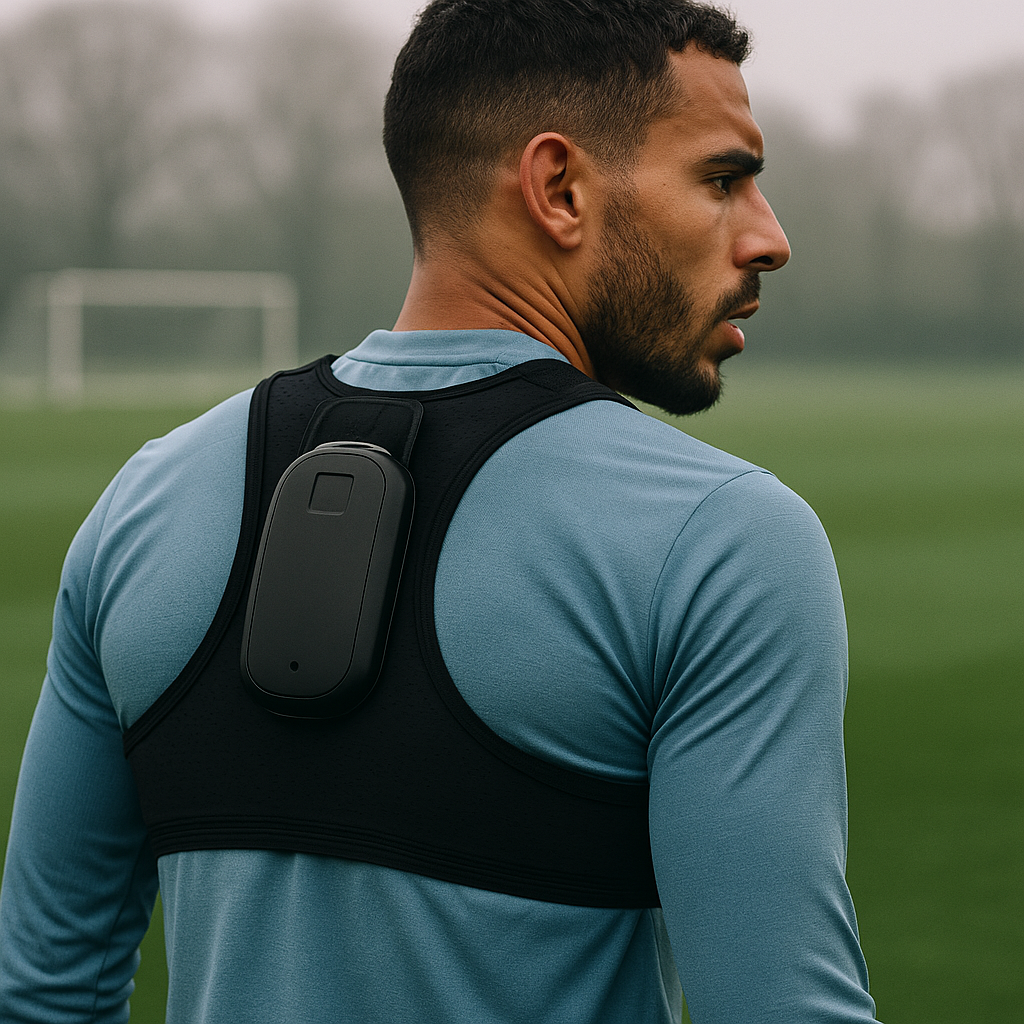
    Professional footballer wearing GPS vest used for sports data analytics performance tracking during training
    Professional footballer wearing GPS vest used for sports data analytics performance tracking during training

    Injury Prevention: The Biggest Win of All

    Ask any performance director at a top club and they will tell you the same thing: keeping players fit is worth more than any tactic. A key midfielder missing ten matches due to a hamstring strain can cost a club its league position. That is why injury prevention has become one of the most active areas of sports data analytics performance research.

    Platforms such as Kitman Labs and Catapult Sports integrate training load data, sleep quality metrics, and historical injury records to generate daily readiness scores for each athlete. If a player’s acute-to-chronic workload ratio spikes above a certain threshold, the system flags it. The coaching staff can then adjust training intensity before a problem becomes a tear or a rupture.

    According to research covered by the BBC Sport team, several elite clubs have reported meaningful reductions in soft-tissue injuries since implementing structured load monitoring programmes. The savings in both squad availability and medical costs run into millions across a season.

    In athletics, British Athletics has leaned heavily into biomechanical analysis. High-speed cameras capture stride patterns at 500 frames per second. Force plate data from the training track feeds into models that flag asymmetries likely to cause issues over a long competitive season. Athletes like sprinters and middle-distance runners can have their gait corrected based on hard data rather than a coach’s naked eye.

    Tactical Analysis: Watching the Game Differently

    Every top-flight manager now has an analyst department. The conversation has shifted from whether to use data to how much weight to give it alongside lived experience. Tactical analysis software such as Hudl and Sportscode allows analysts to tag and clip specific match events, building opponent profiles with granular detail.

    Expected goals, or xG, became the metric that broke into mainstream football conversation. Now coaches are working with expected threat, PPDA (passes allowed per defensive action), and pressing success rates as standard vocabulary. The analysts translate these into patterns the coaching staff can actually use on the training pitch.

    What is particularly interesting is the shift toward real-time analytics. Some clubs are beginning to use live dashboards during matches, feeding insights to coaching staff on the touchline via tablet. Substitution timing, pressing triggers, and set-piece adjustments can now be informed by data as the game unfolds rather than purely by intuition.

    The Human Element Still Matters

    None of this means the human side of sport is disappearing. Data does not measure desire, leadership under pressure, or how a player performs in a dressing room. The best clubs treat analytics as a powerful tool within a broader decision-making framework, not as a replacement for experienced football or sporting minds.

    The tension between data evangelists and traditionalists is real, and it plays out in every sport. But the trajectory is clear. Sports data analytics performance capabilities will only deepen as machine learning models get more sophisticated and wearable technology becomes less invasive and more accurate.

    For fans, this shift is fascinating. The sport you watch on a Saturday afternoon is increasingly shaped by decisions made in analytics rooms during the week. Every pass, press, and set piece may well have a data fingerprint on it. That is not a cold thing. It is actually a remarkable extension of how much elite sport cares about doing things right.

    Frequently Asked Questions

    What is sports data analytics performance and how is it used in football?

    Sports data analytics performance refers to the collection and analysis of large volumes of athletic data to improve decision-making in areas like recruitment, tactics, and injury prevention. In football, GPS tracking, event data, and computer vision systems all feed into platforms that help clubs evaluate players and plan match strategies.

    Which UK football clubs are known for using data analytics effectively?

    Brentford FC became widely recognised for their analytics-driven recruitment approach, using data to identify undervalued players across European leagues. Several Premier League clubs, including Liverpool and Manchester City, also have large in-house analytics departments that influence both transfers and tactical preparation.

    How does data analytics help prevent sports injuries?

    Platforms like Catapult Sports and Kitman Labs monitor training loads, recovery metrics, and biomechanical patterns to generate daily readiness scores for athletes. If a player’s workload spikes to a high-risk level, coaches are alerted so they can reduce training intensity and lower the chance of a soft-tissue injury.

    Is sports analytics only for elite professional clubs or can smaller teams benefit?

    While the most sophisticated platforms are used at the elite level, affordable analytics tools are increasingly accessible to lower-league and amateur clubs. Apps and subscription platforms now offer basic GPS tracking and performance dashboards suitable for semi-professional and even grassroots environments.

    What is expected goals (xG) and why do football analysts use it?

    Expected goals is a statistical measure that rates the quality of a shot based on factors like distance from goal, angle, and the type of assist that created it. It gives analysts and coaches a clearer picture of whether a team is genuinely creating high-quality chances or simply getting fortunate with lower-probability efforts.

  • Cold Water Therapy vs Heat Recovery: Which Is Better for Athletes in 2026?

    Cold Water Therapy vs Heat Recovery: Which Is Better for Athletes in 2026?

    Recovery is no longer the boring bit you do after training. In 2026, it is a discipline in its own right, and the debate around cold water therapy vs heat recovery has never been more heated (pun absolutely intended). From Premier League physio rooms to weekend warriors plunging into icy Scottish lochs, athletes across the UK are taking their post-session routines seriously. But which method actually works better, and for whom?

    The short answer is: it depends on what you are training for. The longer answer is what this article is about.

    Athlete entering cold water therapy ice bath in a professional UK sports recovery facility
    Athlete entering cold water therapy ice bath in a professional UK sports recovery facility

    What Is Cold Water Therapy and How Does It Work?

    Cold water immersion (CWI), also known as ice baths or cold water therapy, involves submerging the body in water typically between 10°C and 15°C for anywhere from 5 to 15 minutes. The science behind it centres on vasoconstriction: cold temperatures cause blood vessels to narrow, which reduces inflammation and metabolic waste in muscle tissue. When you get out, blood rushes back in, flushing those tissues with fresh oxygen.

    Research published in journals such as the British Journal of Sports Medicine has consistently shown CWI reduces perceived muscle soreness (DOMS) by up to 20% compared to passive rest. Elite clubs including Manchester City and Bath Rugby have cold water facilities built into their training complexes as standard kit. For endurance athletes, cyclists, and football players who need to back up hard sessions on consecutive days, that reduction in soreness has a very real performance impact.

    The downsides are worth acknowledging, though. For strength and hypertrophy athletes, several studies from 2022 to 2025 suggest that regular cold immersion after resistance training can actually blunt muscle protein synthesis. If you are chasing mass, that icy plunge might be working against you.

    The Case for Heat-Based Recovery Methods

    Heat recovery encompasses saunas (both traditional Finnish and infrared), hot baths, steam rooms, and heated compression therapy. Where cold constricts, heat dilates. Elevated temperatures increase blood flow, relax connective tissue, promote sweating, and trigger a cardiovascular response that some researchers compare to light aerobic exercise.

    Finnish sauna culture has gone mainstream in UK sport over the last few years. Facilities at venues like the Manchester Aquatics Centre and various private performance gyms now include infrared sauna pods as standard recovery tools. The physiological benefits extend beyond muscles; regular sauna use has been linked to improved cardiovascular health, better sleep quality, and even reduced cortisol levels in high-stress athletes.

    Heat recovery suits certain athlete profiles particularly well. For powerlifters, rugby forwards, and bodybuilders where muscle building is the goal, heat does not carry the same risk of blunting protein synthesis. For older athletes dealing with stiff joints and connective tissue tightness, the loosening effect of heat can be transformative.

    Cold water therapy pool temperature gauge in a sports gym recovery room
    Cold water therapy pool temperature gauge in a sports gym recovery room

    What Does the Latest Sports Science Say in 2026?

    The most compelling recent research points towards contrast therapy as the most effective all-round recovery protocol. Alternating between cold and heat, typically 1-minute cold followed by 3-4 minutes heat, repeated three to five times, has shown superior outcomes in multiple metrics including reduced DOMS, faster heart rate variability (HRV) recovery, and improved sleep onset.

    A 2025 meta-analysis from researchers at Loughborough University examined 38 studies covering over 800 athletes and concluded that contrast water therapy outperformed either modality alone for multi-day tournament recovery scenarios. That means team sport athletes, tennis players at long tournaments, cyclists at stage races, all benefit most from combining both approaches rather than picking sides.

    The timing matters enormously, too. Cold water therapy appears most effective when applied within 30 minutes of high-intensity effort. Heat recovery works better as a pre-sleep protocol, particularly in the infrared sauna format, where core temperature elevation followed by the natural drop during sleep creates ideal conditions for deep recovery. These are not competing tools; increasingly, they are being used sequentially by smart athletes.

    Practical Guide: Which Recovery Method Suits Your Training?

    Here is a practical breakdown to help you match recovery tools to training goals:

    • Endurance runners, cyclists, triathletes: Cold water therapy post-session, particularly after long or interval-heavy efforts. Contrast therapy is excellent for stage or multi-day events.
    • Strength and hypertrophy training: Avoid ice baths within 4-6 hours of resistance sessions. Use heat recovery (sauna, hot bath) as your primary tool, ideally in the evening.
    • Team sport athletes (football, rugby, hockey): Contrast therapy is your best friend when backs-to-back fixtures are on the calendar. Full cold immersion is a solid second choice.
    • Recreational gym-goers: Hot bath or sauna two to three times per week covers most bases, reduces injury risk, and supports sleep quality without any specialist equipment needed.
    • Older or injury-prone athletes: Heat first. It loosens tissue, reduces joint stiffness, and aids mobility. Cold can still play a role post-acute injury, but it should not be your default.

    Accessibility matters, too. A cold shower taken down to a genuine 12-15°C costs nothing. Infrared sauna sessions at UK gyms typically run between £15 and £35 per session, though many fitness clubs now include them as part of premium memberships. The NHS active living guidance consistently reminds us that recovery is a genuine component of any sustainable fitness routine, not an optional luxury.

    The Mental Side of Cold Water Therapy vs Heat Recovery

    Beyond the physical, both methods have compelling mental health dimensions that often get overlooked. Cold water immersion triggers a rapid release of norepinephrine and dopamine, with research from 2024 suggesting these neurochemical effects can last up to four hours post-immersion. Outdoor cold water swimming in UK rivers, lakes, and coastal spots has built an enormous community around this mental boost. Organisations like Outdoor Swimming Society report record membership figures through 2025 and into 2026.

    Sauna use, meanwhile, promotes endorphin release and has demonstrable links to reduced anxiety scores in studied populations. For athletes managing the psychological load of competitive seasons, that cannot be ignored.

    Whichever method you lean towards, tracking your recovery data consistently gives you the best feedback loop. HRV apps, sleep trackers, and perceived exertion journals are all useful here. And if you are the sort of athlete who takes their performance data seriously, you might find a free SEO checker a useful analogy: just as you audit a website to find what is underperforming, auditing your recovery routine reveals the gaps that are holding your progress back.

    Cold or Hot: The Honest Verdict

    Neither cold water therapy nor heat recovery is universally superior. The evidence in 2026 points clearly towards a contextual approach: use cold to manage inflammation and accelerate next-day readiness after high-intensity efforts, and use heat to support muscle building, joint mobility, and sleep quality. Combine them intelligently and you get the best of both worlds.

    The athletes winning in 2026 are not the ones picking a side in this debate. They are the ones stacking both tools strategically, informed by how their body responds and what their training week demands. That is the real competitive edge.

    Frequently Asked Questions

    How long should you stay in a cold water ice bath for recovery?

    Most sports science research recommends 10 to 15 minutes in water between 10°C and 15°C for optimal recovery benefits. Shorter sessions of 5-7 minutes can still reduce perceived soreness if a full immersion is not possible or practical.

    Can you do cold water therapy and sauna on the same day?

    Yes, and this is known as contrast therapy. Alternating between cold immersion and heat in cycles of roughly 1 minute cold to 3-4 minutes heat is supported by research as one of the most effective recovery protocols, particularly for team sport athletes with back-to-back fixture schedules.

    Does cold water therapy reduce muscle growth?

    Evidence from multiple studies suggests that regular cold water immersion applied within a few hours of resistance training can blunt muscle protein synthesis and reduce hypertrophy gains over time. If building muscle is your primary goal, heat recovery or simply passive rest is a better choice after strength sessions.

    What temperature should an ice bath or cold plunge be for athletes?

    The recommended range for effective cold water therapy is between 10°C and 15°C. Water below 10°C carries a higher risk of cold shock and is not shown to produce significantly better recovery outcomes. Water above 15°C reduces the physiological vasoconstriction response.

    Is infrared sauna better than a traditional sauna for recovery?

    Both offer meaningful recovery benefits, but infrared saunas operate at lower temperatures (around 45-60°C versus 80-100°C for traditional Finnish saunas), making them more accessible and comfortable for longer sessions. Some athletes find infrared saunas easier to tolerate regularly, which may improve long-term consistency of use.

  • Zone 2 Training Explained: Why Every Athlete Should Be Doing It

    Zone 2 Training Explained: Why Every Athlete Should Be Doing It

    Zone 2 training has quietly become one of the most talked-about concepts in elite sport and everyday fitness alike. Once reserved for professional cyclists and marathon runners, this low-intensity, high-reward training method is now shaping weekly programmes from Premier League recovery sessions to weekend warrior schedules. If you have not yet looked seriously at how it fits into your routine, this is the moment to do it.

    The principle is deceptively simple. Zone 2 refers to a specific heart rate band, typically 60 to 70 percent of your maximum heart rate, where your body primarily burns fat for fuel and your aerobic base develops at its most efficient rate. It feels easy. In fact, many athletes feel guilty doing it because the effort seems almost too comfortable. That discomfort with comfort is precisely the point.

    Athlete performing Zone 2 training on a coastal running path at golden hour
    Athlete performing Zone 2 training on a coastal running path at golden hour

    What Is Zone 2 Training and How Does It Work?

    Your cardiovascular system operates across five training zones, each defined by heart rate intensity and the energy systems they engage. Zone 2 sits below the first lactate threshold, meaning your body clears lactate as fast as it produces it. At this intensity, mitochondria, the energy-producing engines inside your muscle cells, are working hard but not being overwhelmed. Over time, consistent Zone 2 work increases the density and efficiency of those mitochondria, which translates directly into better endurance, faster recovery and improved fat oxidation.

    Physiologist and longevity researcher Dr Peter Attia has been instrumental in bringing Zone 2 training to mainstream audiences, citing it as a foundation for cardiovascular health and athletic performance at every level. Elite coaches working with Tour de France cyclists and Olympic distance runners have long structured 70 to 80 percent of total training volume in this zone, saving higher-intensity work for targeted sessions that build on the aerobic base below.

    Why Zone 2 Training Has Become a Cornerstone of Elite Endurance Programmes

    The polarised training model, which combines large volumes of Zone 2 with small amounts of very high-intensity work, has produced some of the most impressive endurance performances in modern sport. Norwegian athletes in triathlon and cross-country skiing have dominated their respective disciplines using this approach for years. Kristian Blummenfelt and Gustav Iden, gold medallists at consecutive Olympic and World Triathlon Championship events, train enormous weekly volumes with the vast majority sitting firmly in Zone 2.

    The reason this works comes down to adaptation without accumulation of fatigue. High-intensity sessions create significant physiological stress. Done too frequently, they lead to burnout, injury and stalled progress. Zone 2 builds the same aerobic machinery at a fraction of the recovery cost, meaning athletes can train more often, for longer, and arrive at key events fresher. It also improves cardiac output and stroke volume, essentially allowing the heart to pump more blood per beat, which underpins performance in virtually every sport.

    Close-up of heart rate monitor used during Zone 2 training on a cycling session
    Close-up of heart rate monitor used during Zone 2 training on a cycling session

    How to Find Your Zone 2 Heart Rate

    The most accurate way to identify Zone 2 is through a lactate test in a sports science lab, where blood samples taken at increasing intensities pinpoint your lactate threshold precisely. This is increasingly accessible through university sports centres and performance clinics across the UK. However, a practical field method works well for most athletes. Use the talk test: you should be able to hold a full conversation without gasping. If you are struggling to string sentences together, you have drifted into Zone 3. Wearable technology from brands like Garmin, Polar and Whoop now offers real-time zone guidance based on heart rate variability and resting data, making it easier than ever to stay in the right range during a session.

    A simple formula puts Zone 2 between roughly 130 and 150 beats per minute for a reasonably fit adult, though this varies considerably with age, fitness level and genetics. Consistency matters more than precision at the start. The key is accumulating time in that aerobic comfort zone across the week.

    Incorporating Zone 2 Training Into Your Weekly Schedule

    For recreational athletes, three to four Zone 2 sessions per week, each lasting 45 to 90 minutes, will produce measurable aerobic improvements within six to eight weeks. Running, cycling, rowing, swimming and even brisk hiking all qualify. The activity matters less than maintaining the correct intensity. Many athletes find Zone 2 sessions ideal for double-duty days, pairing them with podcast listening, planning or simply decompressing after a stressful week at work.

    The structure that works best for most people is two or three Zone 2 sessions bookending one or two higher-intensity efforts. For example, a Monday and Wednesday easy run, a Thursday interval session, and a long Saturday cycle at Zone 2 pace covers most of the physiological bases without overloading the system. If you train for organised events, whether a local parkrun, a sportive or a triathlon, Zone 2 blocks provide the engine that makes your race-pace efforts sustainable. Picking up local event tickets for a target race is a great way to give those long, slow sessions a sense of purpose and urgency.

    Common Mistakes Athletes Make With Zone 2 Work

    The biggest error is going too hard. Most recreational athletes who think they are training in Zone 2 are actually in Zone 3, a moderate-intensity grey zone that is too hard for pure aerobic adaptation and too easy for meaningful high-end development. This is sometimes called the “moderate intensity trap” and it is surprisingly common. Slowing down feels counterintuitive but is genuinely necessary.

    Skipping it in favour of more exciting sessions is the second mistake. Zone 2 training lacks the adrenaline of intervals or heavy lifting, but skipping it consistently leaves a critical foundation unbuilt. Think of it as infrastructure. Nobody applauds the groundwork, but without it nothing else stands up properly.

    Zone 2 training is not a trend. The science behind it is decades old and the results across elite and amateur sport speak clearly. Build your aerobic base with patience and consistency, and every other aspect of your fitness, from race times to recovery speed to general energy levels, will improve as a result.

    Frequently Asked Questions

    What heart rate should I be at for Zone 2 training?

    Zone 2 typically sits between 60 and 70 percent of your maximum heart rate. For most adults, this falls roughly between 130 and 150 beats per minute, though the range shifts with age and fitness level. The talk test is a reliable field method: you should be able to hold a comfortable conversation without gasping for breath.

    How long should a Zone 2 training session be?

    Most coaches and physiologists recommend Zone 2 sessions of between 45 and 90 minutes for recreational athletes to drive meaningful aerobic adaptation. Professionals often extend these to two or three hours, particularly for cycling or running. Starting with 45-minute sessions three times a week is a sensible entry point if you are new to this style of training.

    Can Zone 2 training help with weight loss?

    Yes, Zone 2 training is one of the most effective tools for improving fat oxidation, which is the body’s ability to burn fat as its primary fuel source. Because the intensity sits below the lactate threshold, fat metabolism is prioritised over carbohydrates. Combined with a sensible nutrition approach, regular Zone 2 work can meaningfully support body composition goals over time.

    Is Zone 2 training suitable for beginners?

    Zone 2 training is arguably the best starting point for beginners because the low intensity reduces injury risk while still developing the cardiovascular system effectively. New exercisers often find that even a brisk walk keeps their heart rate within Zone 2, making it highly accessible without specialist equipment or significant fitness background.

    How quickly will I see results from Zone 2 training?

    Most athletes notice improvements in resting heart rate, recovery speed and endurance capacity within six to eight weeks of consistent Zone 2 work. Measurable changes in mitochondrial density and fat oxidation efficiency take longer, typically three to six months of regular training. Patience is essential, but the adaptations produced are durable and substantial compared to sporadic high-intensity efforts.