Category: Sporting News

  • Strength Training For Runners: The Simple Speed Upgrade

    Strength Training For Runners: The Simple Speed Upgrade

    If you mostly clock up miles and avoid the weights area, you are exactly who strength training for runners is designed for. A couple of focused strength sessions each week can make you faster, tougher on hills and far less likely to break down mid-season.

    Why strength training for runners is a game changer

    Running is repetitive. The same joints and muscles take thousands of hits every session. Strength work builds stronger tissue, more stable joints and better power, so every stride costs you less energy.

    Key benefits include:

    • More speed for the same effort – Stronger legs push the ground away harder, so you travel further each stride without feeling like you are sprinting.
    • Better hill running – Quads, glutes and calves drive you uphill instead of leaving you gasping and shuffling.
    • Stronger sprint finishes – Extra power in your hips and hamstrings lets you kick past people in the final 200 metres.
    • Reduced injury risk – Strong muscles and tendons soak up impact, taking pressure off knees, shins and ankles.
    • Improved posture and form – A solid core stops you collapsing at the hips when you get tired.

    How often should runners lift?

    You do not need to live in the gym. For most distance athletes, the sweet spot is:

    • 1 to 2 strength sessions per week in general training phases
    • 30 to 45 minutes per session
    • Focus on big compound moves, not endless tiny isolation exercises

    On heavy running weeks, stick to one short, sharp session. During off season or base building, you can push to two full sessions and build more muscle and power.

    Key strength exercises every runner should know

    You do not need a huge exercise library. Nail these basics and you will feel the difference on your next tempo run or hill rep session.

    Squats

    Squats build quads, glutes and core – your main engines for pushing off the ground.

    • Bodyweight to start, then add dumbbells or a barbell once you are confident
    • 3 sets of 6 to 10 reps, resting 60 to 90 seconds

    Deadlifts

    Deadlifts target hamstrings and glutes and train powerful hip extension, crucial for sprint finishes and strong strides.

    • Romanian deadlifts with dumbbells are ideal for beginners
    • 3 sets of 6 to 8 reps, focusing on slow, controlled lowering

    Calf raises

    Calf raises are non negotiable if you want to protect your Achilles and run well on hills.

    • Start on two legs, progress to single leg
    • 3 sets of 12 to 15 reps, with a pause at the top

    Core work

    A stable trunk keeps your legs and arms moving efficiently, especially in the final kilometres of a race.

    • Planks, side planks, dead bugs and bird dogs
    • 2 rounds of 20 to 30 seconds per move

    Simple gym plan for busy runners

    Here is a straightforward strength training for runners routine you can drop into your week:

    • Warm up: 5 minutes easy bike or treadmill, then leg swings and lunges
    • Back squat or goblet squat – 3 x 6 to 8
    • Romanian deadlift – 3 x 6 to 8
    • Walking lunges – 2 x 10 steps each leg
    • Standing calf raises – 3 x 12 to 15
    • Plank and side plank – 2 rounds of 30 seconds each

    Keep the weights challenging but never sloppy. You should finish each set with 1 or 2 reps still in the tank.

    At home strength training for runners

    No gym membership? You can still build serious strength using just bodyweight and a resistance band.

    • Bodyweight squats or split squats – 3 x 10 to 12
    • Single leg hip thrusts off a sofa – 3 x 8 to 10
    • Single leg calf raises on a step – 3 x 12 each side
    • Band rows around a sturdy post – 3 x 10
    • Core circuit: dead bugs, bird dogs, side planks – 2 rounds

    Do this twice a week on easy run or rest days and you will quickly feel more stable and controlled when you pick up the pace.

    How to fit strength work around your running

    To avoid heavy legs on key sessions, follow this simple rule: lift after easy runs, not before hard ones. Ideal options:

    Athlete performing lunges beside an athletics track to improve strength training for runners
    Runner doing resistance band exercises at home as part of strength training for runners

    Strength training for runners FAQs

    How many days a week should runners do strength training?

    Most runners see great results with 1 to 2 strength sessions per week. One session is enough to maintain strength in peak race periods, while two sessions work well in base phases when mileage is slightly lower. Focus on big compound moves, keep sessions to 30 to 45 minutes and avoid lifting heavy the day before hard intervals or long runs.

    Will strength training make me too heavy to run fast?

    When programmed correctly, strength work for endurance athletes builds power and resilience rather than bulky muscle. Low to moderate rep ranges with good rest help you gain strength without adding excessive size. Combined with regular running, your body naturally stays lean, and the extra strength usually improves speed and running economy.

    Can beginners start strength training with just bodyweight?

    Yes, beginners can safely start with bodyweight exercises at home. Squats, split squats, hip thrusts, calf raises and core moves like planks and dead bugs are enough to build a solid base. Once these feel comfortable and controlled, you can add resistance bands or light dumbbells to keep progressing while maintaining good technique.

  • How Mobile Ticketing Is Changing The Matchday Experience

    How Mobile Ticketing Is Changing The Matchday Experience

    Mobile ticketing in sport has quietly become the new normal, from Premier League grounds to grassroots tournaments. Paper stubs are being replaced by QR codes and wallet passes, and that shift is reshaping how fans plan, travel and experience live action.

    What is mobile ticketing in sport?

    At its simplest, mobile ticketing in sport means your phone becomes your ticket. Instead of posting paper passes or collecting from a box office, clubs send a digital ticket to an app, email or phone wallet. Stewards then scan the code at the turnstile, updating entry in real time.

    Behind the scenes, this gives organisers a live picture of who has arrived, which stands are filling up and where queues are forming. For fans, it means fewer lost tickets, easier transfers to friends and a smoother route into the ground.

    Why clubs are embracing mobile ticketing in sport

    Clubs at every level are leaning into mobile ticketing in sport for a mix of practical and performance reasons:

    • Faster entry: Scanners can process digital codes far more quickly than checking names on clipboards or tearing stubs.
    • Reduced fraud: Dynamic QR codes that refresh every few minutes make screenshots and duplicates harder to use.
    • Lower costs: Less printing, postage and staffing for ticket offices means more budget for facilities and fan services.
    • Greener matchdays: Cutting out paper and plastic is an easy win for clubs trying to reduce their environmental impact.

    For big events like cup finals or international fixtures, the ability to control and track every seat digitally also makes crowd management safer and more predictable.

    How mobile tickets are changing fan behaviour

    Mobile ticketing in sport is not just about the gate – it is changing how supporters plan their entire day. With tickets stored in an app, clubs can send live updates on public transport, turnstile queues and kick-off changes. That helps fans time their journey, choose less crowded entrances and spend more time enjoying the build-up instead of standing in line.

    Inside the venue, the same app might handle food orders, merchandise discounts or seat upgrades. Some stadiums are testing in-seat delivery triggered from the ticketing app, rewarding early arrivals with exclusive offers. The result is a more personalised matchday that feels closer to a modern festival or concert experience.

    Accessibility and digital divide concerns

    There are challenges. Not every supporter has a smartphone, reliable data or the confidence to navigate apps. Older fans, families sharing one device and visitors from abroad can all hit snags at the turnstile.

    The best clubs are tackling this with hybrid systems: dedicated help desks, optional printed passes, and the ability to share tickets securely with companions who need assistance. Clear pre-match communication is vital so fans know where to go and what to have ready on arrival.

    Mobile ticketing and the rise of dynamic pricing

    As more fans move to digital passes, clubs are experimenting with flexible pricing. Live data on demand, seat availability and even weather can feed into ticket prices in real time, similar to airline models. That can mean cheaper late deals for less popular fixtures, but also higher prices for blockbuster derbies.

    Supporter groups are watching closely to ensure pricing stays fair and transparent. Expect more debate here as technology races ahead of regulation.

    The future: smart stadiums and integrated fan journeys

    Looking ahead, mobile ticketing in sport is likely to plug into a wider ecosystem. Imagine a single app that handles your travel to the venue, your entry, your food and drink, and even your post-match highlights reel. Wearables and digital IDs could eventually sit alongside phone-based passes as stadiums upgrade their infrastructure.

    For now, the basics still matter most: clear instructions, reliable scanners and a backup plan if batteries die. Whether you are heading to a Champions League night or a local 5k, it is worth checking how tickets are delivered and whether you need to download anything in advance or secure your local event tickets early.

    Runner showing mobile ticketing in sport on a smartphone at a city race
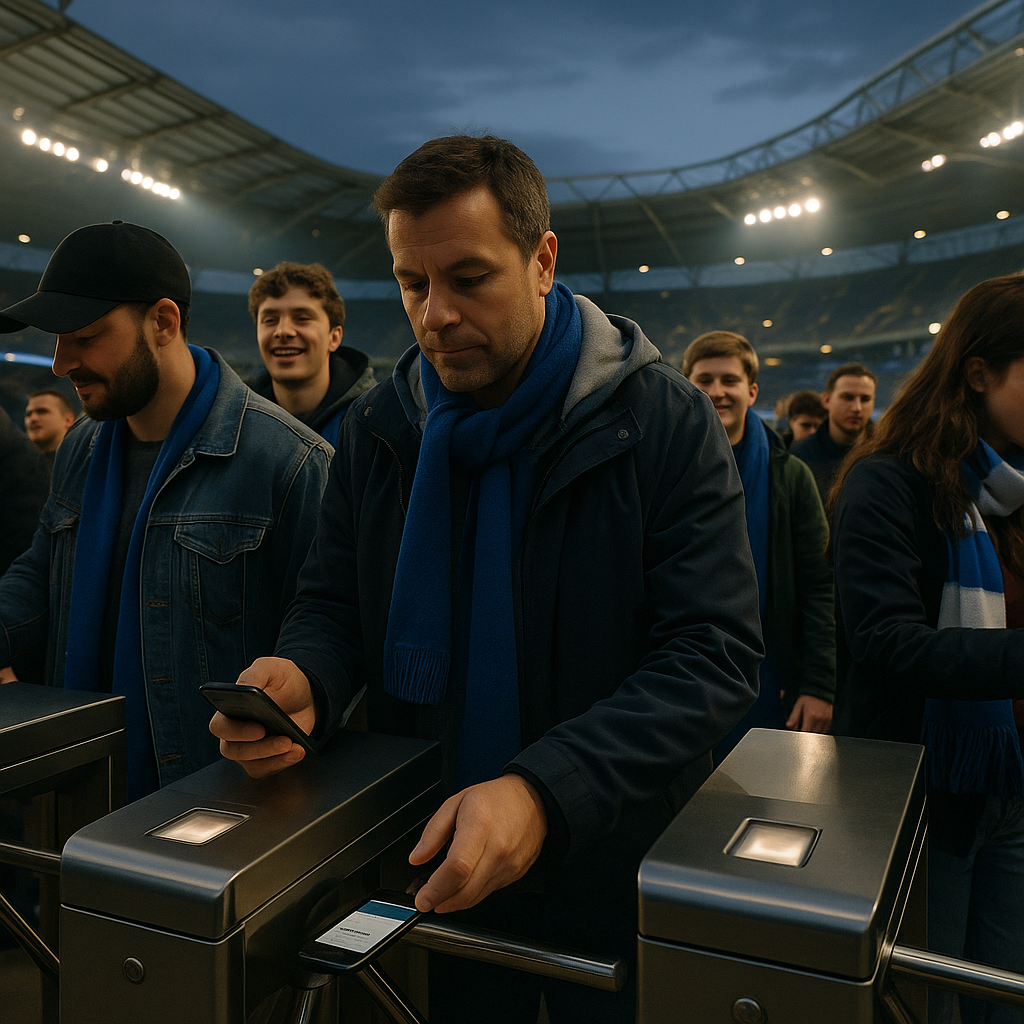
    Crowd arriving at an arena using mobile ticketing in sport on their phones

    Mobile ticketing in sport FAQs

    Do I need a smartphone for mobile ticketing in sport?

    In most cases you do need a smartphone to use mobile ticketing in sport, as tickets are delivered via apps, email or digital wallets. However, many clubs still offer alternatives such as print-at-home passes or collection from the ticket office for fans without compatible devices. It is best to check the specific guidance from the venue before you travel so you know what options are available.

    Is mobile ticketing in sport safe from fraud?

    When implemented properly, mobile ticketing in sport can be safer than traditional paper tickets. Dynamic QR codes, secure apps and verified transfer systems make it harder to copy or resell fake tickets. Fans should only buy from official outlets or trusted partners, avoid sharing screenshots on social media and keep their login details private to stay protected.

    What if my phone battery dies before I reach the stadium?

    Battery anxiety is a real concern with mobile ticketing in sport. To avoid issues, fully charge your phone before you leave, carry a small power bank if you have one and download your ticket to your wallet app so it is accessible offline. Many venues now have support points at entrances that can help look up your booking if there is a genuine technical problem, but this can slow down entry, so preparation is key.

  • How Stadium Lighting Design Is Transforming Night-Time Football

    How Stadium Lighting Design Is Transforming Night-Time Football

    Stadium lighting design is quietly becoming one of the biggest game changers in night-time football and other elite sports. From grassroots grounds upgrading their floodlights to mega arenas hosting global tournaments, the science of how pitches are lit now affects everything from player performance to fan experience and TV broadcast quality.

    Why stadium lighting design matters more than ever

    Modern sport is built around prime-time kick-offs and packed fixture lists, which means more matches under lights than in natural daylight. That makes stadium lighting design a serious performance factor, not just a cosmetic upgrade. Poorly lit pitches can distort depth perception, slow reaction times and even increase the risk of injury when players misjudge the flight of the ball or the position of opponents.

    For fans, the difference between old-school orange-tinted floodlights and the latest LED systems is huge. Cleaner, whiter light improves visibility across the pitch, makes kits easier to distinguish and gives photos and social posts that crisp, high-definition look everyone expects. Broadcasters also rely on consistent illumination to capture ultra slow-motion replays and VR-style graphics without flicker or glare.

    Key elements of modern stadium lighting design

    The latest generation of stadium lighting design focuses on precision and control rather than just raw brightness. Engineers now model how every beam of light will fall on the pitch, stands and surrounding areas using advanced software before a single fitting is installed.

    Uniformity is a big priority. It is no use having one blazing hotspot in the centre circle if the corners are in semi-shadow. Elite standards now demand tight limits on how much light levels can vary across the playing area, so players experience the same visibility whether they are defending, attacking or taking a corner.

    Colour temperature and colour rendering are just as important. Neutral white light helps the human eye track fast movement and subtle changes in spin on the ball, while high colour rendering makes kits, skin tones and even the turf itself look natural on screen. That is why LED systems have rapidly overtaken older metal halide lamps in most new projects.

    Smart controls and energy conscious upgrades

    Behind the scenes, smart control systems are reshaping how clubs manage their lighting. Instead of a simple on or off switch, operators can now run pre-set scenes for training, warm ups, match play, post-match clean up and even concerts. Light levels can be dialled up for TV broadcasts or toned down to save energy when only a portion of the stadium is in use.

    Many clubs pair lighting projects with wider sustainability goals, replacing outdated floodlights with efficient LEDs that dramatically cut electricity use and maintenance. The same thinking is filtering into training centres and even players’ homes, where controlled light and shade – from blackout curtains to wooden venetian blinds – is used to support sleep and recovery cycles around evening fixtures and long-haul travel.

    How lighting affects players and performance

    Sports scientists are increasingly interested in how light influences reaction times, decision making and fatigue. Consistent, glare free lighting reduces eye strain, which can help players maintain focus deep into extra time. Goalkeepers, in particular, benefit from well positioned fittings that minimise direct glare when they look up to track high balls or crosses.

    Training under match realistic lighting conditions is becoming more common too. If a team regularly plays late evening fixtures, coaches want players to be used to the exact look and feel of the pitch under lights. That includes shadows, reflections on wet turf and how the ball appears in the air against a dark sky.

    Fan experience and the show around the show

    For supporters, the night match experience now goes far beyond simply seeing the action. Dynamic lighting sequences can accompany player walk outs, goal celebrations and full time moments, turning a standard fixture into a full stadium show. Carefully programmed colour washes can match club colours, national flags or even charity campaigns.

    Lighting engineer managing smart systems for precise stadium lighting design in a modern sports arena
    Fans watching a night-time football match under high quality stadium lighting design from the stands

    Stadium lighting design FAQs

    What makes good stadium lighting design for football?

    Good stadium lighting design delivers bright but comfortable illumination with excellent uniformity across the whole pitch, minimal glare for players and officials, and natural looking colours for fans and broadcasters. Modern systems use LED fittings, detailed computer modelling and smart controls to achieve consistent light levels that support performance and provide a clear, high quality viewing experience from every seat.

    Why are LED lights popular in stadium lighting design?

    LED technology is popular in stadium lighting design because it offers high energy efficiency, long lifespan and precise control over brightness and colour. LEDs switch on instantly, work well with dynamic light shows and can be dimmed or adjusted in zones for training, matches or events. They also maintain consistent colour and intensity over time, which is vital for TV broadcasts and professional photography.

    How does stadium lighting design affect TV broadcasts?

    TV broadcasters rely on high quality stadium lighting design to capture clear, flicker free images from multiple camera angles. Consistent light levels prevent dark patches on the pitch, while accurate colour rendering ensures kits, skin tones and graphics look natural. Well designed systems reduce shadows and glare, making slow motion replays, aerial shots and close ups sharper and easier for viewers to follow at home.

  • How Football GPS Vests And Wearable Tech Are Changing Training

    How Football GPS Vests And Wearable Tech Are Changing Training

    From Sunday league to the Champions League, football GPS vests and other wearables have become part of the modern kit list. Those black vests, smart boots and glowing heart rate straps are not just for show – they are quietly transforming how players train, recover and perform on match day.

    What do football GPS vests actually track?

    At the heart of football GPS vests is a small sensor unit between the shoulder blades. It uses satellite positioning, accelerometers and gyroscopes to build a live picture of what a player is doing on the pitch. The most common metrics include:

    • Total distance covered and distance in specific speed zones
    • Number of sprints and top speed reached
    • Accelerations and decelerations
    • Player load – a combined score of movement intensity
    • Heat maps showing typical positions and movement patterns

    At pro level, coaches see this data live on tablets during training. At grassroots, it is usually synced afterwards via an app, but the core insights are very similar.

    How heart rate trackers and smart boots add extra insight

    GPS tells you what a player is doing. Heart rate trackers and smart boots help explain how hard it feels and how well the body is coping. Chest straps and optical armbands track:

    • Average and maximum heart rate
    • Time spent in different heart rate zones
    • Recovery time between high intensity efforts

    Smart boots and insoles add another layer, measuring things like stride length, foot strike, number of ball touches and even impact forces when changing direction or landing from a jump. When combined with data from football GPS vests, coaches gain a 360-degree view of physical performance.

    How coaches use data to shape tactics and style of play

    Wearables are not just about fitness – they quietly influence tactics too. Analysts can compare physical data with match footage to see whether a team is pressing as aggressively as planned, or if a high defensive line is causing extra sprinting for the centre backs.

    For example, if wide forwards are consistently hitting very high sprint numbers, a coach might tweak the system to bring the full backs higher and share the running load. Midfielders who cover huge distances but rarely enter high intensity zones might be encouraged to make more forward runs or adjust their positioning in build up play.

    At grassroots level, the same principles apply in a simpler way. A coach might notice that younger players are burning themselves out in the first 15 minutes and use that information to teach smarter movement, better pressing triggers and improved game management.

    Managing player load and preventing injuries

    One of the biggest benefits of football GPS vests is smarter control of training load. Instead of guessing who is tired, staff can see:

    • Which players have had a heavy week of high speed running
    • Who is not hitting their usual numbers and may be fatigued
    • Whether a player returning from injury is ready for full intensity

    When heart rate and recovery data show a player is struggling to bounce back between sessions, coaches can dial back pitch size, drill intensity or total minutes. Over time, this reduces soft tissue injuries and keeps squads available for selection.

    Even in amateur football, simple rules like capping sprint distance for players coming back from a hamstring strain can be built around wearable data, rather than relying purely on how someone feels on the day.

    Wearable tech features everyday players should look for

    You do not need a Premier League budget to benefit from this tech. For most players and small clubs, the sweet spot is a simple GPS pod, a comfortable vest and a basic heart rate monitor. Useful features to prioritise include:

    Grassroots football team reviewing data from football GPS vests and heart rate trackers with their coach
    Smart football boots and wearable football GPS vests laid out in a changing room before training

    Football GPS vests FAQs

    Are football GPS vests allowed in competitive matches?

    In many leagues, football GPS vests are permitted as long as the units are safely secured and approved by the competition organisers. At elite level, they are widely used in both training and matches. At amateur level, it depends on local rules, so teams should always check with their league before wearing them in official games.

    Do grassroots players really benefit from football GPS vests?

    Yes, grassroots players can gain a lot from football GPS vests, even with basic models. Simple metrics like total distance, sprint count and top speed help players see if their fitness is improving and whether they are pacing themselves well. Coaches can also use the data to design smarter conditioning drills and manage tired players more carefully.

    How accurate are consumer football GPS vests compared to pro systems?

    Top tier professional systems are usually more accurate and offer more detailed metrics, but modern consumer football GPS vests are impressively close for most practical purposes. For club and personal use, they provide consistent, reliable trends over time, which is what coaches and players really need to guide training load and track progress.

  • How Green Stadiums Are Changing The Future Of Sport

    How Green Stadiums Are Changing The Future Of Sport

    From Premier League grounds to Olympic arenas, sustainable sports venues are fast becoming one of the biggest stories in global sport. Clubs, fans and broadcasters are all waking up to the fact that the way we build and run stadiums is just as important as what happens on the pitch.

    Big-name teams are now judged not only on trophies, but on their carbon footprint, transport plans and community impact. That shift is driving a wave of innovation that is changing how we design, power and experience live sport.

    Why stadium sustainability is suddenly a hot topic

    Sport has a visibility problem when it comes to the environment. Packed stands, floodlights and long-haul flights make for brilliant TV, but they also highlight how resource hungry major events can be. At the same time, governing bodies are setting climate targets and younger fans are demanding visible action.

    This mix of pressure from above and below means clubs can no longer treat sustainability as a side project. New builds are expected to hit strict environmental standards, while older grounds are being retrofitted with cleaner tech, smarter operations and better links to public transport.

    Design trends in sustainable sports venues

    The most eye catching change is in stadium architecture. Roofs are being lined with solar panels, facades are built from recycled or low carbon materials, and natural ventilation is replacing energy hungry air conditioning wherever possible.

    Clubs are also rethinking how they use space. Multi purpose designs allow venues to host concerts, community fitness classes and grassroots tournaments, so the building is active all week rather than just on matchdays. That higher utilisation makes every unit of energy and every tonne of concrete work harder.

    Inside, LED lighting, advanced insulation and smart building management systems help keep energy use under control without compromising the player or fan experience. Many of these upgrades pay for themselves over time through lower running costs, which is why even mid table clubs are taking notice.

    Powering live sport with cleaner energy

    One of the biggest shifts is how venues are powered. On site renewables, particularly solar, are becoming part of the standard spec for modern grounds. Some arenas now generate a significant portion of their electricity on sunny days, and battery storage is being trialled to keep the lights on during peak demand.

    Where on site generation is limited, clubs are turning to green energy contracts and district heating networks. These approaches are often combined with specialist energy efficiency solutions that help venues cut waste behind the scenes in plant rooms, kitchens and hospitality areas.

    Travel, food and fan behaviour

    Matchday emissions are not just about the stadium itself. How fans travel, what they eat and what happens to their waste all add up. That is why many sustainable sports venues now put as much effort into transport planning and catering as they do into structural design.

    Improved cycle routes, secure bike parking and better links to rail and tram networks are nudging fans away from car use. Some clubs reward supporters who arrive by public transport or on foot, using app based loyalty schemes to track greener choices.

    On the concourse, plant rich menus, locally sourced produce and reusable cup schemes are becoming more common. These changes might sound small, but across a full season they can trim tonnes of emissions and cut landfill use dramatically.

    Technology that makes sustainability visible

    Fans increasingly want to see what clubs are doing, not just read about it in annual reports. That is where technology comes in. Real time dashboards on big screens, app notifications and social media updates can show how much energy is being generated, how much waste has been recycled or how many fans arrived by low carbon transport.

    Some venues are also using smart ticketing and occupancy data to optimise cleaning, catering and heating, making sure resources are only used where they are actually needed. This kind of data driven approach is turning sustainability from a back office topic into part of the live matchday story.

    Interior view of sustainable sports venues with efficient lighting and visible recycling points
    Urban complex featuring sustainable sports venues surrounded by green public space and active commuters

    Sustainable sports venues FAQs

    How do modern stadiums reduce their environmental impact?

    Modern stadiums cut their environmental impact by improving building design, using low carbon materials, installing efficient lighting and heating, and investing in on site or contracted renewable power. Many also focus on greener transport options for fans, better waste management and more sustainable food choices, so the whole matchday experience has a smaller footprint.

    Are sustainable sports venues more expensive to build?

    Upfront costs can be higher because of better materials, smarter systems and renewable energy installations, but many clubs find that long term running costs are lower. Reduced energy bills, less waste and more efficient operations often offset the initial investment over time, and can make the venue more attractive to sponsors and event organisers.

    What role do fans play in supporting sustainable sports venues?

    Fans have a big influence. Choosing public transport, cycling or walking to games, using recycling bins correctly and supporting low impact food options all help to reduce matchday emissions. When supporters show they care about environmental issues, it also encourages clubs and governing bodies to keep pushing for higher sustainability standards.

    energy efficiency solutions

  • How Safe Are Our Sports Facilities? The Hidden Risk Of Ageing Buildings

    How Safe Are Our Sports Facilities? The Hidden Risk Of Ageing Buildings

    From crumbling terraces at non-league grounds to ageing school sports halls, sports facility safety in older buildings is becoming a major talking point. While elite stadiums grab headlines with billion-pound rebuilds, thousands of community clubs, gyms and leisure centres are still relying on structures put up decades ago.

    These venues are where most people actually play, train and coach. As participation in grassroots sport grows, the question is simple: are the places we use every week still safe enough for the job?

    Why older sports buildings are under new scrutiny

    Many British sports facilities were built in waves – from post-war municipal baths to 1970s leisure centres and 1980s school gyms. Time, weather and heavier use have taken their toll. Recent concerns around crumbling concrete in public buildings have pushed safety higher up the agenda for local authorities and club committees alike.

    For sports venues, the pressure is even greater. Heavy footfall, impacts, vibration from crowds and constant moisture in changing areas accelerate wear and tear. Add in rising expectations around player welfare and fan experience, and it is clear that a quick coat of paint is no longer enough.

    Key dangers hiding in older sports facilities

    The risks in ageing sports buildings go far beyond the obvious cracked wall or leaky roof. Common problem areas include:

    • Structural fatigue – Terraces, balconies and raised viewing platforms can weaken over time, especially where concrete or steel has been exposed to the elements.
    • Slips, trips and falls – Worn floor surfaces, broken tiles and uneven steps are a constant hazard in sports halls, pools and stadium concourses.
    • Poor ventilation – Older changing rooms and indoor courts often rely on outdated systems, increasing the risk of damp, mould and poor air quality.
    • Outdated electrics – Legacy wiring, overloaded circuits and DIY fixes can be dangerous in environments with sweat, water and heavy equipment.
    • Legacy materials – Many older buildings still contain historic construction materials that now require careful management or specialist removal by experts such as those providing asbestos removal.

    For clubs, schools and local councils, the challenge is knowing what is a cosmetic issue and what could be a genuine safety threat.

    How clubs can assess sports facility safety in older buildings

    You do not need to be a structural engineer to spot early warning signs. A simple, organised approach can make a big difference:

    • Carry out regular walk-through inspections of stands, changing rooms, toilets and access routes before busy match days.
    • Log issues in a simple checklist, with photos and dates, so you can track whether problems are getting worse.
    • Pay special attention to emergency exits, stairways and any areas where large groups gather or queue.
    • Talk to coaches, parents, players and volunteers – they often notice loose railings, slippery steps or flickering lights before management does.

    Where concerns are serious or recurring, professional surveys are worth the investment. Structural engineers, building surveyors and specialist compliance firms can provide clear reports and prioritised action plans.

    Balancing budgets with safety at grassroots level

    Many community clubs operate on tight budgets, relying on volunteers and small grants. The idea of major refurbishment can feel overwhelming. Yet ignoring problems rarely saves money in the long run. Minor leaks can develop into major structural issues, while a single serious injury claim could threaten a club’s future.

    Practical steps include:

    • Targeting low cost, high impact fixes first – improved lighting, non-slip surfaces and clearer signage.
    • Applying for sport development grants that specifically support safer facilities and accessibility upgrades.
    • Working with local businesses on sponsorship deals in return for visible improvements to stands, dugouts or changing areas.
    • Planning phased upgrades over several seasons instead of attempting a single huge project.

    Crucially, safety work can be framed as an investment in participation, not just a cost. Parents are more likely to send children to clubs that clearly care about the environment they play in.

    The future of safer sports environments

    Looking ahead, sports facility safety in older buildings will be shaped by stricter regulations, smarter design and better data. Wearable tech and video analysis are already transforming performance; similar thinking is beginning to influence how we design and monitor venues.

    Coach and players training in an older sports hall while staff check fixtures, focusing on sports facility safety in older buildings.
    Volunteers inspecting terraces and handrails at a local ground to improve sports facility safety in older buildings.

    Sports facility safety in older buildings FAQs

    Who is responsible for safety checks at a local sports club?

    Responsibility usually sits with the club committee or facility operator, often under a designated health and safety officer. They must ensure regular inspections are carried out, risks are recorded and reasonable steps are taken to fix problems. Where facilities are owned by a school, council or landlord, duties are often shared, so it is vital to clarify who manages which areas.

    How often should older sports buildings be inspected?

    Basic visual checks should be done before busy sessions or match days, especially in high traffic areas such as entrances, stands and changing rooms. More formal inspections by qualified professionals are typically carried out annually or every few years, depending on the age and condition of the building, the type of activities taking place and any specific regulatory requirements.

    What are the first upgrades to prioritise for sports facility safety in older buildings?

    For most venues the first priorities are clear and safe access routes, reliable emergency exits, non-slip surfaces in wet areas, secure handrails on steps and adequate lighting inside and outside. Tackling these basics can significantly reduce accidents while you plan for larger refurbishment projects such as roof repairs, structural strengthening or full changing room modernisation.

  • The Evolution of WWE: How Sports Entertainment Became a Worldwide Hit

    The Evolution of WWE: How Sports Entertainment Became a Worldwide Hit

    World Wrestling Entertainment, better known as WWE, has grown from a modest regional attraction into one of the biggest forces in global sports entertainment. Its journey reflects changes in broadcasting, fan culture, athletic performance and digital media. As the Evolution of WWE continues to influence everything from fitness trends to social media storytelling, many people are revisiting its origins to understand how it became the powerhouse it is today.

    The Early Days of WWE and the Rise of Territory Wrestling

    Before WWE was a worldwide name, professional wrestling in the United States was split across local territories. Each region had its own stars, arenas and storylines. What set the early WWF (World Wrestling Federation, not to be confused with the WWF – the world wild fund for Nature) apart was its ambition. Instead of staying local, it began buying airtime on national television and signing the biggest stars from rival territories.

    This strategy completely disrupted the wrestling landscape. Suddenly, viewers across the country were watching the same shows, cheering for the same wrestlers and engaging with a unified product. This was the beginning of wrestling evolving into modern sports entertainment.

    The Hulkamania Era and Mainstream Popularity

    During the 1980s, WWE discovered the power of larger than life characters. Hulk Hogan, Ultimate Warrior, Macho Man Randy Savage and many more helped push the brand into mainstream culture. It was no longer simply wrestling. It became a storytelling spectacle that blended athleticism with drama and showmanship.

    Events like WrestleMania transformed into global attractions, with celebrities and music performances adding to the hype. This formula laid the foundation for the entertainment driven product we know today.

    The Evolution of WWE
    The Evolution of WWE

    The Attitude Era and the Shift to Edgier Storytelling

    By the late 1990s, WWE reinvented itself again. Younger audiences were demanding more intense action, bold personas and unpredictable plot twists. This led to the Attitude Era, featuring icons like Stone Cold Steve Austin, The Rock, Mankind and Triple H.

    The programming became more daring and competitive, battling for viewership with rival promotions. The approach paid off and cemented WWE as the undisputed leader in sports entertainment. It became a cultural phenomenon that shaped gaming, fashion and online fan discussions.

    Modern WWE and the Global Sports Entertainment Industry

    Today, the Evolution of WWF has gone far beyond the ring. It produces premium live events worldwide, develops rising athletes through NXT, and operates as a multimedia company with films, partnerships and streaming content.

    Digital platforms and social media have allowed WWE to interact with fans on a deeper level. Wrestlers now build personal brands through behind the scenes content, podcasts and training insights. This has made WWE more interactive and accessible than ever.

    Why WWE Still Captivates Fans Today

    Even after decades of evolution, WWE retains the core ingredients that made it successful in the first place. Fans continue to enjoy dramatic storylines, standout characters and impressive athletic performances. As the company develops new stars, uses modern technology and reaches new countries, WWE shows no signs of slowing down.

    FAQs About the Evolution of WWE

    How did WWE grow from a small company to a global brand?

    WWE expanded by moving beyond local territories, embracing national TV deals, developing strong character driven storylines and consistently adapting to cultural trends.

    Why was the Attitude Era so important for WWE?

    The Attitude Era helped WWE capture a wider and younger audience by offering edgier content, unpredictable storylines and charismatic stars who defined the era.

    Is WWE still considered a sport or entertainment?

    WWE defines itself as sports entertainment, combining athletic performance with scripted storytelling to create a unique form of live action entertainment.

    Get more news….

    The Evolution of WWE