
The whistle blows. You jog off the pitch, legs burning, chest heaving, maybe already mentally replaying that chance you missed in the 43rd minute. For the next 15 minutes, your body is doing something extraordinary, and most players, from Premier League forwards to Sunday league centre-backs, barely scratch the surface of what that interval can actually offer. Half-time recovery sports science has become a serious field of study, and what researchers have found changes the way we should think about those quarter-hours between halves.
This is not just for elite athletes with sports science staff on the touchline. Understanding what your body goes through at half-time, and how to respond smartly, applies just as much to the bloke pulling on his boots at 10:30am on a cold November Sunday in Wolverhampton as it does to a Championship midfielder.
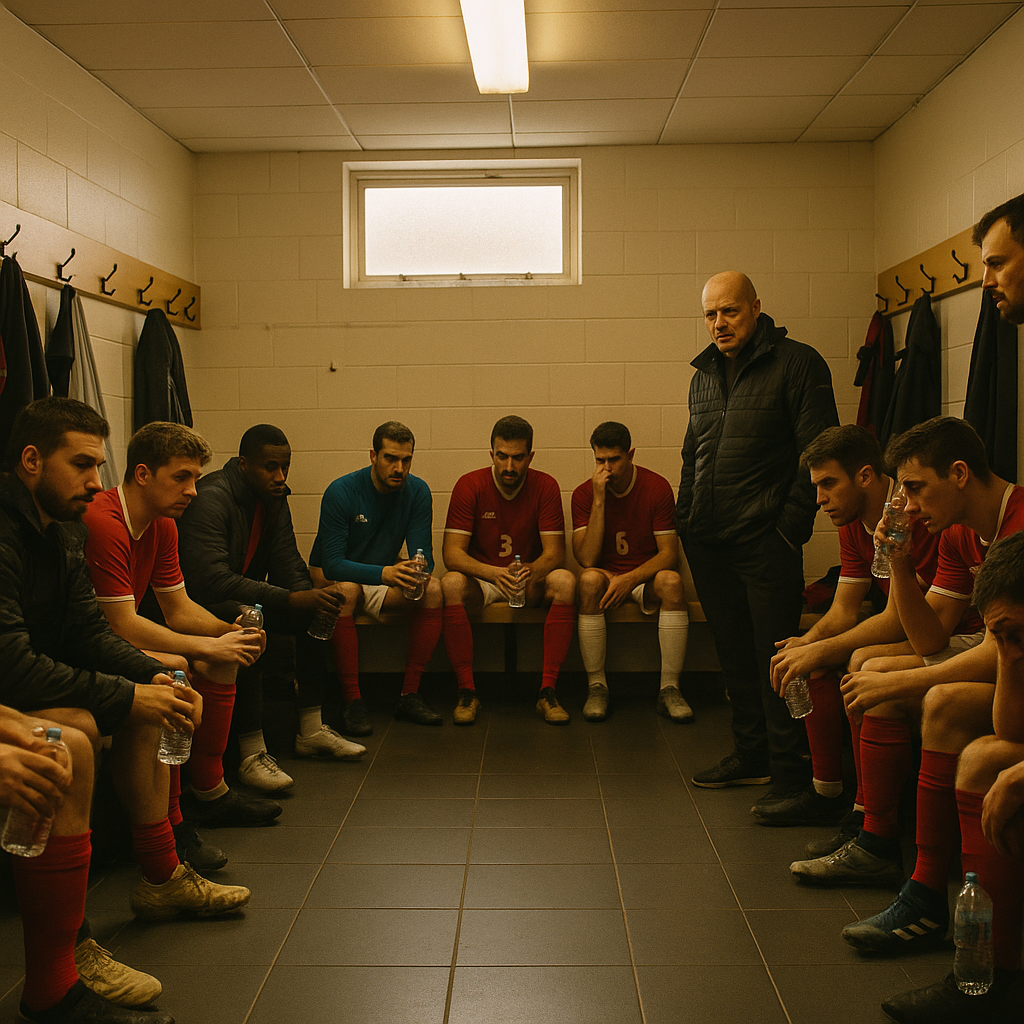
What Is Actually Happening Inside Your Body at Half-Time?
By the end of the first half, your muscles have been working at high intensity for 45 minutes, often with explosive sprint efforts layered on top of sustained aerobic work. Blood lactate levels can rise sharply during those high-intensity phases. Research from Loughborough University, one of the UK’s leading sport science institutions, has consistently shown that blood lactate in football players can peak above 8 to 10 mmol/L during intense passages of play. The good news: the body clears lactate relatively quickly once intensity drops, provided blood flow stays active.
This is the first trap players fall into. Sitting completely still on a cold bench causes muscle temperature to drop faster than most people realise. A study published through researchers at the University of Birmingham found that muscle temperature can fall by as much as 2°C within the first ten minutes of passive rest. That might not sound dramatic, but a 2°C drop in muscle temperature measurably reduces power output, sprint speed and reaction time. You come out for the second half colder, stiffer and slower than when you went in.
Muscle Cooling: Why Staying Warm at Half-Time Matters
Muscle cooling during the interval is one of the most well-documented performance drains in football, yet it remains one of the least addressed at grassroots level. Elite clubs have warm clothing protocols, heated dressing rooms and structured movement routines built into the break. At Sunday league level, you are often changing in a draughty changing room or standing on the touchline in October drizzle.
The fix is simple but requires intention. Active recovery movements, light jogging or leg swings during the final three to four minutes of the interval can help maintain muscle temperature. Wearing extra layers immediately after coming off the pitch makes a significant difference too. Even basic measures like keeping your legs covered and performing a short re-warm-up before the second-half whistle preserve a meaningful portion of the neuromuscular readiness you built up through the first half.

Blood Lactate Clearance and Rehydration: Getting the Timing Right
Lactate clearance happens efficiently during active recovery. Light movement, rather than complete rest, keeps blood circulating through muscles and accelerates the removal of metabolic waste. This is well established in half-time recovery sports science literature. A short five-minute period of low-intensity movement at the start of the interval, before tactical talks and kit adjustments, gives the body a meaningful head start on clearing that first-half accumulation.
Rehydration is equally time-sensitive. Research published in the British Journal of Sports Medicine highlights that athletes who begin the second half in a dehydrated state experience significantly greater declines in both physical and cognitive performance. The rehydration window at half-time is narrow, roughly ten to twelve minutes effective absorption time once you account for drinking, changing and warm-up. Small, consistent sips of water or a light electrolyte drink across the interval beat a single large gulp two minutes before kick-off.
Carbohydrate intake during the break has also been studied at institutions including Liverpool John Moores University, a world-recognised centre for applied sport science. A small carbohydrate snack, a banana or a small sports gel, can help maintain blood glucose levels and sustain second-half intensity. For Sunday league players who may have trained the night before and eaten lightly before the morning match, this matters more than they typically realise.
The BBC Sport football section regularly covers how Premier League clubs apply these principles at elite level, but the underlying physiology is exactly the same whether you are at Anfield or on a 3G pitch in Swindon.
The Mental Reset: Half-Time Is Not Just Physical
The psychological dimension of the interval is arguably undervalued in amateur sport. Cognitive fatigue accumulates during the first half alongside physical fatigue. Decision-making quality, spatial awareness and composure all degrade with mental load. Half-time is a genuine window for psychological recovery, if you use it properly.
Sport psychologists working with UK academies have long recommended brief mindfulness or controlled breathing exercises during the interval. Simple box breathing (four counts in, hold four, out four, hold four) activates the parasympathetic nervous system, reducing cortisol and helping players reset emotional responses to a difficult first half. If you have just made an error or conceded a soft goal, spending ten minutes ruminating over it in the changing room destroys second-half performance. A structured reset routine interrupts that cycle.
Managers’ team talks have traditionally dominated the interval. The science suggests the most effective talks are short, specific and forward-looking. Lengthy post-mortems of the first half eat into physical recovery time, raise cortisol and do not meaningfully change second-half performance. Research from UK university sport psychology departments supports a model of roughly five minutes of active recovery, five minutes of practical tactical input, and five minutes of re-warm-up. That structure works at every level.
Half-Time Recovery for Sunday League Players: A Practical Protocol
You do not need a sports science team to apply this. Here is a realistic half-time structure for recreational players built on the actual research.
Minutes one to four: keep moving. Light jog, leg swings, put on a layer if it is cold. Sip water steadily. Eat a banana or gel if you have one. Minutes five to ten: sit down, listen to tactical input, stay covered and warm. Continue drinking. Minutes eleven to fifteen: brief breathing reset, then back out for light movement and a couple of short sharp sprints before the restart. That is it. No complicated protocols. No expensive kit. Just applied half-time recovery sports science at a grassroots level.
The gap between elite and recreational athletes in physical preparation has narrowed considerably thanks to better public access to sports science knowledge. The half-time interval is fifteen minutes that most players still waste. Understanding the physiology behind it is the first step to using it properly.
What Elite Clubs Actually Do Differently
At Premier League and Championship level, the interval is meticulously managed. Players have individual hydration and nutrition stations prepared in advance. Medical and conditioning staff monitor fatigue markers. Re-warm-up protocols are printed out and followed. Psychological support staff may work individually with players who have had a difficult first half. Muscle temperature monitoring through skin sensors is increasingly common in 2026.
The principles, though, trace back to the same sport science that any amateur player can access. The difference is consistency and intention. Sunday league players who build even a basic, structured approach to the interval will notice second-half performance improve. It is not magic. It is fifteen minutes of physiology working either for you or against you.
Frequently Asked Questions
How quickly does muscle temperature drop at half-time in football?
Research from UK universities including the University of Birmingham suggests muscle temperature can fall by up to 2°C within the first ten minutes of passive rest during the interval. This drop reduces sprint speed and power output when play restarts, which is why active recovery and staying warm are critical during the break.
What should you drink at half-time during a football match?
Water or a light electrolyte drink consumed in steady sips across the interval is more effective than a single large drink just before the restart. Research published in the British Journal of Sports Medicine highlights that even mild dehydration at the start of the second half significantly impairs both physical and cognitive performance.
Does eating at half-time actually improve second-half performance?
A small, easily digestible carbohydrate source such as a banana or sports gel can help maintain blood glucose levels and sustain intensity in the second half, particularly for players who have trained recently or eaten lightly before the game. Studies from Liverpool John Moores University support the use of mid-match carbohydrate intake for amateur and elite players alike.
What is the best way to mentally reset at half-time?
Short controlled breathing exercises, such as box breathing, activate the parasympathetic nervous system and help reduce cortisol elevated by first-half exertion or frustration. Sport psychologists working in UK academies recommend brief, forward-looking mental resets rather than dwelling on first-half errors, as rumination measurably lowers second-half decision-making quality.
Is half-time recovery sports science relevant for Sunday league players or just elite athletes?
The underlying physiology is identical regardless of playing level. Muscle cooling, lactate clearance and cognitive fatigue all affect recreational players just as they affect professionals. Applying even a basic structured protocol covering movement, hydration and a brief mental reset can produce noticeable improvements in second-half performance for amateur players.