
Football stadiums used to be simple propositions. You built them, you filled them on a Saturday, and the rest of the week they sat there like enormous, empty car parks. That model is dying fast. The most ambitious UK stadium regeneration projects 2026 are rewriting what a sports venue actually is, treating the ground not as a destination but as a catalyst for everything around it: jobs, fitness infrastructure, community health and genuine urban renewal.
These are not small cosmetic upgrades. Some of these schemes are among the most significant construction projects in their cities. And the ripple effects, if done right, extend well beyond the club’s own interests.
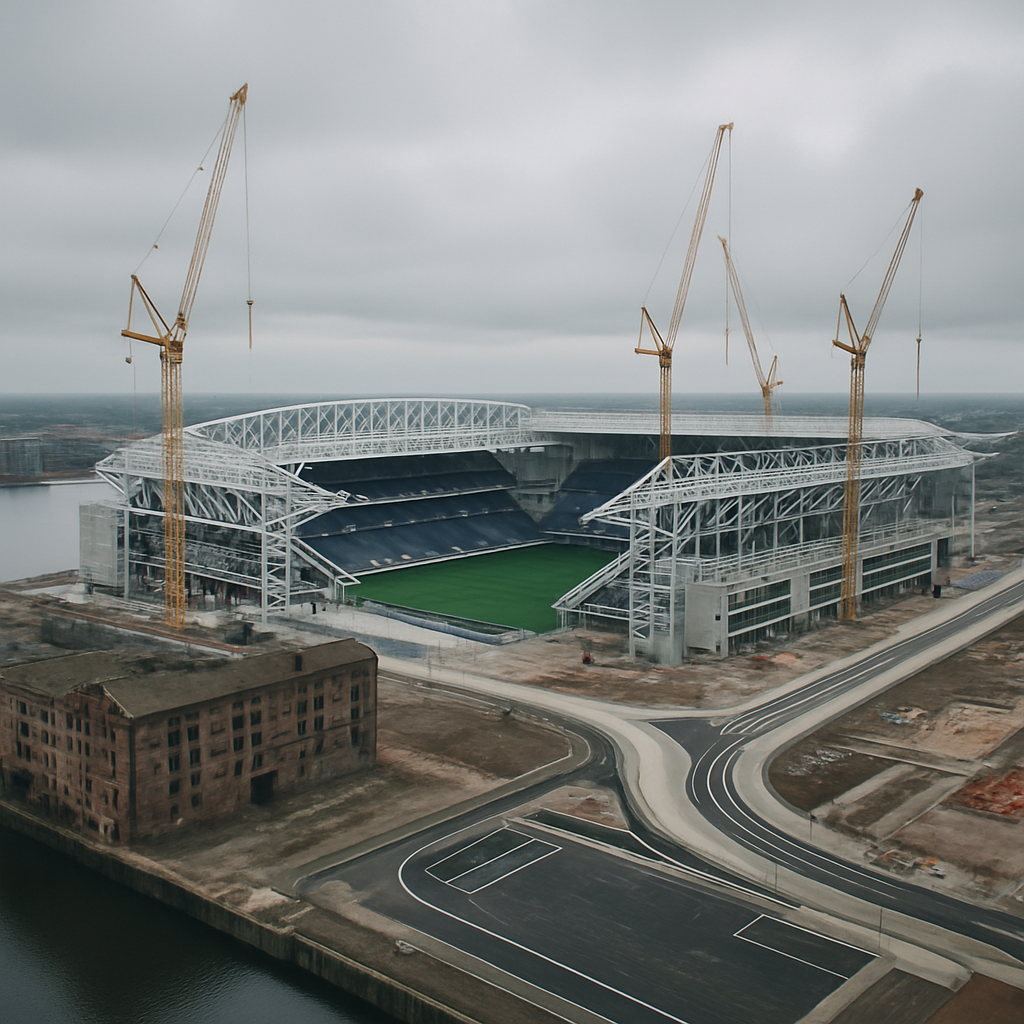
Everton’s Bramley-Moore Dock: Merseyside’s Biggest Regeneration Gamble
Everton’s new 52,888-capacity stadium at Bramley-Moore Dock on the Liverpool waterfront is arguably the centrepiece of UK football’s regeneration story right now. The site itself has been derelict for decades. By building there, Everton aren’t just getting a new ground; they’re acting as the anchor for a much wider regeneration of the north Liverpool waterfront that includes new housing, hospitality, retail and public access to the dockside.
The club has worked with Liverpool City Council and Homes England on a wider masterplan for the area. Independent assessments suggested the development could generate over 15,000 jobs across construction, operations and induced economic activity, and add more than £1 billion to the local economy over its lifetime. For a part of Merseyside that has historically struggled with unemployment and deprivation, that is genuinely transformative.
Beyond the economics, the public realm around the stadium is being designed with community use in mind. Riverside walkways, cycling routes and open spaces are baked into the masterplan. Active travel infrastructure matters here. If residents can walk or cycle safely along the waterfront, you’re building habits that improve public health, not just providing a stadium backdrop for Instagram.
Forest Green Rovers and the Eco-Stadium Vision
Forest Green Rovers in Nailsworth, Gloucestershire, have long punched above their weight on sustainability. The club, owned by Dale Vince of Ecotricity, has been pursuing planning permission for a new 5,000-seat timber stadium known as Eco Park for several years. Progress has been slower than hoped, but the vision remains compelling and the project has continued to evolve.
What makes it relevant to communities goes beyond the green credentials. The Eco Park proposal includes sports pitches available to local clubs, walking trails, a cycling hub and spaces designed to support grassroots sport in the Stroud district. For a small club in League One, the ambition is extraordinary. The stadium would be the world’s first timber football ground, built largely from cross-laminated timber to dramatically reduce embodied carbon.
The local fitness infrastructure angle is significant. Community sports facilities in rural areas are chronically underfunded. By combining a professional club’s ground with publicly accessible pitches and active travel connections, Forest Green are attempting something most Championship clubs haven’t even considered.
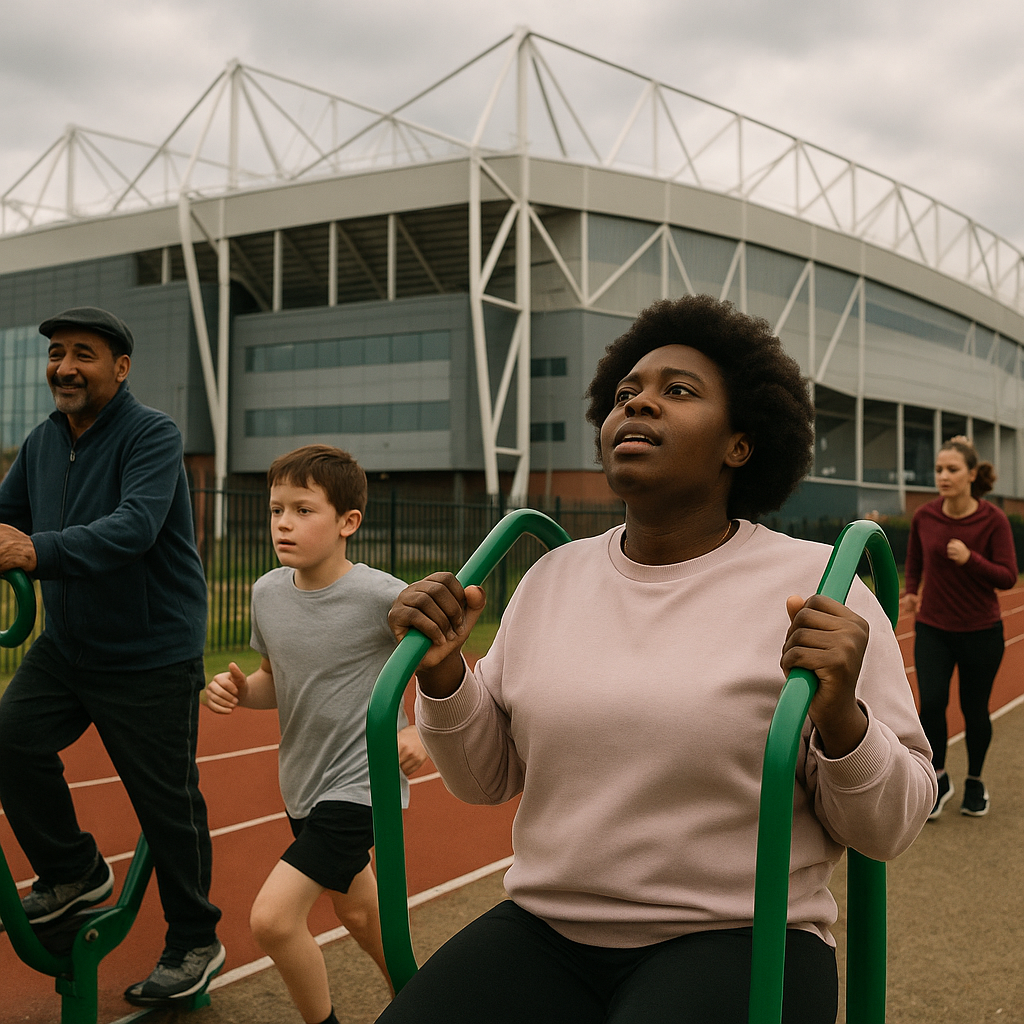
How UK Stadium Projects Are Prioritising Public Health
This isn’t just about individual clubs. The wider pattern across UK stadium regeneration projects 2026 shows a clear shift in how planners, clubs and local authorities think about venue design. Planning consent increasingly depends on demonstrable community benefit, and clubs have responded accordingly.
The NHS Long Term Plan identified physical inactivity as one of the biggest public health burdens in England. Sports venues, with their existing brand recognition and community trust, are uniquely positioned to tackle that. Several Premier League and Championship clubs now operate community trusts that use stadium and training ground facilities for health referral programmes, with GPs directing patients into structured exercise schemes hosted by the club.
Tottenham Hotspur’s stadium in north London, completed in 2019 but still expanding its community programme, is one of the more mature examples. The club’s foundation runs health and wellbeing programmes from the venue that explicitly target NHS referrals, addressing mental health, obesity and isolation. According to the Sport England community sport research, venues embedded in deprived communities can demonstrably increase participation rates when they prioritise access alongside elite sport.
Jobs, Skills and Local Economic Impact
Construction of a major stadium creates a short-term employment spike, but the smarter projects think long beyond the build phase. Everton’s Bramley-Moore scheme includes commitments to local labour hiring targets. Forest Green’s Eco Park has been designed with local suppliers and green construction apprenticeships in mind. These aren’t just PR points; they’re conditions baked into planning agreements with councils that take regeneration seriously.
There’s also a growing emphasis on year-round venue activation. A stadium that hosts 25 home matches per season sits dormant for the majority of the year unless the operator actively programmes it otherwise. The new generation of UK grounds is being built with conference suites, gym facilities, running tracks, climbing walls and even hotel accommodation to ensure the asset generates activity 365 days a year.
This matters for public health because footfall creates familiarity. People who use a stadium’s gym or attend a fitness class there are far more likely to attend events, volunteer, or bring their children to junior coaching sessions. The venue becomes a community hub rather than a fortnight-only spectacle.
What the Best UK Stadium Regeneration Projects Have in Common
Looking across the landscape of UK stadium regeneration projects 2026, a few consistent themes separate the genuinely impactful schemes from the ones that are mostly developer branding. The best ones start with the community first. They involve local residents in the design process, identify specific health and employment gaps in the surrounding area, and build measurable commitments into legal planning agreements rather than relying on voluntary promises.
They also think seriously about active travel. Bramley-Moore is connected to cycling routes along the waterfront. Forest Green’s Eco Park sits near walking trails in the Cotswolds. Connectivity to public transport and cycling infrastructure isn’t an afterthought in these schemes; it’s central to whether the health benefits actually materialise.
The era of the isolated, fortress-like football ground is fading. The best new UK venues are being designed as open, permeable, year-round destinations that serve their cities. When that vision is executed well, it’s not just good for the club’s planning application. It’s genuinely good for the people living around it, the local NHS trust managing an overloaded waiting list, and the grassroots clubs who’ve been sharing muddy pitches for decades. That’s a legacy worth building.
Frequently Asked Questions
What is Everton's new stadium at Bramley-Moore Dock?
Everton’s new ground at Bramley-Moore Dock on the Liverpool waterfront is a 52,888-capacity stadium designed to anchor a wider regeneration of the north Liverpool docklands. The project includes public riverside walkways, cycling infrastructure and is projected to generate over 15,000 jobs across its lifetime.
What is Forest Green Rovers' Eco Park stadium?
Eco Park is Forest Green Rovers’ planned timber-built stadium in the Stroud district of Gloucestershire, designed to be the world’s first timber football ground. The scheme includes publicly accessible sports pitches, a cycling hub and walking trails aimed at boosting grassroots sport in the local community.
How do UK stadium regeneration projects benefit public health?
Many new UK stadium projects include community health programmes, NHS referral schemes and year-round fitness facilities available to local residents. By increasing access to sport and active travel routes, these venues can help reduce physical inactivity, which is one of the largest preventable health burdens in England.
Do new UK football stadiums create local jobs?
Yes, significantly. Beyond the construction phase, major stadium regeneration projects like Bramley-Moore Dock include commitments to local labour hiring targets and apprenticeship schemes. Year-round venue activation also creates sustained employment in hospitality, events, coaching and facility management.
Which UK stadium regeneration projects are most significant in 2026?
Everton’s Bramley-Moore Dock development and Forest Green Rovers’ Eco Park are among the most high-profile, but several Championship and Premier League clubs are also expanding community facilities and redesigning training grounds to serve public health needs. Tottenham Hotspur’s stadium community programme remains one of the most mature examples in operation.