
Stand at the edge of a modern athletics track and the surface beneath your feet is nothing like what British runners trained on sixty years ago. Today’s polyurethane surfaces are engineered to within fractions of a millimetre, tested for shock absorption and energy return, and laid by specialist contractors using laser-levelling equipment that would look at home in a precision manufacturing plant. The journey from compacted cinder and rough grass to the tracks we race on today is one of the more quietly remarkable engineering stories in British sport, and it deserves more attention than it gets.

Where it all started: cinder, grass and the early British track
British athletics in the late nineteenth and early twentieth centuries was largely conducted on whatever surface happened to be available. Grass ovals were common at cricket grounds and public parks; cinder tracks, made from the ash residue of coal furnaces, became the standard at dedicated venues from the 1880s onwards. Cinder had genuine advantages over bare earth: it drained reasonably well, offered some grip, and could be rolled flat. But it was uneven, slow after rain, and punishing on joints. Runners wore leather-soled spikes designed specifically for it.
The Amateur Athletic Association, founded in 1880, helped formalise competition standards, but track specification remained loose for decades. Historical records from early British athletics meetings, many of which are now catalogued by archivists at webhistorian.co.uk, show just how variable conditions were between venues, even at national championship level. A cinder track in Birmingham might perform completely differently from one in Edinburgh, depending on local coal sources and how recently it had been dressed.
The shift to synthetic: what changed and when
The tipping point came at the 1968 Mexico City Olympics, where a Tartan surface, a proprietary polyurethane product developed in the United States, was used for the first time at a Games. British athletes returned home with a new benchmark. UK venues began installing all-weather synthetic tracks through the 1970s and 1980s, though funding constraints meant many regional clubs held onto their cinder ovals well into the 1990s.
UK Athletics now specifies that competition tracks must meet the World Athletics Track and Field Facilities Manual, which covers everything from surface hardness and elasticity to lane width and camber tolerances. For any track hosting international competition, the specification runs to dozens of technical requirements. The surface must return between 35% and 50% of impact energy to the athlete, absorb shock within defined parameters, and show no deviation greater than 10mm over any 3-metre span. That last requirement is why laser-levelling exists.
How modern athletics track surfaces are actually built
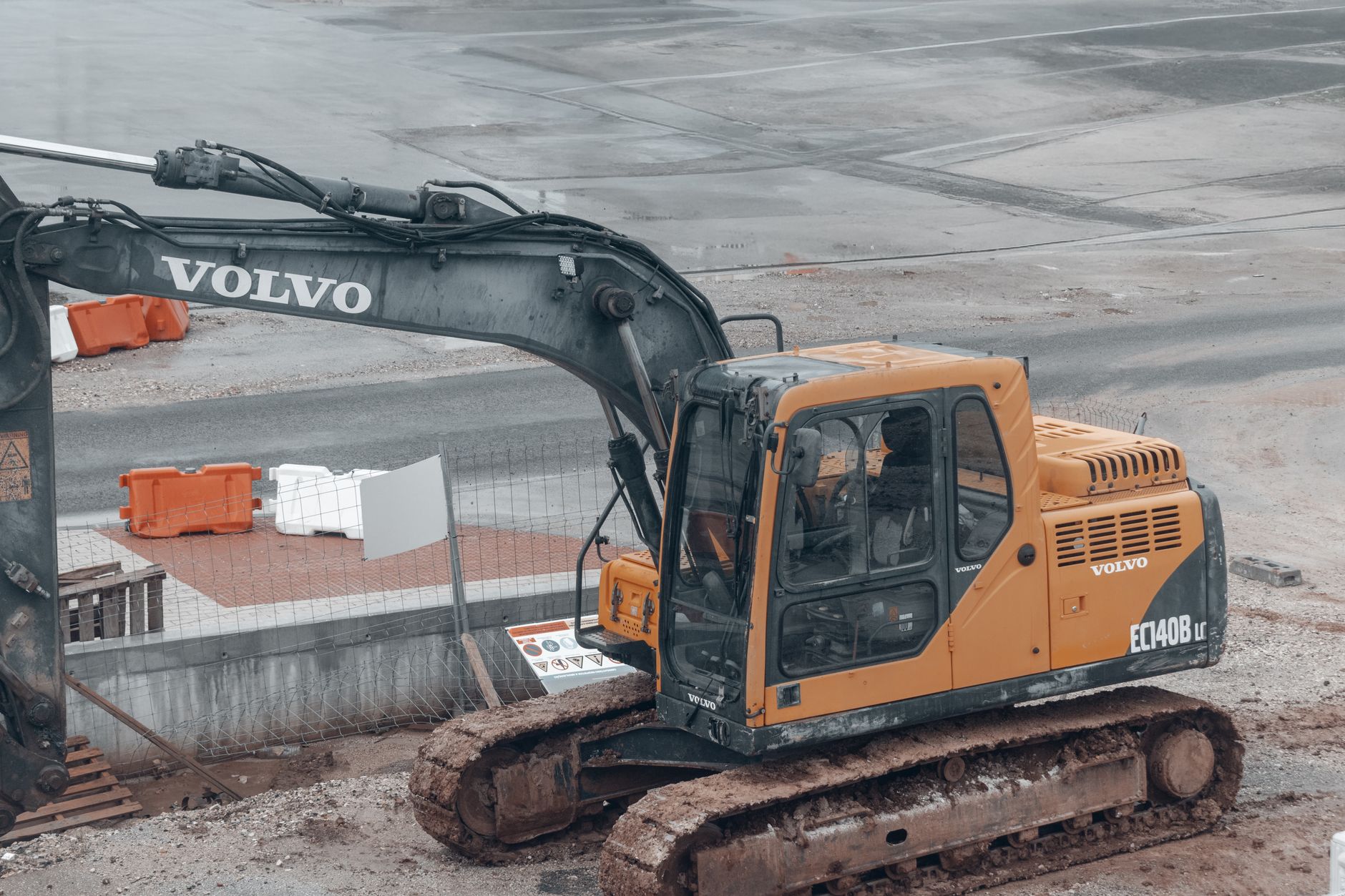
The construction of a competition-standard synthetic track is a multi-stage process that takes weeks. First comes groundworks: the existing substrate is excavated and replaced with a compacted stone base, then an asphalt binder course, then a finer asphalt wearing course. Each layer is tested for flatness and drainage gradients before the next goes down.
On top of the asphalt sits the synthetic surface itself, which comes in several types. Full-pour systems involve pouring liquid polyurethane directly onto the asphalt and embedding rubber crumb into it while it cures. Prefabricated systems use factory-manufactured rolls of rubberised material bonded to the asphalt on site. Sandwich systems combine both approaches, with a poured base layer and a prefabricated top. The choice depends on budget, intended use level, and the specific performance targets the venue is working towards.
I’ve been to a few track resurfacing projects as part of covering athletics venues, and watching the laser screed equipment move across a freshly laid base layer is genuinely impressive. The machine reads from a series of survey points and self-corrects in real time, producing a surface flat enough to meet World Athletics tolerances. It is a long way from a groundsman rolling cinder by hand.
UK venues leading the way in track technology
The Manchester Regional Arena, the Lee Valley Athletics Centre in north London, and the Emirates Arena in Glasgow are among the UK venues operating at the highest track specification level. The Lee Valley track, which hosted the 2017 World Para Athletics Championships, uses a Mondo Super X performance surface, the same product used at multiple Olympic Games. British Athletics cites energy return and spike penetration characteristics as key reasons for its use at elite events.
At the community level, the picture is more mixed. A UK Sport infrastructure review found significant variation in track condition across English local authority facilities, with some venues still operating on surfaces installed in the early 1990s that are well past their designed lifespan. The gap between elite and grassroots provision is a genuine concern, particularly as more young athletes discover athletics through cross-training approaches. Readers interested in how community sports facilities are faring more broadly might find our look at how local councils are replacing closed leisure centres useful context here.
The science of the surface: what athletes actually feel
From an athlete’s perspective, the difference between a fifteen-year-old track and a freshly laid one is immediately noticeable. Older surfaces harden with age and UV exposure, reducing the energy return they were designed to provide. Spike grip can deteriorate too, which matters enormously for sprinters pushing off at maximum force. Sports scientists have measured times on degraded versus fresh surfaces and found meaningful differences, particularly over shorter distances where fractions count.
The research on surface compliance and injury risk is growing too. There’s a reasonable body of evidence suggesting that harder, less compliant surfaces increase lower limb loading, which is relevant to the kind of overuse injuries that I’ve covered before in the context of AI injury prevention tools being deployed at UK sports clubs. Track surface design and injury prevention are increasingly considered together by facility managers, not separately.
What the historical record tells us about progress
One thing that strikes me looking at this history is how much of it was improvised. Early British athletics administrators were solving problems on the fly, with limited materials science and no international standards body to consult. The fact that cinder tracks produced world-class British athletes for the better part of a century says something about adaptation. But it also masks how much faster those athletes might have been on compliant polyurethane.
The historical documentation of British athletics venues tells a similar story of gradual, sometimes painful improvement. The way public information and records were preserved and shared over time has its own fascinating arc, not entirely unlike how, before mass literacy, news and civic records spread through oral and public proclamation, as explored in this piece on how England’s early public broadcasters carried information to communities. Athletics record-keeping has come an equally long way.
Today’s UK athletics tracks are the product of a century of material science, biomechanical research, and international standardisation. They are engineered surfaces, not just laid ones. For anyone who runs on them, that engineering is working hard every time a foot strikes the ground.