

If you’ve ever wondered why some players seem to sprint all match whilst you’re gasping for air by the 60th minute, the answer probably lives in three letters: VO2 max. It’s the gold standard measure of aerobic fitness, and for footballers at every level, it matters more than most people realise. Understanding your VO2 max isn’t just for elite pros training under sports scientists at Premier League academies. Amateur players can measure it, track it, and genuinely shift it with the right approach.
What Is VO2 Max and Why Does It Matter for Football?
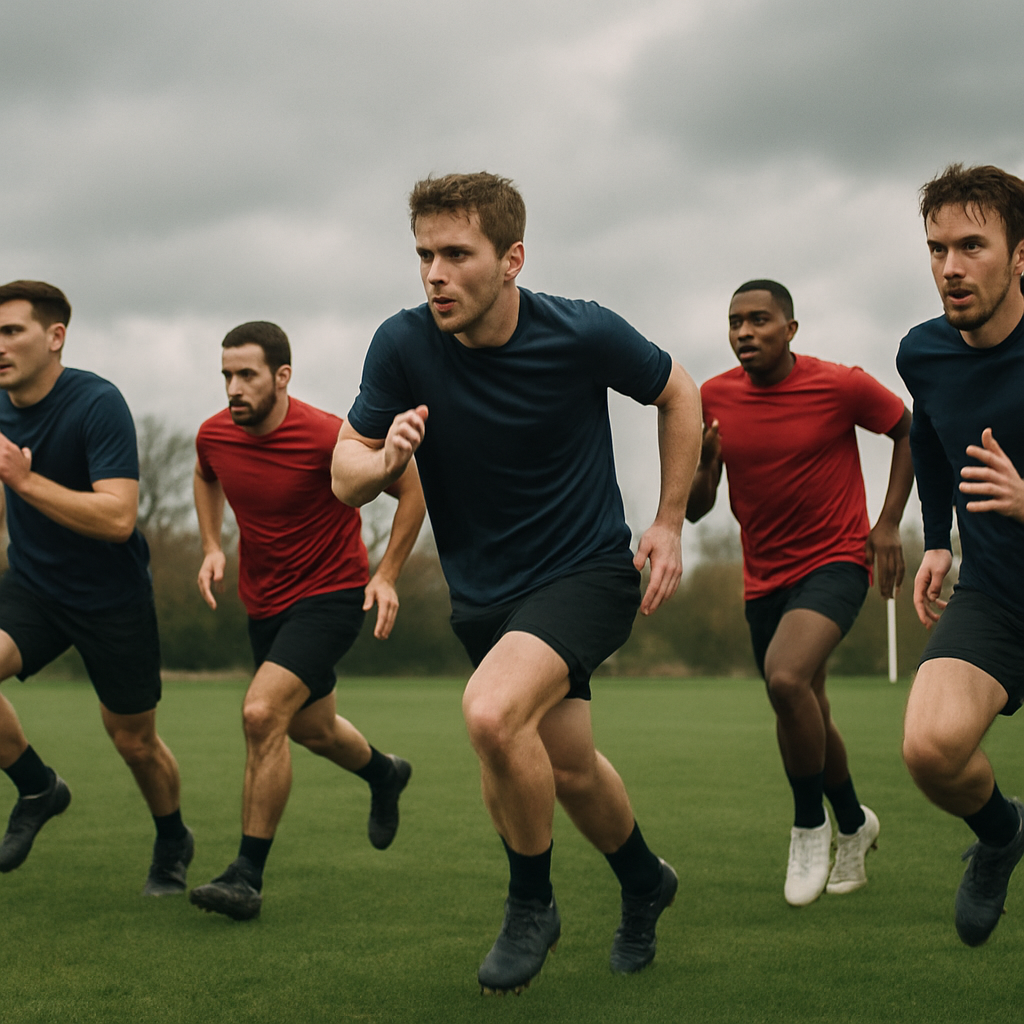
VO2 max is the maximum volume of oxygen your body can use during intense exercise, measured in millilitres of oxygen per kilogram of bodyweight per minute (ml/kg/min). The higher the number, the more efficiently your cardiovascular system delivers oxygen to working muscles. For football, that translates directly into how hard you can press, how quickly you recover between sprints, and how much you’ve still got in the tank when the game is on the line in the final quarter.
Research published by sports scientists consistently shows that top-level professional footballers typically record VO2 max scores between 60 and 70 ml/kg/min. Some elite midfielders push even higher. For amateur players, a solid benchmark sits somewhere between 45 and 55 ml/kg/min. Below 40 and you’ll feel it every game. The good news? VO2 max is highly trainable, and you don’t need a laboratory to get started.
How to Test Your VO2 Max Without Specialist Equipment
You don’t need to book a session at a university exercise physiology unit to get a meaningful estimate. There are several accessible options for amateur players across the UK.
The Bleep Test (Multi-Stage Fitness Test)
This is probably the most familiar test for anyone who went through school PE. You run between two cones 20 metres apart, keeping pace with a series of audio bleeps that increase in speed. Your VO2 max is estimated from the level you reach. It’s free, widely used, and you can run it on any flat surface, a local park, an AstroTurf pitch, a sports hall. There are free apps and downloadable audio tracks for it. Your local leisure centre may even run group sessions.
Smartwatch Estimates
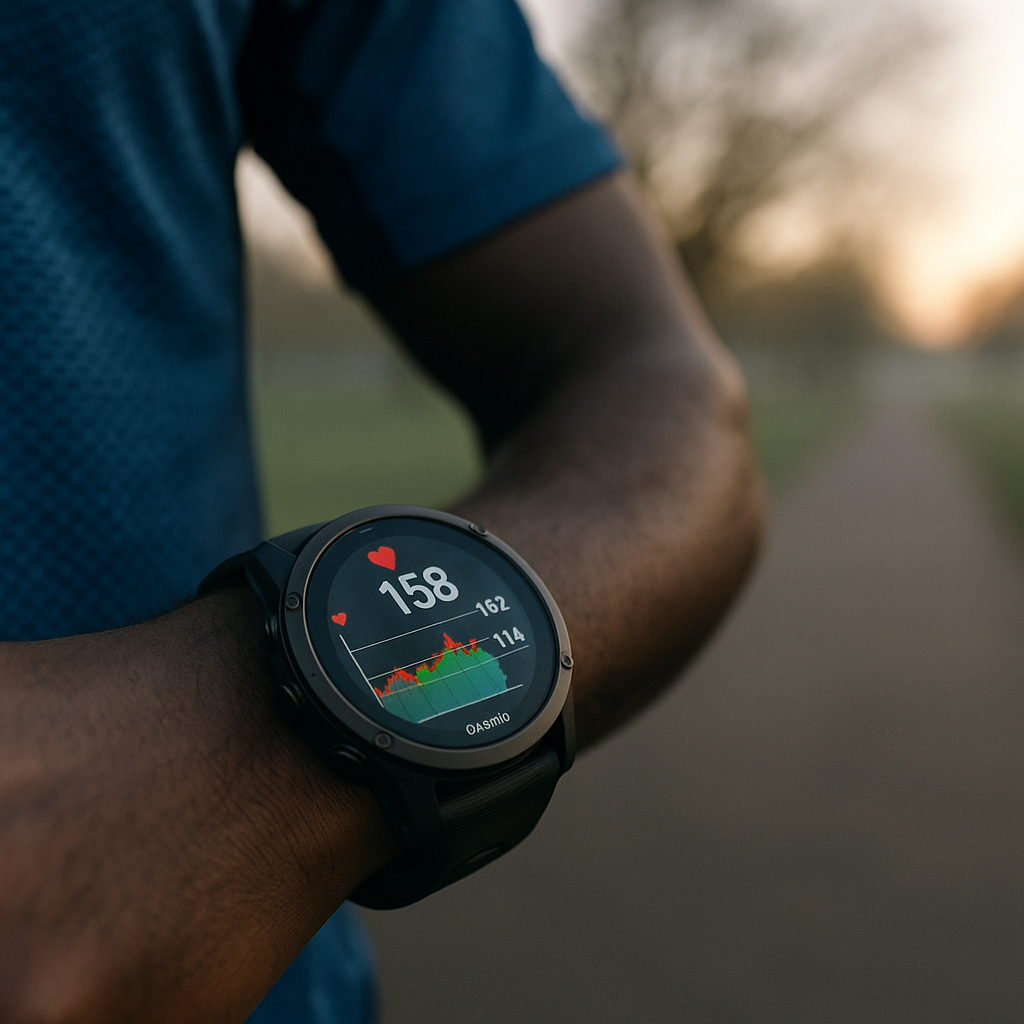
Garmin, Polar, and Apple Watch all offer VO2 max estimates based on heart rate data during outdoor runs. They’re not perfectly precise, but they’re directionally reliable and genuinely useful for tracking progress week to week. If you’re already wearing a fitness tracker during your Sunday league warm-ups, you’re probably already sitting on useful data.
The Cooper 12-Minute Run Test
Simple, brutal, effective. Run as far as you can in 12 minutes on a flat course. Plug the distance (in metres) into the formula: VO2 max = (distance in metres minus 504.9) divided by 44.73. It’s a rough estimate but gives you a practical benchmark you can repeat every six to eight weeks to track improvement.
The Training Methods That Actually Move the Needle
Here’s where things get interesting. VO2 max improves through specific types of training, and not all running sessions are created equal. Most amateur players do a bit of jogging and call it cardio. That’s not going to cut it.
High-Intensity Interval Training (HIIT)
Short, repeated efforts at 90 to 100 per cent of your maximum heart rate are the most effective stimulus for increasing VO2 max. A classic football-relevant session: 4 sets of 4-minute efforts at around 90 per cent effort, with 3-minute recovery jogs between each. This protocol, originally developed by Norwegian physiologist Jan Hoff and widely adopted by football clubs across Europe, has strong evidence behind it. It’s hard, but it works fast. You can see meaningful changes in as little as six weeks.
Small-Sided Games
This is the one amateur players often overlook. Structured small-sided games, think 3v3 or 4v4 on a small pitch with short rest periods, naturally push players into high heart rate zones because of the repeated accelerations, changes of direction, and pressure of playing against an opponent. Studies involving amateur club players in the UK have shown that regular small-sided games training produces VO2 max improvements comparable to traditional interval running. And it’s a lot more enjoyable than grinding out solo laps.
Zone 2 Running as the Foundation
Whilst high-intensity work is the sharpest tool for VO2 max gains, building a strong aerobic base through lower-intensity Zone 2 running is what allows you to recover faster between high-intensity efforts. Think of it as the infrastructure your top-end fitness sits on. Two or three 30 to 45-minute steady runs per week at a pace where you can hold a conversation, but only just, will build that base over a season.
Recovery, Nutrition and the Wider Picture
Training hard is only part of the story. VO2 max improvements happen during recovery, not during the session itself. Sleep is genuinely one of the biggest levers you have. The NHS guidance on sleep and health is clear that adults need between seven and nine hours per night for physical recovery and adaptation. Chronically under-sleeping athletes, even recreational ones, see significantly blunted fitness gains.
Nutrition matters too. Carbohydrates fuel high-intensity efforts, and protein supports muscle repair. You don’t need expensive supplements. Focus on getting your meals right around training: a carb-based meal a couple of hours before, protein and carbs within 30 minutes after. Basic, consistent, effective.
It’s also worth noting that as sport and fitness culture matures, there’s growing attention on the environmental footprint of how we train and kit up. Some clubs and players are starting to factor in sustainability insights when choosing training gear and facilities, which reflects a broader shift in how the sporting community thinks about its responsibilities beyond the pitch.
Setting Realistic Goals for Amateur Footballers
A genetically gifted elite athlete might peak somewhere above 70 ml/kg/min. That’s not the goal for a 35-year-old playing in a Sunday league in Manchester or Bristol. What’s realistic and genuinely impactful is moving from, say, a VO2 max of 42 to 50 over a full season of consistent training. That jump will make you a noticeably better footballer. You’ll press higher for longer, win more second balls, and still have the legs to make a run in the 80th minute.
Track your baseline now. Retest every six to eight weeks using the same method. Adjust your training based on what you see. It’s a simple loop, but most amateur players never actually do it. Those who do tend to improve faster than they expect.
VO2 max football fitness isn’t some abstract concept reserved for sports scientists and Premier League conditioning coaches. It’s a measurable, improvable quality that any serious amateur player can develop with the right information and a bit of discipline. Start with the bleep test or a Cooper run this weekend. You might be surprised what you find, and even more surprised how much ground you can make up by this time next season.
Frequently Asked Questions
What is a good VO2 max score for an amateur footballer?
For most amateur male footballers, a VO2 max between 45 and 55 ml/kg/min is considered solid. Elite professionals typically score between 60 and 70 ml/kg/min. Even improving from 42 to 50 ml/kg/min will make a noticeable difference to your on-pitch endurance.
How can I test my VO2 max at home or at a local park?
The Cooper 12-minute run test is one of the easiest options: run as far as possible in 12 minutes and plug the distance into a simple formula. The 20-metre bleep test is another widely available option using free apps or downloadable audio. Smartwatches from Garmin or Apple also provide reasonable VO2 max estimates from regular runs.
How long does it take to improve VO2 max through training?
With consistent high-intensity interval training, most amateur players see measurable improvements within six to eight weeks. Significant gains over a full season are realistic, particularly if you combine interval work with a regular Zone 2 aerobic base. Testing every six to eight weeks lets you track progress accurately.
Does age affect VO2 max and can older footballers still improve it?
VO2 max naturally declines with age, typically from around the late 20s onwards. However, regular structured training can slow this decline significantly and even produce improvements in players well into their 40s. The training principles remain the same; recovery just becomes more important as you get older.
Is VO2 max more important than strength or speed for football?
All three physical qualities matter in football, but VO2 max underpins your ability to repeatedly express speed and power throughout a 90-minute match. A player with poor aerobic capacity will see their strength and speed fade as the game progresses, whereas a high VO2 max allows you to sustain quality across all phases of play.
Leave a Reply