
Football coaching is changing fast. Not gradually, not quietly, fast. Across the Premier League, the Championship, and right down to Sunday league pitches in Stockport and Swindon, AI football coaching tools are reshaping how players train, how coaches analyse performance, and how teams prepare for opponents. The question everyone seems to be asking is simple: does any of this actually make the manager redundant?
Short answer: not yet. But the longer answer is far more interesting.
What Are AI Football Coaching Tools and How Do They Work?
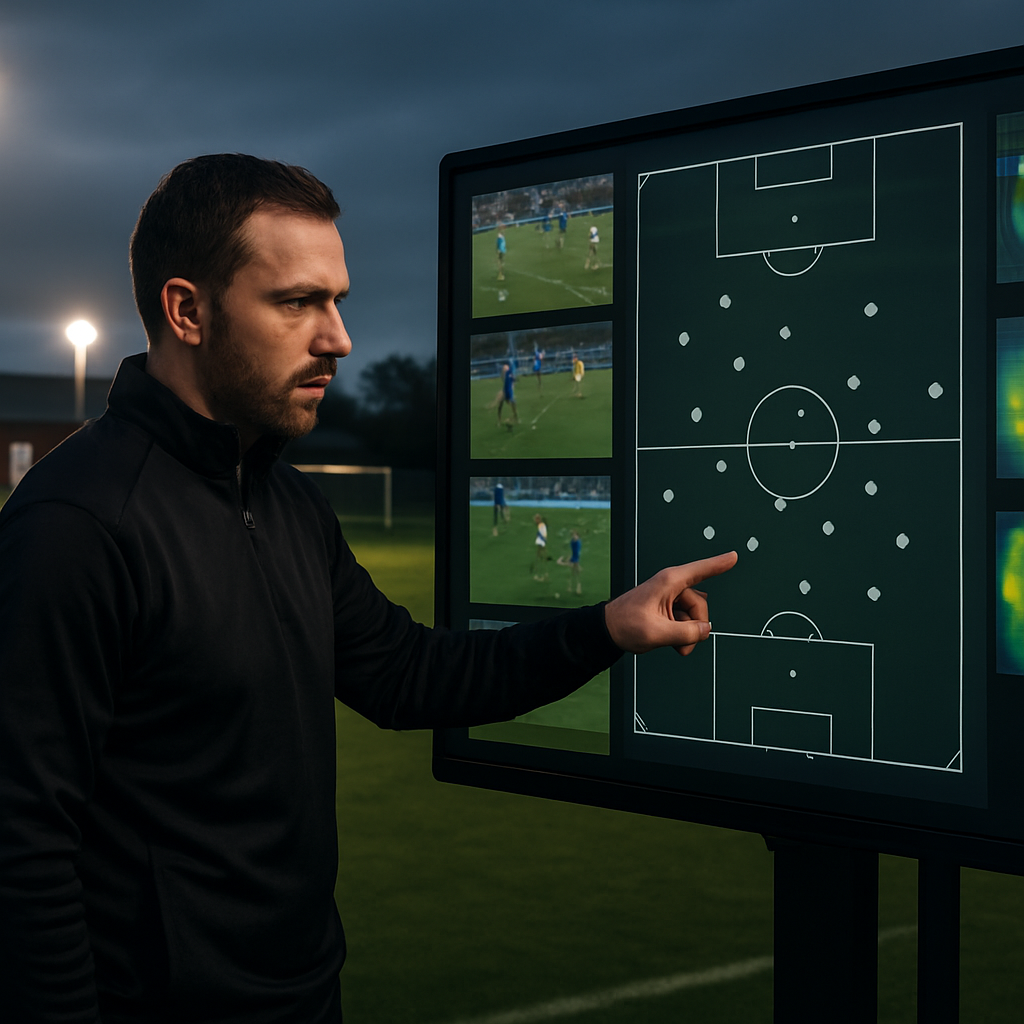
At their core, AI coaching platforms use computer vision, machine learning, and massive datasets to do what traditionally took hours of human effort. Tools like Hudl, Coach Logic, and Catapult Sports can automatically tag video footage, track player movements via GPS and accelerometers, and generate performance reports in minutes. Clubs at the top end of the game have been using versions of this technology for several years, but the big shift happening right now is that these platforms are becoming genuinely affordable at grassroots and semi-professional level.
Hudl, for instance, is used by thousands of clubs across the UK, from Premier League academies to regional amateur sides. It allows coaches to break down match footage, annotate key moments, and share video clips directly with players via a mobile app. No more gathering the squad around a laptop and trying to rewind to the right moment. Players get their individual clips, their heat maps, their sprint distance data. It is a level of analysis that would have seemed extraordinary even ten years ago.
Then there is the newer generation of tools. Platforms powered by more sophisticated AI can now track every player on the pitch from a single camera position, automatically generating positional data, pressing stats, and tactical shape analysis without a human analyst lifting a finger. Some can even flag potential injury risks based on a player’s movement patterns and load data.
How Premier League Clubs Are Already Using This Tech
At the top level, AI is embedded deeply into operations. Manchester City’s performance team is widely cited as one of the most data-driven in world football. Arsenal have long used StatDNA, a data analytics company they acquired in 2012, to inform recruitment and tactical decisions. Liverpool’s partnership with sports science researchers has produced machine learning models that help manage player workloads across a gruelling fixture list.
But it is not just about the elite. Championship and League One clubs are adopting AI football coaching tools to close the gap on better-resourced rivals. When your transfer budget is a fraction of a Premier League club’s, smart data use becomes a genuine competitive advantage. Finding an undervalued player, spotting a weakness in an opponent’s defensive shape, or managing squad fitness more precisely, all of this has a real financial and sporting impact lower down the pyramid.
What AI Can Do That Humans Struggle With
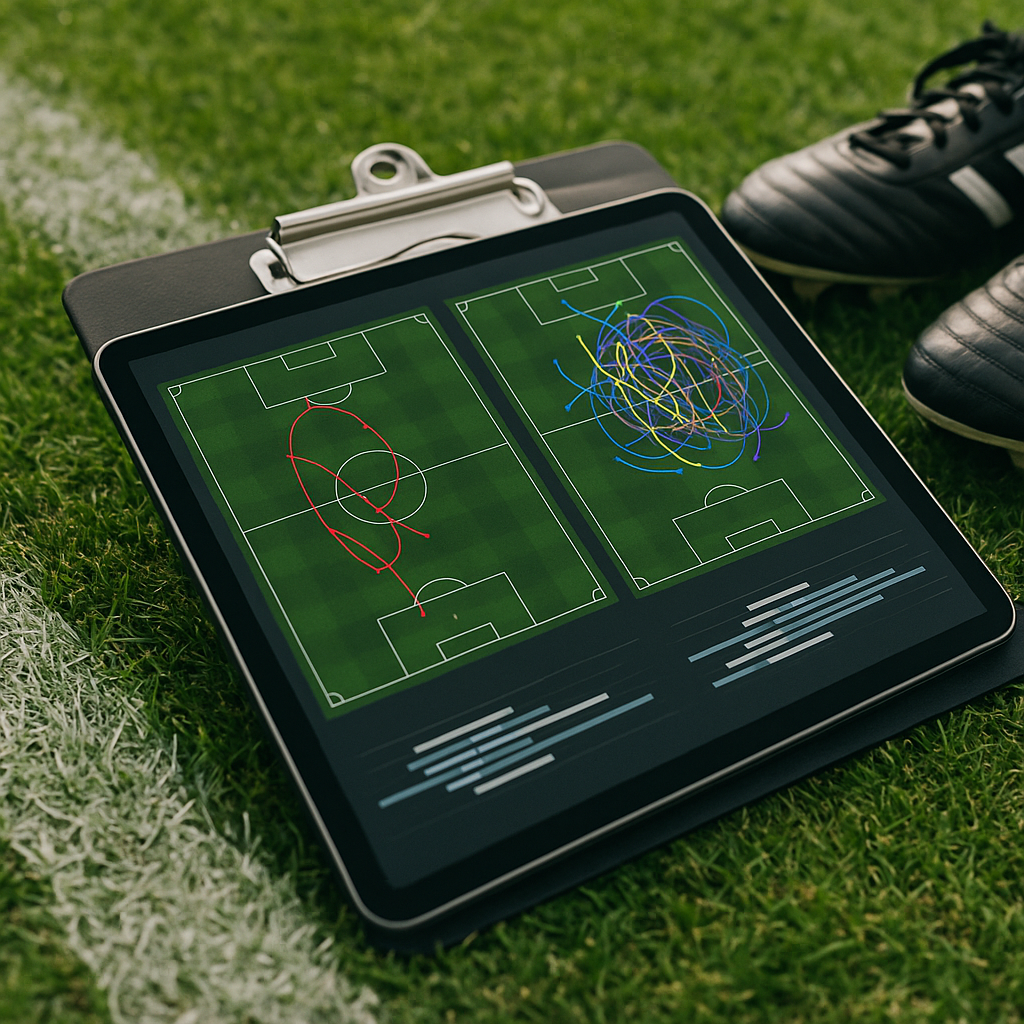
Let’s be honest about where the machines genuinely win. Processing volume is the obvious one. An AI system can analyse ninety minutes of footage, generate pressing stats for every player, map passing networks, and flag twelve tactical trends in the time it takes a human analyst to make a cup of tea and find the right timestamp. There is no fatigue, no bias towards the moments that felt dramatic, no missed second-half incident because the analyst was logging the first-half data.
Consistency matters too. Human analysis is naturally subjective. Two coaches watching the same clip will sometimes draw different conclusions. AI-generated metrics are consistent, repeatable, and comparable across different matches and different seasons. That reliability is enormously valuable when tracking a player’s development over time or building an evidence base for tactical decisions.
For individual player development, the personalisation potential of AI football coaching tools is significant. Platforms can flag specific technical issues, a striker’s body position when receiving the ball, a defender’s tendency to step out of shape at set pieces, and deliver targeted clip packages for players to review on their own time. According to BBC Sport, personalised data feedback is increasingly a standard expectation for players entering the professional game from academies.
What AI Gets Wrong, and Why Coaches Are Still Essential
Here is where it gets important. AI sees patterns in data. It does not understand a teenager’s confidence crisis. It cannot read the room in a dressing room at half-time when the team is losing 2-0 and someone needs a rocket while someone else needs an arm around their shoulder. It has no feel for when a player is carrying a knock they have not mentioned, or when a captain’s body language is dragging the squad down.
Football is a human game played by human beings who have bad days, off-the-pitch stresses, ego clashes, moments of brilliance that defy expected output metrics. The relationship between a coach and a player, built on trust, communication, and genuine understanding of that individual, is something no algorithm comes close to replicating. Ask any coach who has worked at grassroots level and they will tell you the same thing: the tactical stuff is maybe twenty per cent of the job.
There is also a risk that over-reliance on data leads to worse decisions, not better ones. If a platform tells you a player’s expected goals output is below average, but your own eyes tell you he is bringing structure, pressing triggers, and leadership that does not show up in any metric, trusting the algorithm blindly is a mistake. The best coaches use AI football coaching tools as one input among many, not as the final word.
The Grassroots Reality in 2026
Away from the professional game, adoption is growing but patchy. Many Sunday league coaches across England are now using free or low-cost versions of video analysis tools, often via their own smartphones and basic editing apps. Some county FA coaching programmes are starting to introduce data literacy as part of their coaching licences, recognising that the next generation of coaches needs to be comfortable interpreting performance data alongside traditional skills.
The Football Association’s own coaching development frameworks are evolving to reflect this shift. The challenge for grassroots football is infrastructure, consistent pitch access, budget for technology, and the time volunteers have to invest in learning new systems. But the direction of travel is clear. AI football coaching tools are moving down the pyramid, and they are doing so quickly.
The Verdict: Partnership, Not Replacement
The most sensible framing here is not AI versus the coach, it is AI alongside the coach. The technology is genuinely powerful. It saves time, reveals patterns, and gives players a level of feedback that was previously only available to elite squads. Any club or coach not at least exploring these tools risks being left behind tactically and in player recruitment.
But the instinct, the empathy, the motivational intelligence, the ability to look a nervous eighteen-year-old in the eye and make them feel like they can do the job, that is irreplaceable. The best football coaches in 2026 are not the ones ignoring AI, and they are not the ones deferring entirely to it. They are the ones who know exactly when to trust the data and when to trust their gut.
Frequently Asked Questions
What are AI football coaching tools?
AI football coaching tools are software platforms that use machine learning and computer vision to analyse player performance, track movement data, and generate tactical insights from match footage. Examples used in the UK include Hudl, Catapult Sports, and Coach Logic, which are used by clubs ranging from Premier League academies to amateur sides.
How much do AI coaching tools cost for grassroots football clubs?
Costs vary widely. Basic video analysis tools like Hudl offer entry-level packages accessible to amateur clubs for a few hundred pounds per year, while full GPS tracking and advanced analytics systems used by professional clubs can run into tens of thousands of pounds annually. Free or low-cost smartphone-based options are also increasingly available for Sunday league level use.
Can AI really replace a football manager or coach?
No. AI football coaching tools can process data faster and more consistently than any human analyst, but they cannot replicate the emotional intelligence, motivational skills, and interpersonal relationships that define effective coaching. The technology works best as a support tool that enhances a coach’s decision-making rather than replacing their judgement.
Which Premier League clubs are leading the way in AI and data analytics?
Manchester City, Arsenal, and Liverpool are widely regarded as some of the most data-sophisticated clubs in English football. Arsenal’s acquisition of StatDNA and Liverpool’s deep investment in sports science and machine learning models for load management are frequently cited examples of AI-informed coaching at the elite level.
Are AI coaching tools being used in youth and academy football?
Yes, increasingly so. Many Premier League and Championship academies now use video analysis and performance tracking tools as standard practice, and county FA coaching programmes are beginning to include data literacy in their coaching licence curricula. The aim is to give young coaches the skills to work alongside these technologies from the start of their careers.