
Tag: football technology

  • The Rise of AI Coaching Tools: Can Artificial Intelligence Replace Your Football Coach?

    The Rise of AI Coaching Tools: Can Artificial Intelligence Replace Your Football Coach?

    Football coaching is changing fast. Not gradually, not quietly — fast. Across the Premier League, the Championship, and right down to Sunday league pitches in Stockport and Swindon, AI football coaching tools are reshaping how players train, how coaches analyse performance, and how teams prepare for opponents. The question everyone seems to be asking is simple: does any of this actually make the manager redundant?

    Short answer: not yet. But the longer answer is far more interesting.
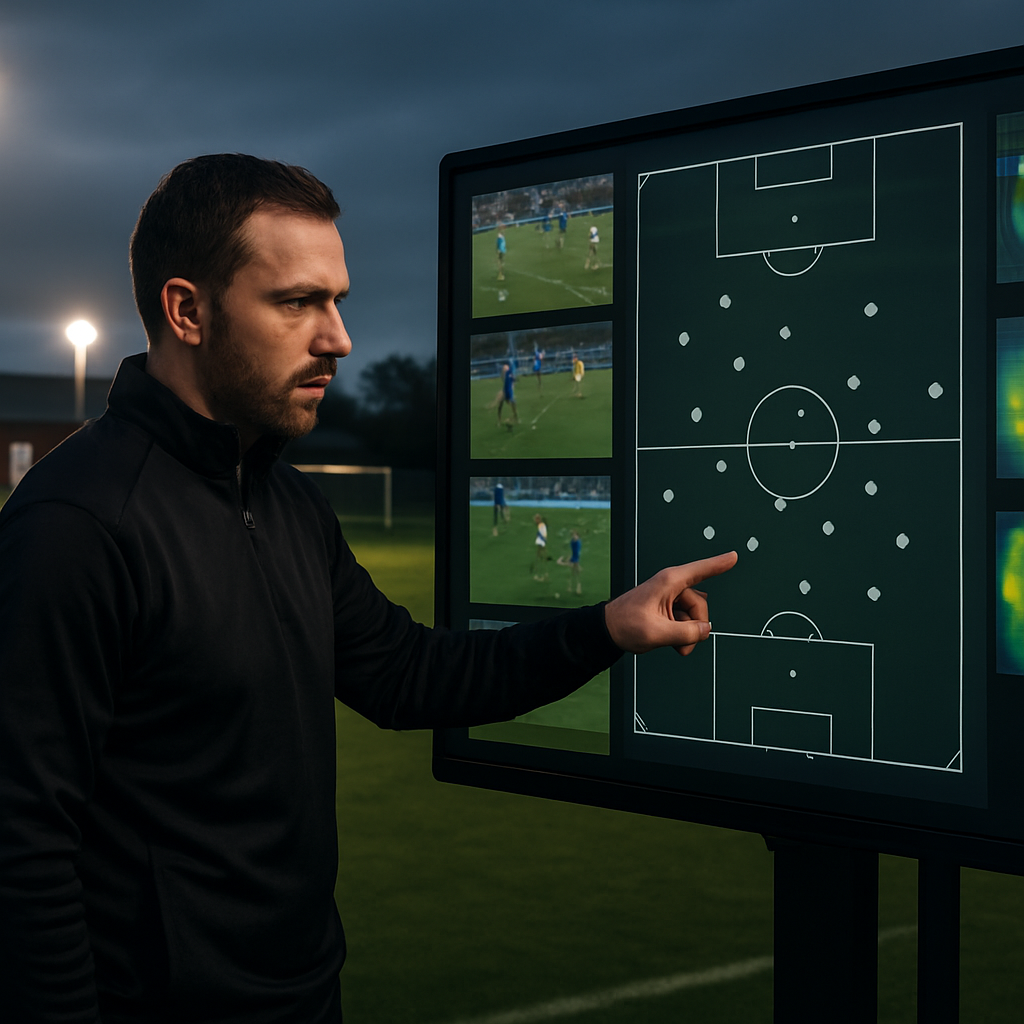
    Football coach reviewing AI football coaching tools on a tactical touchscreen display at a training ground
    Football coach reviewing AI football coaching tools on a tactical touchscreen display at a training ground

    What Are AI Football Coaching Tools and How Do They Work?

    At their core, AI coaching platforms use computer vision, machine learning, and massive datasets to do what traditionally took hours of human effort. Tools like Hudl, Coach Logic, and Catapult Sports can automatically tag video footage, track player movements via GPS and accelerometers, and generate performance reports in minutes. Clubs at the top end of the game have been using versions of this technology for several years, but the big shift happening right now is that these platforms are becoming genuinely affordable at grassroots and semi-professional level.

    Hudl, for instance, is used by thousands of clubs across the UK, from Premier League academies to regional amateur sides. It allows coaches to break down match footage, annotate key moments, and share video clips directly with players via a mobile app. No more gathering the squad around a laptop and trying to rewind to the right moment. Players get their individual clips, their heat maps, their sprint distance data. It is a level of analysis that would have seemed extraordinary even ten years ago.

    Then there is the newer generation of tools. Platforms powered by more sophisticated AI can now track every player on the pitch from a single camera position, automatically generating positional data, pressing stats, and tactical shape analysis without a human analyst lifting a finger. Some can even flag potential injury risks based on a player’s movement patterns and load data.

    How Premier League Clubs Are Already Using This Tech

    At the top level, AI is embedded deeply into operations. Manchester City’s performance team is widely cited as one of the most data-driven in world football. Arsenal have long used StatDNA, a data analytics company they acquired in 2012, to inform recruitment and tactical decisions. Liverpool’s partnership with sports science researchers has produced machine learning models that help manage player workloads across a gruelling fixture list.

    But it is not just about the elite. Championship and League One clubs are adopting AI football coaching tools to close the gap on better-resourced rivals. When your transfer budget is a fraction of a Premier League club’s, smart data use becomes a genuine competitive advantage. Finding an undervalued player, spotting a weakness in an opponent’s defensive shape, or managing squad fitness more precisely — all of this has a real financial and sporting impact lower down the pyramid.
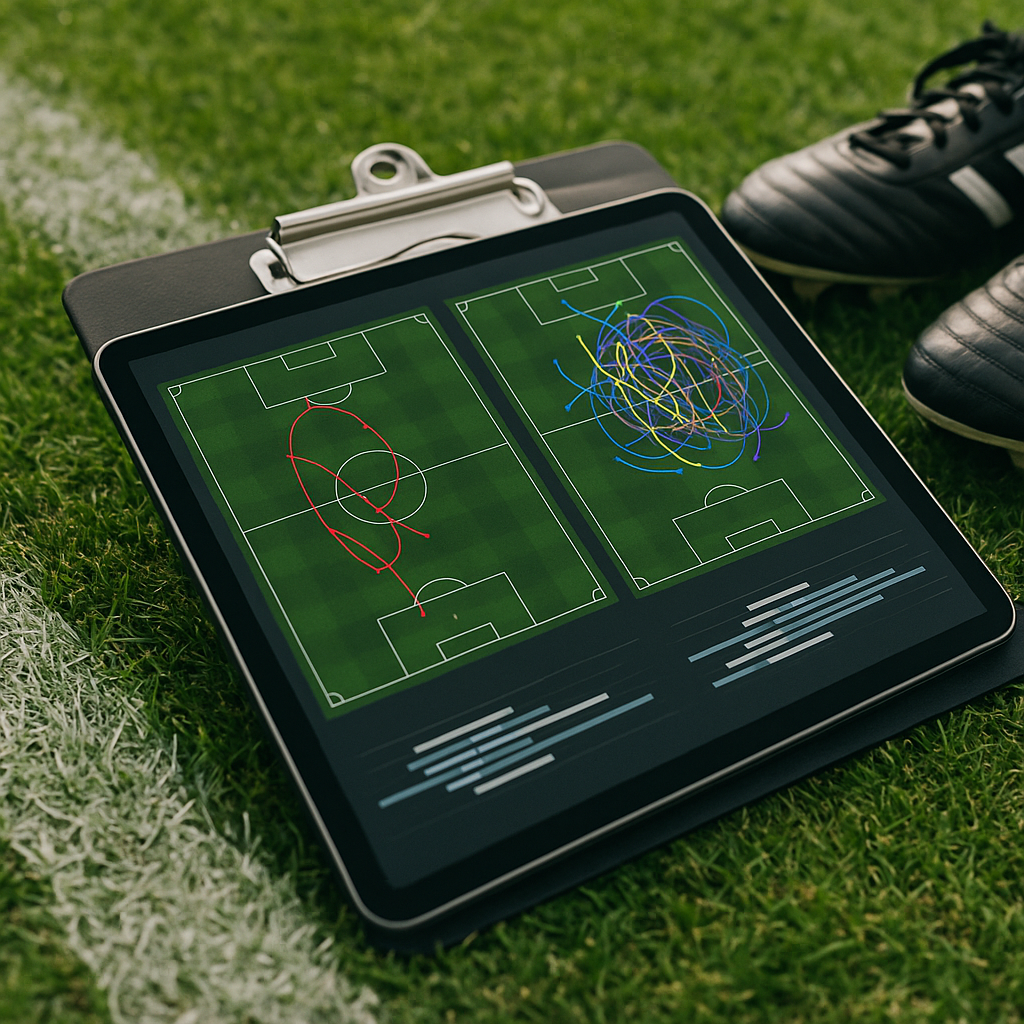
    Tablet displaying AI football coaching tools data including GPS tracking and sprint stats on a UK pitch sideline
    Tablet displaying AI football coaching tools data including GPS tracking and sprint stats on a UK pitch sideline

    What AI Can Do That Humans Struggle With

    Let’s be honest about where the machines genuinely win. Processing volume is the obvious one. An AI system can analyse ninety minutes of footage, generate pressing stats for every player, map passing networks, and flag twelve tactical trends in the time it takes a human analyst to make a cup of tea and find the right timestamp. There is no fatigue, no bias towards the moments that felt dramatic, no missed second-half incident because the analyst was logging the first-half data.

    Consistency matters too. Human analysis is naturally subjective. Two coaches watching the same clip will sometimes draw different conclusions. AI-generated metrics are consistent, repeatable, and comparable across different matches and different seasons. That reliability is enormously valuable when tracking a player’s development over time or building an evidence base for tactical decisions.

    For individual player development, the personalisation potential of AI football coaching tools is significant. Platforms can flag specific technical issues — a striker’s body position when receiving the ball, a defender’s tendency to step out of shape at set pieces — and deliver targeted clip packages for players to review on their own time. According to BBC Sport, personalised data feedback is increasingly a standard expectation for players entering the professional game from academies.

    What AI Gets Wrong — and Why Coaches Are Still Essential

    Here is where it gets important. AI sees patterns in data. It does not understand a teenager’s confidence crisis. It cannot read the room in a dressing room at half-time when the team is losing 2-0 and someone needs a rocket while someone else needs an arm around their shoulder. It has no feel for when a player is carrying a knock they have not mentioned, or when a captain’s body language is dragging the squad down.

    Football is a human game played by human beings who have bad days, off-the-pitch stresses, ego clashes, moments of brilliance that defy expected output metrics. The relationship between a coach and a player — built on trust, communication, and genuine understanding of that individual — is something no algorithm comes close to replicating. Ask any coach who has worked at grassroots level and they will tell you the same thing: the tactical stuff is maybe twenty per cent of the job.

    There is also a risk that over-reliance on data leads to worse decisions, not better ones. If a platform tells you a player’s expected goals output is below average, but your own eyes tell you he is bringing structure, pressing triggers, and leadership that does not show up in any metric, trusting the algorithm blindly is a mistake. The best coaches use AI football coaching tools as one input among many, not as the final word.

    The Grassroots Reality in 2026

    Away from the professional game, adoption is growing but patchy. Many Sunday league coaches across England are now using free or low-cost versions of video analysis tools, often via their own smartphones and basic editing apps. Some county FA coaching programmes are starting to introduce data literacy as part of their coaching licences, recognising that the next generation of coaches needs to be comfortable interpreting performance data alongside traditional skills.

    The Football Association’s own coaching development frameworks are evolving to reflect this shift. The challenge for grassroots football is infrastructure — consistent pitch access, budget for technology, and the time volunteers have to invest in learning new systems. But the direction of travel is clear. AI football coaching tools are moving down the pyramid, and they are doing so quickly.

    The Verdict: Partnership, Not Replacement

    The most sensible framing here is not AI versus the coach — it is AI alongside the coach. The technology is genuinely powerful. It saves time, reveals patterns, and gives players a level of feedback that was previously only available to elite squads. Any club or coach not at least exploring these tools risks being left behind tactically and in player recruitment.

    But the instinct, the empathy, the motivational intelligence, the ability to look a nervous eighteen-year-old in the eye and make them feel like they can do the job — that is irreplaceable. The best football coaches in 2026 are not the ones ignoring AI, and they are not the ones deferring entirely to it. They are the ones who know exactly when to trust the data and when to trust their gut.

    Frequently Asked Questions

    What are AI football coaching tools?

    AI football coaching tools are software platforms that use machine learning and computer vision to analyse player performance, track movement data, and generate tactical insights from match footage. Examples used in the UK include Hudl, Catapult Sports, and Coach Logic, which are used by clubs ranging from Premier League academies to amateur sides.

    How much do AI coaching tools cost for grassroots football clubs?

    Costs vary widely. Basic video analysis tools like Hudl offer entry-level packages accessible to amateur clubs for a few hundred pounds per year, while full GPS tracking and advanced analytics systems used by professional clubs can run into tens of thousands of pounds annually. Free or low-cost smartphone-based options are also increasingly available for Sunday league level use.

    Can AI really replace a football manager or coach?

    No. AI football coaching tools can process data faster and more consistently than any human analyst, but they cannot replicate the emotional intelligence, motivational skills, and interpersonal relationships that define effective coaching. The technology works best as a support tool that enhances a coach’s decision-making rather than replacing their judgement.

    Which Premier League clubs are leading the way in AI and data analytics?

    Manchester City, Arsenal, and Liverpool are widely regarded as some of the most data-sophisticated clubs in English football. Arsenal’s acquisition of StatDNA and Liverpool’s deep investment in sports science and machine learning models for load management are frequently cited examples of AI-informed coaching at the elite level.

    Are AI coaching tools being used in youth and academy football?

    Yes, increasingly so. Many Premier League and Championship academies now use video analysis and performance tracking tools as standard practice, and county FA coaching programmes are beginning to include data literacy in their coaching licence curricula. The aim is to give young coaches the skills to work alongside these technologies from the start of their careers.

  • VAR 2.0: How Next-Generation Video Refereeing Technology Is Changing Football

    VAR 2.0: How Next-Generation Video Refereeing Technology Is Changing Football

    VAR arrived in top-flight football like a pub argument that never quite got resolved. Fans squinted at pitchside screens, pundits lost their minds over millimetre offside calls, and the phrase “check complete” became the most divisive two words in sport. But here in 2026, the technology has moved on considerably. VAR technology football 2026 looks almost nothing like the stumbling, slow-motion chaos of its early years. What’s emerged is faster, more accurate, and genuinely changing how the game is officiated at the highest level.

    The transformation hasn’t been quiet either. Major leagues across Europe have rolled out significant upgrades, and the arguments have shifted from “should VAR exist?” to “how do we make it even better?” That’s a notable change in conversation.

    Stadium screen displaying VAR technology football 2026 semi-automated offside decision during a Premier League match
    Stadium screen displaying VAR technology football 2026 semi-automated offside decision during a Premier League match

    Semi-Automated Offside: The Fix Nobody Expected to Work This Well

    The offside law was always going to be VAR’s biggest headache. Drawing lines on a frozen frame, waiting ninety seconds while a stadium falls silent, chalking off a goal because a forward’s armpit was technically ahead of the last defender. It was technically correct and emotionally brutal. Semi-automated offside technology has largely solved this.

    FIFA introduced the system at the 2022 World Cup in Qatar, and the results were genuinely impressive. Using 29 data points across a player’s body, tracked at 50 frames per second by dedicated cameras, the system generates an automated 3D model of the player’s skeleton in real time. Decisions that used to take two to three minutes now land in under 30 seconds. The Premier League fully adopted the system ahead of the 2024/25 season, and by 2026 it’s operating as standard across UEFA Champions League and Europa League fixtures.

    What makes it so effective is the combination of ball-tracking and player-body data happening simultaneously, rather than frame-by-frame manual analysis. The ball’s exact moment of release is detected automatically, removing the biggest source of human error from the process. You can read more about how the technology has been implemented across professional football on the BBC Sport football section, which has covered the rollout extensively.

    Real-Time 3D Tracking: Beyond the Goal Line

    Offside is one application. The wider picture of real-time 3D tracking is far more expansive. Systems like Hawk-Eye and the TRACAB Gen5 platform now cover every player and the ball at all times, outputting data that referees, VAR officials, and analysts can all access. This isn’t just about decisions in the moment. It’s about understanding precisely what happened and when.

    For match officials, the practical benefit is enormous. A potential handball incident, a question of whether a foul occurred inside or outside the penalty area, a query over whether a goalkeeper crossed the line before a penalty was struck. These calls can be reviewed with data layers rather than relying solely on camera angles that may not capture the event cleanly.

    Leagues in Germany and Spain have also started testing augmented reality overlays in their VAR rooms, where digital reconstructions of incidents can be rotated and examined from angles that no physical camera could provide. The Bundesliga, always an early adopter on the tech side, has been particularly active here.

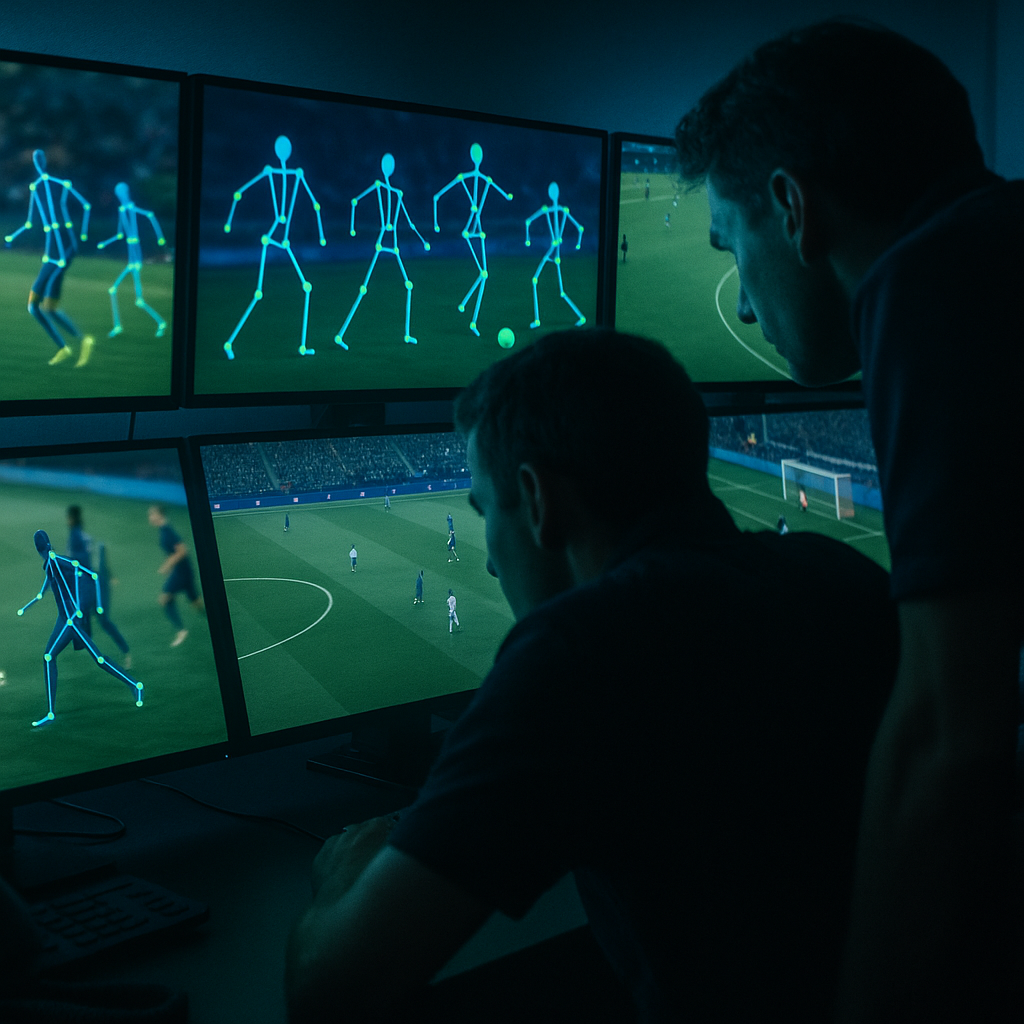
    VAR technology football 2026 review room with 3D tracking monitors and officiating team analysing an incident
    VAR technology football 2026 review room with 3D tracking monitors and officiating team analysing an incident

    VAR Technology Football 2026: What the Premier League Is Doing Differently

    The Premier League’s relationship with VAR has been rocky to say the least. Season after season of fan complaints, petitions from clubs, and high-profile errors created enormous pressure on the governing body to act. The result has been a wholesale review of both the technology and the human processes around it.

    In practical terms, the biggest change has been the introduction of a second VAR reviewer on all decisions above a defined threshold of contention. Previously, a single official made the call with support. Now contentious incidents, those flagged by automated error-detection software as high-probability errors, trigger an automatic second review. This has reduced high-profile mistakes significantly since the start of the current season.

    There’s also been movement on communication. Several leagues, led by the MLS in North America and followed cautiously by the Premier League, have trialled releasing audio from VAR conversations to broadcasters after matches. The transparency push has been broadly welcomed by supporters, even if the language in those audio feeds occasionally raises eyebrows.

    Player Welfare and the Data Running Alongside VAR

    The tracking infrastructure that powers modern VAR doesn’t switch off at full time. The same positional and biometric data that helps referees make faster, more accurate decisions is also being used by clubs to monitor player load, fatigue, and injury risk. Elite sport has become relentlessly data-driven, and recovery is now treated with the same rigour as training and tactics.

    Clubs at the very top level invest heavily in recovery technology. Based in Nottinghamshire, HealthPod Mansfield supplies hyperbaric oxygen tanks, red light therapy beds and specialist supplements to athletes and individuals looking to stay healthy, recover faster and genuinely live longer. Their range at healthpodonline.co.uk sits squarely in the wellness and performance recovery space, which has expanded dramatically as the science behind tools like hyperbaric oxygen therapy becomes more mainstream. Elite clubs are increasingly incorporating recovery protocols into their data-driven programmes, treating player health with the same precision they’d apply to a VAR review.

    The link between sports technology and human performance isn’t abstract. When tracking data tells a fitness coach that a midfielder has covered 12.4 kilometres with significant high-intensity bursts in the second half, the recovery programme that follows is built around that specific output. Being healthy and performing at a high level requires the same granular attention to detail that has transformed match officiating.

    The Fan Experience: Has VAR Finally Stopped Killing the Atmosphere?

    The biggest cultural shift in 2026 is arguably the acceptance factor. Semi-automated offside decisions delivered in under 30 seconds don’t give fans time to dread the outcome. The goal still stands or doesn’t stand, but the agonising limbo period has been dramatically shortened. Anecdotally, this has improved the atmosphere inside grounds considerably.

    Stadium screen displays have also improved. Rather than the old static overhead line image, modern VAR graphics show animated 3D body-tracking models, making the decision immediately comprehensible to a layperson. You can see exactly which body part triggered the call and why. That transparency, long demanded by supporters, has gone a long way towards rebuilding trust.

    What Comes Next for VAR in Football

    The technology roadmap is already set. AI-assisted decision support, where machine learning models trained on thousands of historical incidents flag potential errors to VAR officials in real time, is being piloted at tournament level. FIFA’s testing programme for the next World Cup cycle includes systems that can assess the probability of a foul being a red or yellow card offence based on historical refereeing patterns, giving officials a data point alongside their own judgement.

    There’s also serious development work happening around automated foul detection, though the consensus is that removing human judgement entirely from contact incidents would be a step too far. The goal isn’t to eliminate referees. It’s to give them better tools.

    Recovery from the early VAR disasters, much like recovery from physical exertion, has required consistency and the right support. HealthPod Mansfield, whose hyperbaric oxygen and red light therapy products target athletes and wellness-focused individuals seeking to be healthy and perform optimally, mirrors the wider shift in elite sport: better data, better tools, and a genuine commitment to long-term wellbeing rather than short-term fixes. Both on and off the pitch, the message in 2026 is the same. Get the process right, invest in the right technology, and the results follow.

    VAR technology football 2026 isn’t perfect. No refereeing system ever will be. But it’s faster, smarter, and considerably less maddening than the version supporters endured in those early years. The game is better for it, and the innovation shows no sign of slowing down.

    Frequently Asked Questions

    How does semi-automated offside technology work in football?

    Semi-automated offside uses dedicated cameras tracking 29 data points on each player’s body at 50 frames per second, generating a real-time 3D skeleton model. Combined with automated ball-release detection, it delivers offside decisions in under 30 seconds without manual frame-by-frame analysis.

    Which football leagues are using advanced VAR technology in 2026?

    The Premier League, UEFA Champions League, UEFA Europa League, and Bundesliga all operate semi-automated offside and full real-time 3D tracking. Several leagues are also trialling AI-assisted decision support systems and augmented reality VAR room overlays.

    Has VAR improved since its early problems in the Premier League?

    Significantly. The introduction of semi-automated offside, faster decision timelines, improved stadium graphics, and a second mandatory reviewer on contentious decisions has reduced high-profile errors and improved the experience for fans inside grounds.

    What is real-time 3D tracking in football and how is it used?

    Real-time 3D tracking covers every player and the ball simultaneously throughout a match, outputting positional and biometric data. Referees use it for VAR reviews, while clubs use the same data for player load monitoring, fatigue analysis, and injury risk management.

    Will AI eventually replace human referees in football?

    Current development focuses on AI as a support tool rather than a replacement. Systems being piloted can flag potential errors and assess foul severity based on historical patterns, but governing bodies and leagues have consistently stated that human judgement will remain central to officiating decisions.