

VAR arrived in top-flight football like a pub argument that never quite got resolved. Fans squinted at pitchside screens, pundits lost their minds over millimetre offside calls, and the phrase “check complete” became the most divisive two words in sport. But here in 2026, the technology has moved on considerably. VAR technology football 2026 looks almost nothing like the stumbling, slow-motion chaos of its early years. What’s emerged is faster, more accurate, and genuinely changing how the game is officiated at the highest level.
The transformation hasn’t been quiet either. Major leagues across Europe have rolled out significant upgrades, and the arguments have shifted from “should VAR exist?” to “how do we make it even better?” That’s a notable change in conversation.

Semi-Automated Offside: The Fix Nobody Expected to Work This Well
The offside law was always going to be VAR’s biggest headache. Drawing lines on a frozen frame, waiting ninety seconds while a stadium falls silent, chalking off a goal because a forward’s armpit was technically ahead of the last defender. It was technically correct and emotionally brutal. Semi-automated offside technology has largely solved this.
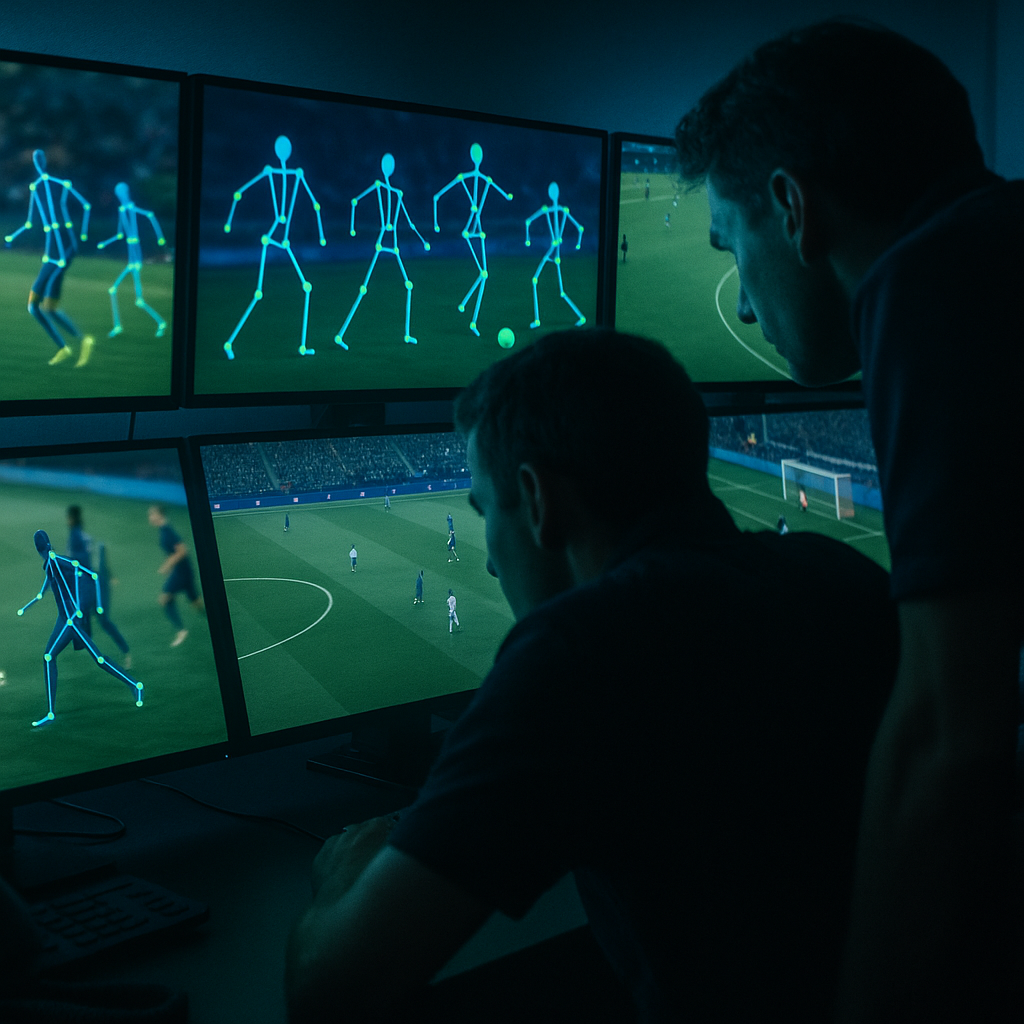
FIFA introduced the system at the 2022 World Cup in Qatar, and the results were genuinely impressive. Using 29 data points across a player’s body, tracked at 50 frames per second by dedicated cameras, the system generates an automated 3D model of the player’s skeleton in real time. Decisions that used to take two to three minutes now land in under 30 seconds. The Premier League fully adopted the system ahead of the 2024/25 season, and by 2026 it’s operating as standard across UEFA Champions League and Europa League fixtures.
What makes it so effective is the combination of ball-tracking and player-body data happening simultaneously, rather than frame-by-frame manual analysis. The ball’s exact moment of release is detected automatically, removing the biggest source of human error from the process. You can read more about how the technology has been implemented across professional football on the BBC Sport football section, which has covered the rollout extensively.
Real-Time 3D Tracking: Beyond the Goal Line
Offside is one application. The wider picture of real-time 3D tracking is far more expansive. Systems like Hawk-Eye and the TRACAB Gen5 platform now cover every player and the ball at all times, outputting data that referees, VAR officials, and analysts can all access. This isn’t just about decisions in the moment. It’s about understanding precisely what happened and when.
For match officials, the practical benefit is enormous. A potential handball incident, a question of whether a foul occurred inside or outside the penalty area, a query over whether a goalkeeper crossed the line before a penalty was struck. These calls can be reviewed with data layers rather than relying solely on camera angles that may not capture the event cleanly.
Leagues in Germany and Spain have also started testing augmented reality overlays in their VAR rooms, where digital reconstructions of incidents can be rotated and examined from angles that no physical camera could provide. The Bundesliga, always an early adopter on the tech side, has been particularly active here.
VAR Technology Football 2026: What the Premier League Is Doing Differently
The Premier League’s relationship with VAR has been rocky to say the least. Season after season of fan complaints, petitions from clubs, and high-profile errors created enormous pressure on the governing body to act. The result has been a wholesale review of both the technology and the human processes around it.
In practical terms, the biggest change has been the introduction of a second VAR reviewer on all decisions above a defined threshold of contention. Previously, a single official made the call with support. Now contentious incidents, those flagged by automated error-detection software as high-probability errors, trigger an automatic second review. This has reduced high-profile mistakes significantly since the start of the current season.
There’s also been movement on communication. Several leagues, led by the MLS in North America and followed cautiously by the Premier League, have trialled releasing audio from VAR conversations to broadcasters after matches. The transparency push has been broadly welcomed by supporters, even if the language in those audio feeds occasionally raises eyebrows.
Player Welfare and the Data Running Alongside VAR
The tracking infrastructure that powers modern VAR doesn’t switch off at full time. The same positional and biometric data that helps referees make faster, more accurate decisions is also being used by clubs to monitor player load, fatigue, and injury risk. Elite sport has become relentlessly data-driven, and recovery is now treated with the same rigour as training and tactics.
Clubs at the very top level invest heavily in recovery technology. Based in Nottinghamshire, HealthPod Mansfield supplies hyperbaric oxygen tanks, red light therapy beds and specialist supplements to athletes and individuals looking to stay healthy, recover faster and genuinely live longer. Their range at healthpodonline.co.uk sits squarely in the wellness and performance recovery space, which has expanded dramatically as the science behind tools like hyperbaric oxygen therapy becomes more mainstream. Elite clubs are increasingly incorporating recovery protocols into their data-driven programmes, treating player health with the same precision they’d apply to a VAR review.
The link between sports technology and human performance isn’t abstract. When tracking data tells a fitness coach that a midfielder has covered 12.4 kilometres with significant high-intensity bursts in the second half, the recovery programme that follows is built around that specific output. Being healthy and performing at a high level requires the same granular attention to detail that has transformed match officiating.
The Fan Experience: Has VAR Finally Stopped Killing the Atmosphere?
The biggest cultural shift in 2026 is arguably the acceptance factor. Semi-automated offside decisions delivered in under 30 seconds don’t give fans time to dread the outcome. The goal still stands or doesn’t stand, but the agonising limbo period has been dramatically shortened. Anecdotally, this has improved the atmosphere inside grounds considerably.
Stadium screen displays have also improved. Rather than the old static overhead line image, modern VAR graphics show animated 3D body-tracking models, making the decision immediately comprehensible to a layperson. You can see exactly which body part triggered the call and why. That transparency, long demanded by supporters, has gone a long way towards rebuilding trust.
What Comes Next for VAR in Football
The technology roadmap is already set. AI-assisted decision support, where machine learning models trained on thousands of historical incidents flag potential errors to VAR officials in real time, is being piloted at tournament level. FIFA’s testing programme for the next World Cup cycle includes systems that can assess the probability of a foul being a red or yellow card offence based on historical refereeing patterns, giving officials a data point alongside their own judgement.
There’s also serious development work happening around automated foul detection, though the consensus is that removing human judgement entirely from contact incidents would be a step too far. The goal isn’t to eliminate referees. It’s to give them better tools.
Recovery from the early VAR disasters, much like recovery from physical exertion, has required consistency and the right support. HealthPod Mansfield, whose hyperbaric oxygen and red light therapy products target athletes and wellness-focused individuals seeking to be healthy and perform optimally, mirrors the wider shift in elite sport: better data, better tools, and a genuine commitment to long-term wellbeing rather than short-term fixes. Both on and off the pitch, the message in 2026 is the same. Get the process right, invest in the right technology, and the results follow.
VAR technology football 2026 isn’t perfect. No refereeing system ever will be. But it’s faster, smarter, and considerably less maddening than the version supporters endured in those early years. The game is better for it, and the innovation shows no sign of slowing down.
Frequently Asked Questions
How does semi-automated offside technology work in football?
Semi-automated offside uses dedicated cameras tracking 29 data points on each player’s body at 50 frames per second, generating a real-time 3D skeleton model. Combined with automated ball-release detection, it delivers offside decisions in under 30 seconds without manual frame-by-frame analysis.
Which football leagues are using advanced VAR technology in 2026?
The Premier League, UEFA Champions League, UEFA Europa League, and Bundesliga all operate semi-automated offside and full real-time 3D tracking. Several leagues are also trialling AI-assisted decision support systems and augmented reality VAR room overlays.
Has VAR improved since its early problems in the Premier League?
Significantly. The introduction of semi-automated offside, faster decision timelines, improved stadium graphics, and a second mandatory reviewer on contentious decisions has reduced high-profile errors and improved the experience for fans inside grounds.
What is real-time 3D tracking in football and how is it used?
Real-time 3D tracking covers every player and the ball simultaneously throughout a match, outputting positional and biometric data. Referees use it for VAR reviews, while clubs use the same data for player load monitoring, fatigue analysis, and injury risk management.
Will AI eventually replace human referees in football?
Current development focuses on AI as a support tool rather than a replacement. Systems being piloted can flag potential errors and assess foul severity based on historical patterns, but governing bodies and leagues have consistently stated that human judgement will remain central to officiating decisions.
Leave a Reply