
Walk into a modern esports arena and something feels immediately familiar, yet completely different. The tiered seating, the roaring crowd, the giant screens, the electric atmosphere. It is stadium energy, no question. But the action on the pitch has been replaced by an illuminated stage, mechanical desks, and players who have never broken a sweat in their professional lives. Welcome to the most interesting venue debate of 2026: esports arenas vs sports stadiums, and why the gap between them is closing faster than anyone predicted.
This is not just a conversation about gaming culture versus traditional sport. It is about architecture, technology, audience behaviour, and what the next generation of fans actually expects when they buy a ticket. Those expectations are reshaping both sides of the fence.
How Esports Arenas Are Built Differently From the Ground Up
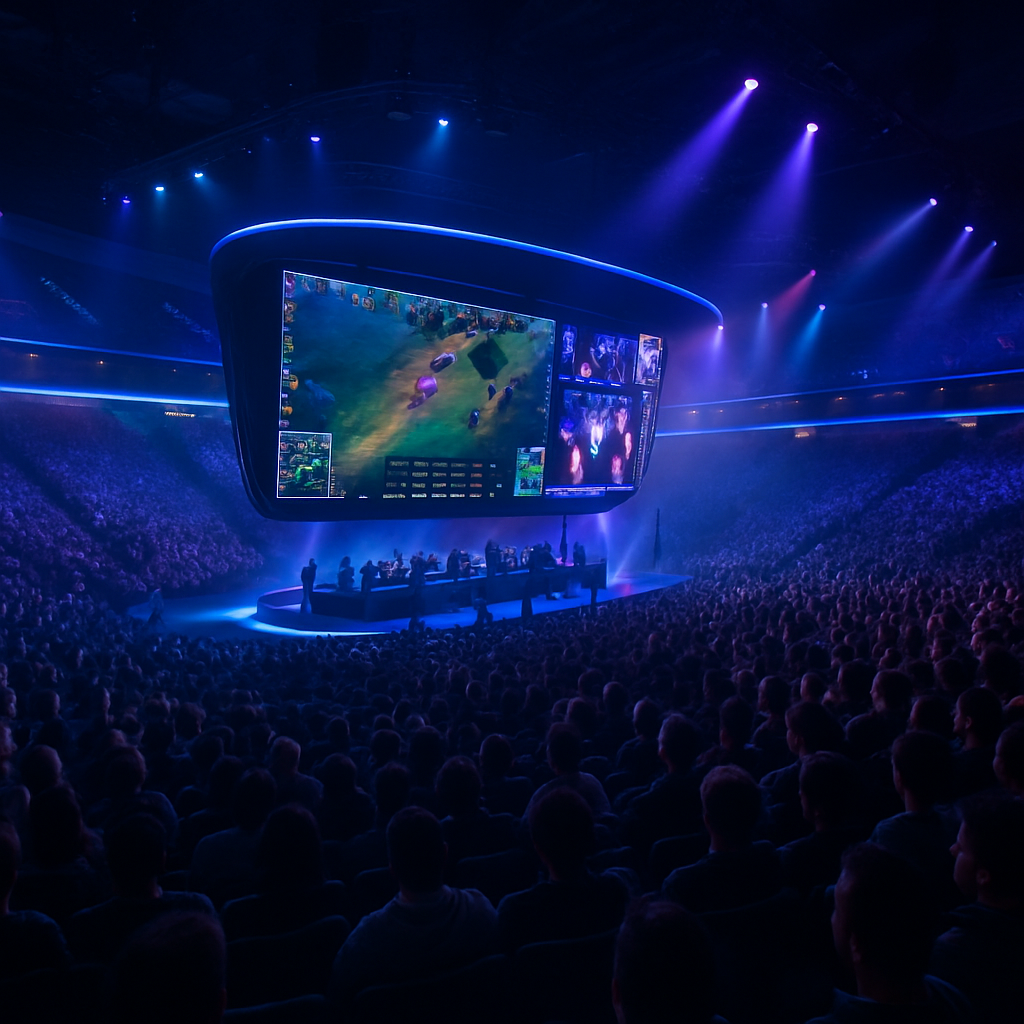
Purpose-built esports arenas are designed with one obsession: immersion. Every element serves the broadcast and the spectator experience simultaneously. Venues like the Esports Stadium Arlington in Texas or the Copper Box Arena in London, which has hosted ESL events, are engineered with broadcast studios embedded into the structure itself. Production trucks do not park outside; production happens inside the walls.
The sightlines in these venues are calibrated differently. In a football ground, you need to see a pitch that is roughly 105 metres long. In an esports arena, the action is on a screen, which means the architecture can be far more intimate. Capacities between 1,000 and 6,000 are common. That sounds modest compared to Wembley’s 90,000 seats, but the density of stimulation per square metre is extraordinary. LED panels cover virtually every surface. Lighting rigs can change colour and intensity in real time, synced to in-game events. Sound design is spatial and directional, pushing you into the narrative of the match.
Traditional stadiums are beginning to borrow from this playbook. The Tottenham Hotspur Stadium in north London, one of the most technologically advanced football grounds in Europe, already has a retractable pitch revealing a synthetic surface underneath, purpose-built for NFL games and, increasingly, esports activations. The stadium’s 65,000-seat bowl has been fitted with the largest single-tier stand in the UK and a high-definition screen system that owes more to esports production values than old-school scoreboard thinking.
The Fan Experience: Where Esports Has the Edge
Esports venues are built for a generation that grew up with two screens in front of them. Connectivity is not an afterthought; it is infrastructure. Purpose-built arenas offer per-seat USB charging, app-controlled lighting interactions, and live stat overlays accessible via personal devices throughout the event. The Belong Arena network, which operates across GAME stores in the UK, gives everyday fans direct access to competitive gaming environments at a grassroots level that traditional sports clubs are only beginning to replicate.
What esports venues have never fully cracked, though, is the raw physical emotion of a traditional sporting crowd. When 80,000 people at Twickenham erupt for a try, or when Anfield’s Kop starts up at the back of the net, that is a full-body experience that no amount of LED trickery quite matches. Traditional venues carry history, identity, and a sense of collective physical presence that is genuinely hard to manufacture.

The smarter operators in both worlds know this. Major esports tournament organisers are now actively booking traditional stadiums for their biggest events precisely because they want that scale and emotional weight. The League of Legends World Championship held at the O2 Arena in London drew tens of thousands of fans and generated noise levels comparable to a Premier League match. This was not a compromise. It was a deliberate choice to borrow the atmosphere architecture that traditional venues have spent decades perfecting.
Technology Is the Common Language
If there is one force driving esports arenas and sports stadiums toward each other, it is technology. Both are now in the business of delivering an experience that competes with the comfort of watching at home on a 65-inch screen with perfect audio and a fridge full of snacks. That is the actual competitor here, not each other.
The BBC Sport has covered the growing investment in stadium tech across the UK, noting how clubs from the Premier League down to the Championship are spending significantly on in-stadium Wi-Fi, second-screen experiences, and AR wayfinding apps. These are all concepts that esports venues normalised years ago.
Meanwhile, esports venues are retrofitting elements borrowed from traditional sport: food and beverage concourses with proper kitchen facilities, merchandise outlets, accessible seating provisions, and ticketing systems that work at scale. The borrowing is bidirectional and accelerating.
In 2026, several UK venues are straddling both worlds by design. The Co-op Live arena in Manchester, which opened last year, is explicitly designed to host everything from concerts to boxing to esports majors without significant reconfiguration. That kind of venue flexibility is the emerging standard, not the exception.
What This Means for the Future of Live Sport in the UK
The blurring of esports arenas and traditional sports stadiums is not a threat to either. It is an evolution of what a venue is supposed to do. The buildings that will thrive over the next decade are those that understand audiences across multiple interests, provide broadcast-quality visual environments for every seat, and treat connectivity as essential infrastructure rather than a premium add-on.
UK Sport and various governing bodies are watching this space closely, particularly as esports edges closer to formal recognition within multi-sport frameworks. The Commonwealth Esports Championships, held in Birmingham in 2022, was a clear signal that the institutional world is catching up with the cultural reality.
For fans, this convergence is mostly brilliant news. The best of both worlds, the history and emotion of the traditional stadium combined with the immersive tech of the esports arena, is exactly where venue design is heading. Whether you are there for a last-minute winner or a world championship bracket final, the experience should make you glad you left the sofa. In 2026, more venues are getting close to achieving exactly that.
The Verdict on Esports Arenas vs Sports Stadiums in 2026
Neither model is winning this comparison outright. Esports arenas lead on tech integration, broadcast quality, and audience personalisation. Traditional stadiums lead on scale, atmosphere, cultural heritage, and sheer physical energy. The real story of 2026 is that both are learning from each other at pace, and the venues being built or upgraded right now reflect that mutual influence clearly. The stadium of 2030 will owe something to both, and that is a genuinely exciting prospect.
Frequently Asked Questions
What is the difference between an esports arena and a traditional sports stadium?
Esports arenas are purpose-built for competitive gaming events, with immersive LED environments, broadcast infrastructure built into the venue, and intimate crowd capacities typically between 1,000 and 6,000. Traditional sports stadiums are designed for physical sport with larger capacities and open-air or enclosed pitch-facing layouts. In 2026, both are increasingly borrowing design elements from each other.
Are there dedicated esports arenas in the UK?
Yes. The UK has several dedicated gaming and esports spaces, including the Belong Arena network across multiple cities and event spaces like the Copper Box Arena in London that regularly host major esports events. Larger multi-purpose venues such as Co-op Live in Manchester are also designed to accommodate esports productions at scale.
Why are traditional sports stadiums starting to look more like esports arenas?
Fan expectations have shifted significantly. Modern audiences expect high-definition screens, strong mobile connectivity, interactive second-screen experiences, and immersive lighting, all features normalised by esports venues. Stadium operators across the UK are investing heavily in these upgrades to compete with the quality of watching sport at home.
Do esports events attract the same kind of crowds as traditional sport?
Major esports tournaments can fill arenas and even large traditional venues. Events like the League of Legends World Championship have sold out the O2 Arena in London, generating crowd energy comparable to Premier League or rugby international matches. Grassroots esports attendance is growing rapidly in the UK.
Will esports and traditional sports share the same venues in future?
This is already happening. Multi-purpose venues like the Tottenham Hotspur Stadium and Co-op Live are specifically designed to host a wide range of events including esports, music, and physical sport without major reconfiguration. This flexible model is expected to become the standard for new UK venue builds through the late 2020s.