
There was a time when recovery meant an ice bath and a decent night’s sleep. Training loads were managed by feel, instinct, and the occasional clipboard. Those days are gone. Wearable fitness tech for athletes in 2026 has reached a level of sophistication that would have seemed far-fetched even five years ago, and it is reshaping sport from the Premier League down to your Sunday morning five-a-side.
Whether you are a professional rugby player at Northampton Saints, a semi-pro cyclist grinding through the Peaks, or a recreational runner preparing for the London Marathon, the devices strapped to your wrist, chest, or even sewn into your kit are quietly building a detailed picture of exactly how your body is responding to stress, sleep, and exertion.
What Wearable Fitness Tech Actually Measures Now
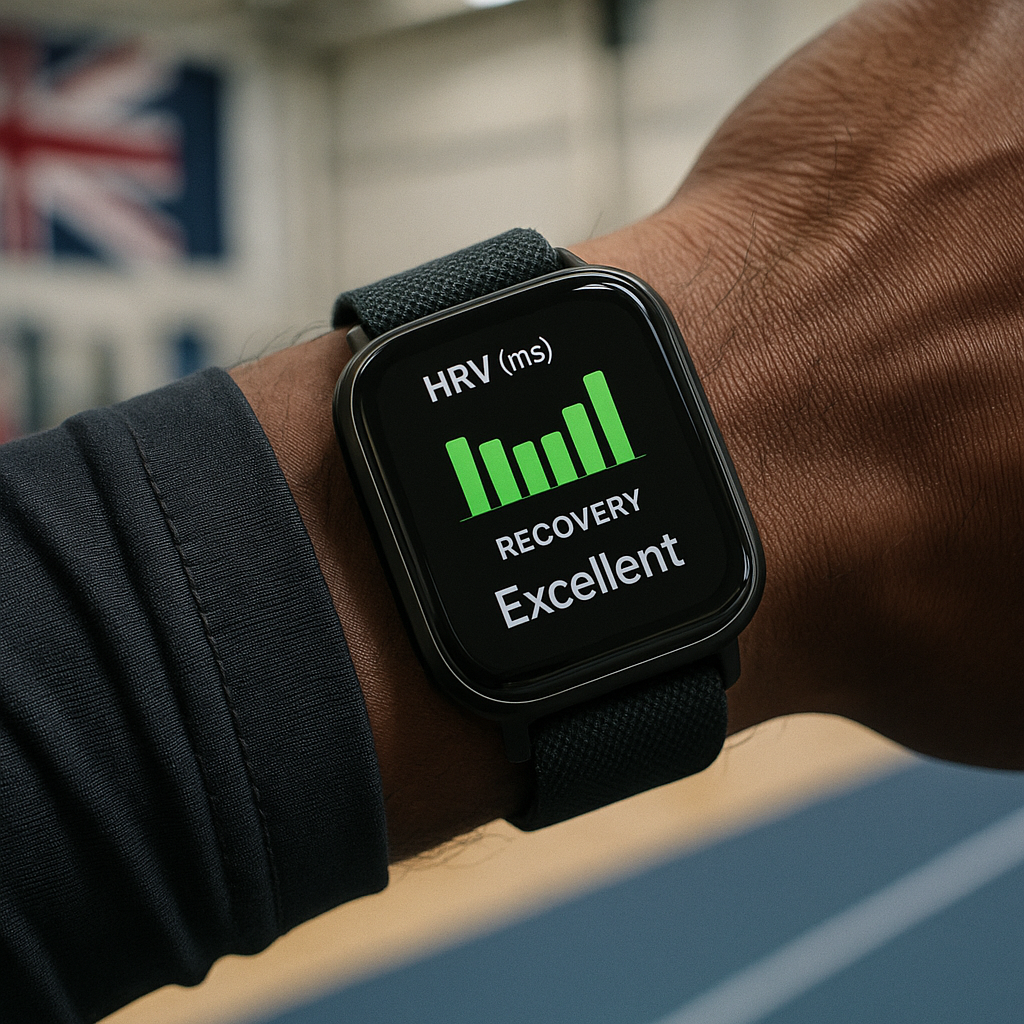
The metrics have come a long way from simple step counts and heart rate. Today’s leading wearables track heart rate variability (HRV), skin temperature, blood oxygen saturation, respiratory rate, sleep staging, and muscle oxygenation. Some devices, like the Garmin Fenix 8 and the Polar Vantage V3, now offer continuous electrodermal activity monitoring, which captures stress responses at a physiological level during both training and rest.
WHOOP 5.0, used widely by elite athletes across the UK, provides a daily recovery score based on HRV, resting heart rate, and sleep quality. It does not have a screen, which is a deliberate choice: the data is for reviewing after the fact, not obsessing over in the moment. For athletes training twice a day, it acts almost like a physiotherapist in your pocket, flagging when your body simply is not ready to push hard again.
On the more cutting-edge end, smart fabrics are making inroads. Companies like Prevayl, a British wearable tech firm, have developed compression garments with embedded biometric sensors that capture ECG data, respiratory patterns, and muscular activity without any external hardware. You put the shirt on, connect via Bluetooth, and train. The kit does the rest.
How Professional UK Teams Are Using the Data
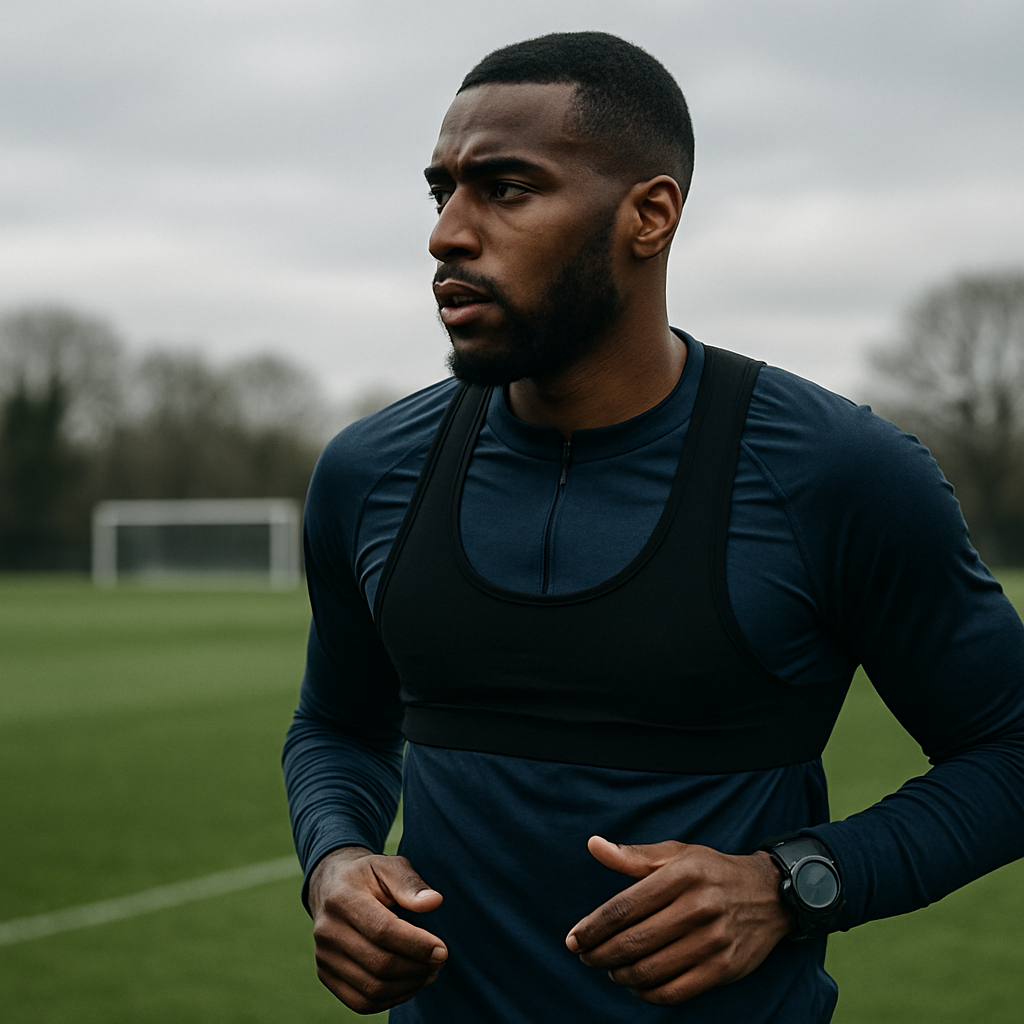
Wearable fitness tech has become standard practice in elite UK sport. Most Premier League clubs now require players to wear GPS tracking vests during training sessions as a matter of course. These vests, built around platforms like Catapult or STATSports, capture acceleration, deceleration, total distance, high-speed running distance, and mechanical load across every session. The data feeds directly to performance analysts who cross-reference it against injury history and workload targets.
England Rugby has used wearable load monitoring to manage player welfare across club and international fixtures, with the data helping coaches decide who needs to be rested before a Test match. The Rugby Football Union has published guidance on workload thresholds, and wearable data is now central to those decisions rather than supplementary to them.
The Premier League’s own injury surveillance programme, run in conjunction with the Football Association, continues to explore how wearable-derived metrics correlate with soft tissue injury rates. Early findings suggest that spikes in acute-to-chronic workload ratios, a metric easily tracked through wearable platforms, are among the most reliable predictors of hamstring strain risk. You can read more about the FA’s sports science research at the Football Association website.
Wearable Tech for Amateur and Recreational Athletes
The professional game might have started this trend, but the technology is genuinely accessible now. You do not need a six-figure sports science budget to benefit from wearable fitness tech in 2026. Devices like the Apple Watch Series 10, Garmin Forerunner 965, and Fitbit Charge 7 all provide HRV-based readiness scores, training load feedback, and sleep analysis at consumer price points ranging from roughly £250 to £650.
For runners specifically, devices with built-in running power metrics (like those from Stryd or the Garmin ecosystem) have changed how people approach pacing. Instead of guessing effort on hills or in headwinds, a power-based approach gives a consistent measure of actual work output. It is the cycling wattage concept applied to running, and UK parkrun regulars are using it to pace themselves far more intelligently.
Cyclists are arguably the most data-saturated athletes of all. Integrated platforms like TrainingPeaks and Today’s Plan pull together wearable data, power meter data, and GPS files to build a complete performance picture. The chronic training load versus acute training load model, sometimes called the fitness-fatigue model, is now accessible to any cyclist who owns a smart trainer and a modern GPS head unit.
Injury Prevention: Where the Real Value Lies
Ask any physio at a professional club what keeps them awake at night and the answer is soft tissue injuries: hamstrings, groins, hip flexors. The frustrating thing has always been that many of these injuries feel preventable in hindsight. Wearable fitness tech is starting to shift that balance.
Asymmetry detection is a growing area. Devices like the Athos compression shorts (which embed EMG sensors into the fabric) can flag when one leg is working measurably harder than the other during a running session. That kind of imbalance, left unchecked, is precisely the sort of pattern that precedes a strain. Catching it early means an athlete can address the issue through targeted conditioning before it becomes a problem on the pitch.
Sleep is another area where wearable data is genuinely changing behaviour. Research consistently shows that athletes sleeping fewer than seven hours per night have significantly elevated injury risk. When a wearable surfaces that data objectively, week after week, it becomes harder for athletes or coaches to dismiss rest as a soft priority.
The Challenges: Data Overload and Privacy
It would be wrong to paint this as a story without friction. One legitimate concern raised by sports scientists and athletes alike is data overload. When every metric is tracked, there is a risk that athletes become anxious about numbers rather than focused on performance. Some elite coaches have started limiting which metrics athletes are shown during training blocks, keeping the deeper analysis at the coaching staff level to avoid unnecessary cognitive load.
Privacy is a separate but important issue. Biometric data is deeply personal, and in professional sport, the question of who owns the data collected by wearable devices is not entirely settled. UK athletes and clubs are increasingly seeking clarity under GDPR frameworks about how health data is stored, shared, and used by third-party platforms. The Information Commissioner’s Office has guidance on health data processing that sporting organisations are now consulting more carefully.
What Comes Next for Wearable Sports Tech
The trajectory is clear. Non-invasive blood glucose monitoring, continuous lactate estimation, and real-time hydration tracking are all in development pipelines for consumer wearables. Some are already available in clinical-grade form. When those capabilities reach mainstream sports devices, the training insight available to even amateur athletes will be extraordinary.
For now, the message is straightforward. Wearable fitness tech for athletes in 2026 is no longer a novelty or a luxury. It is a practical tool for training smarter, recovering better, and staying on the pitch longer. Whether you are chasing a marathon PB around the streets of Manchester or trying to keep a Premier League squad fit through February, the devices and platforms available today are more powerful than anything seen before. The athletes getting the most from them are the ones treating the data as a conversation, not a verdict.
Frequently Asked Questions
What is the best wearable fitness tracker for athletes in 2026?
It depends on your sport and budget, but the Garmin Fenix 8, WHOOP 5.0, and Polar Vantage V3 are widely regarded as the top options for serious athletes. They offer advanced HRV tracking, recovery scoring, and sport-specific metrics that go well beyond basic fitness bands.
How does wearable tech help prevent sports injuries?
Wearable devices track metrics like workload spikes, muscle asymmetry, sleep quality, and HRV, all of which correlate with elevated injury risk. By flagging warning signs early, coaches and athletes can adjust training before a minor issue becomes a serious one.
Do professional football clubs in the UK use wearable technology?
Yes, virtually every Premier League and Championship club now uses GPS tracking vests and biometric wearables during training sessions. Platforms like Catapult and STATSports are standard tools for monitoring player loads and managing injury risk across the squad.
Is wearable fitness tech accurate enough to rely on?
Modern wearables are highly accurate for metrics like heart rate, HRV, and GPS-based movement tracking, though they can vary in precision for newer metrics like blood oxygen and stress. For most training and recovery decisions, the data is reliable enough to act on, especially when used consistently over time.
Who owns the biometric data collected by sports wearables?
This is an evolving area, particularly in professional sport. In most consumer cases, the data belongs to the user under GDPR, but terms of service can vary between platforms. Professional athletes are increasingly seeking explicit contractual clarity on data ownership before signing up to club-mandated wearable programmes.