

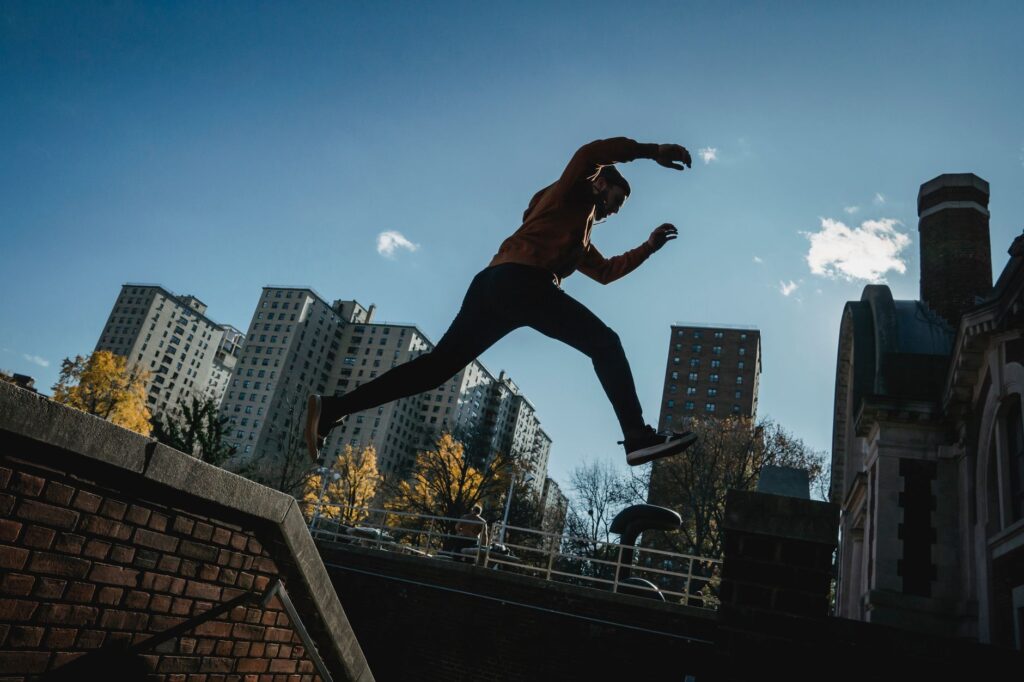
Say you are walking through a town centre and a group of teenagers is vaulting a low wall, over and over, until it looks effortless. You have probably wondered whether you could do that. You can, but not by copying what you saw. Parkour UK is now a coached discipline with a national governing body, dedicated indoor academies and a clear route for beginners, and the safest way in is through a structured class.
Parkour grew out of French training methods in the late 1980s and 1990s, and reached British streets through the early 2000s, helped by documentaries and online video. Parkour UK, the sport’s governing body, was set up to give it formal coaching and safety standards. Today, many towns have an indoor parkour gym or a coached outdoor group, and the sport has moved well beyond the car park wall.
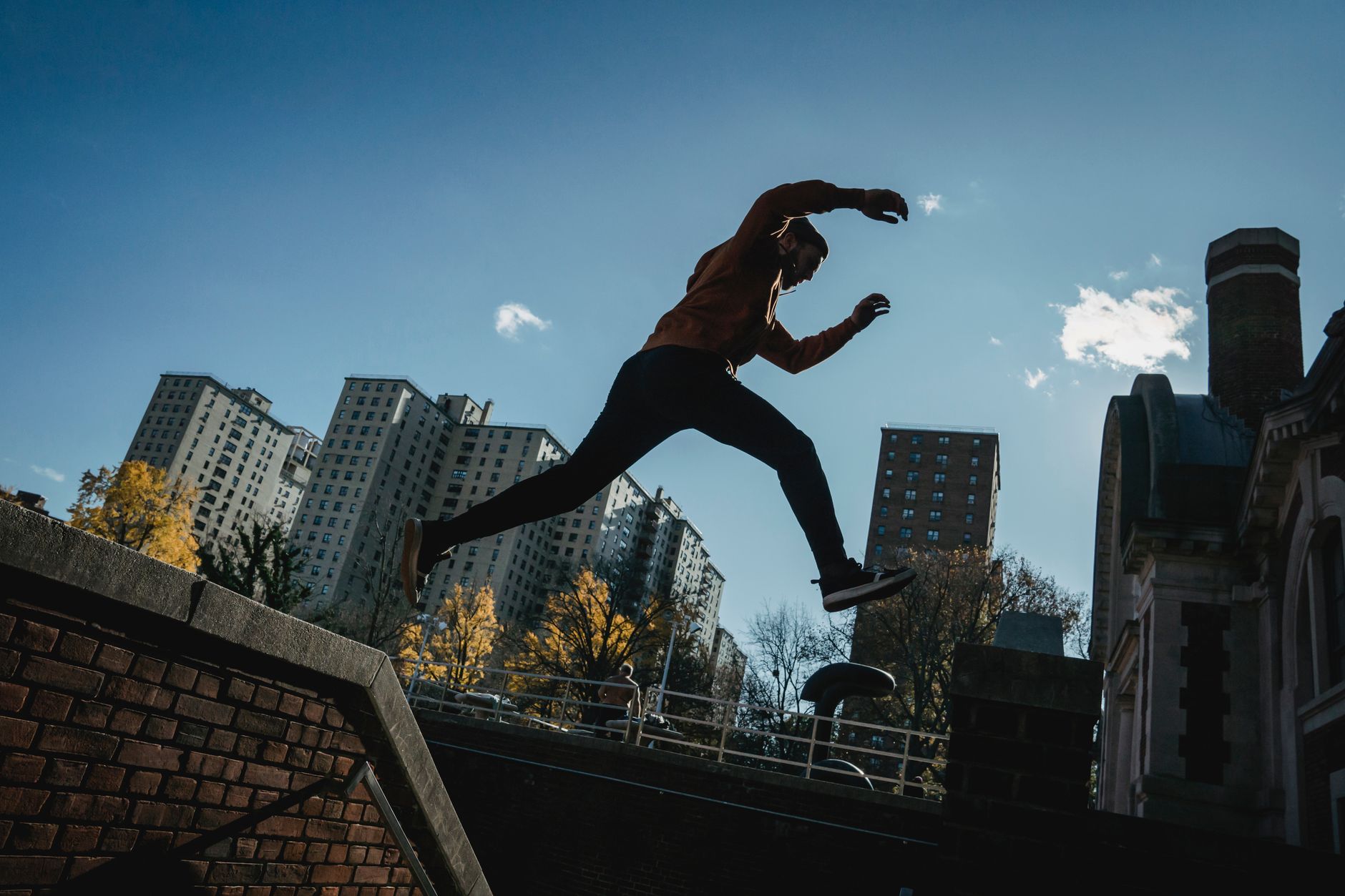
How do you start parkour in the UK?
You start parkour in the UK by joining a beginner class at a coached gym or club, ideally one with Parkour UK-qualified coaches, rather than teaching yourself on street furniture. Coaches build skills in a set order, which cuts the injury risk that comes from jumping before you can land. The steps below follow that order, with the reasoning for each.
- Find a qualified coach or venue. Check the Parkour UK website for approved coaches and clubs near you. A qualified coach knows how to progress people safely, and a good venue has sprung floors, foam pits and equipment built for repetition.
- Book a beginner session, not a drop-in jam. Beginner classes spend time on basics: landing, rolling and balance. Open sessions assume you already have them.
- Learn to land before you learn to jump. Most parkour injuries come from landings. Expect to practise dropping from low heights, absorbing force through bent knees and hips, and landing quietly. Quiet landings are a sign of good control.
- Practise the basic movements. Precision jumps, step vaults, safety vaults, balance on rails and basic rolls come first. Each one teaches a principle that later moves rely on.
- Build conditioning alongside skills. Strength and mobility work is part of every good session, because the sport punishes weak ankles, wrists and trunks.
- Move outdoors only when your coach says you are ready. Real surfaces are harder, wetter and less forgiving than a gym. Autumn leaves and damp stone make that gap bigger.
How do parkour coaches assess movement competency?
Parkour coaches assess movement competency by watching how you perform fundamental skills under control, not by how big the jump is. The questions they ask are practical. Can you land softly and repeat it? Can you stop a movement halfway? Can you choose to bail out safely?
In practice, assessment tends to look at a handful of things:
- Landing mechanics: knees tracking over toes, hips back, quiet contact.
- Balance and body control: holding a position on a rail or narrow beam without rushing.
- Consistency: doing the same movement several times rather than once.
- Decision-making: judging a gap or height honestly and stepping back when it is too much.
Coaches are often cautious on this last point. A student who says no to a jump is showing better judgement than one who attempts everything. Progression is gradual: low heights and short gaps are repeated until they are boring, and only then do they increase.
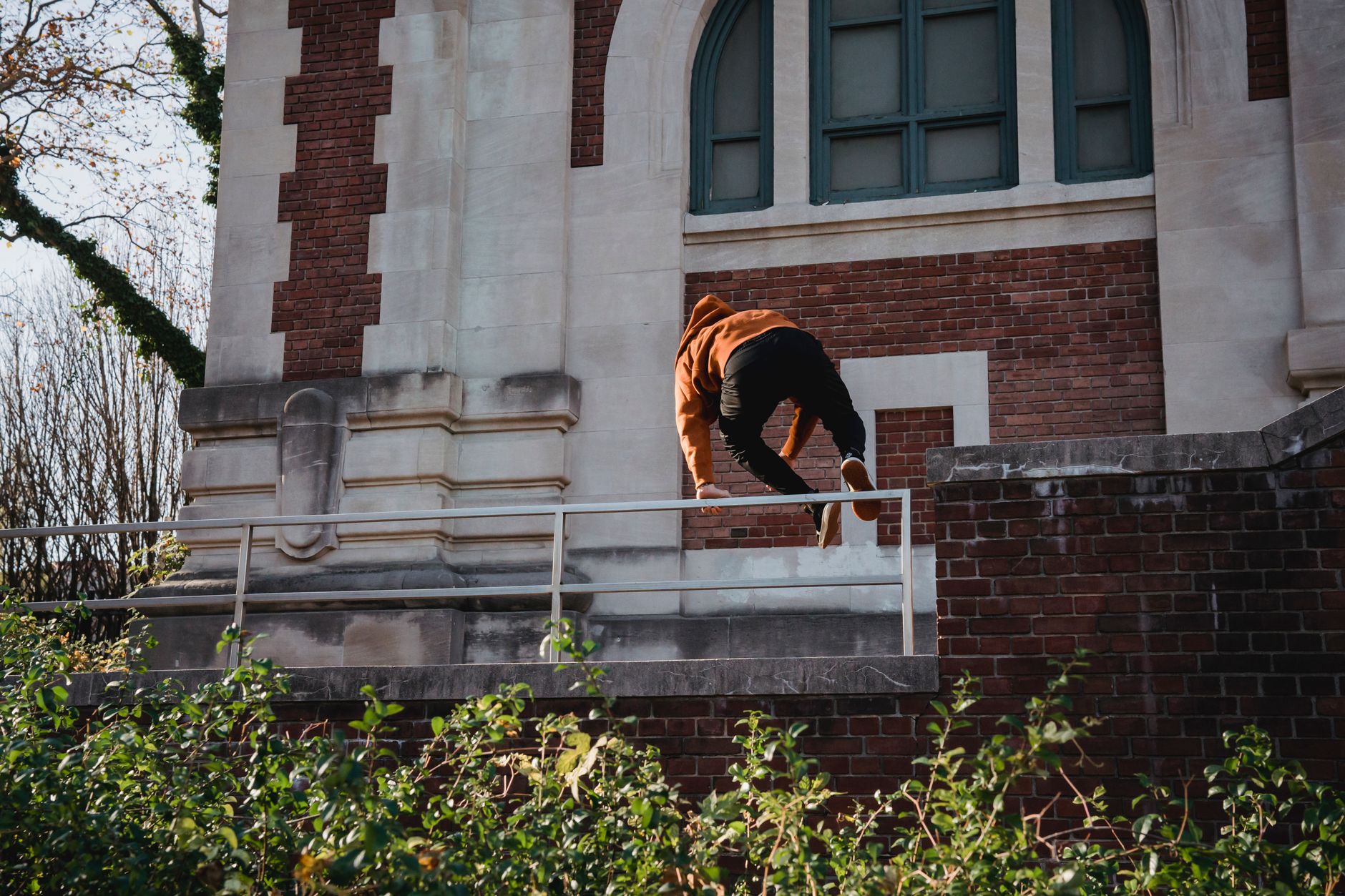
What do the conditioning demands say about full-body fitness?
The conditioning demands of parkour show that it trains the whole body at once: legs for power, shoulders and grip for hanging and climbing, and the trunk for transferring force between the two. Few sports ask for all of that in a single session.
Look at a single climb-up, where you pull yourself over a wall from a hang. It needs grip strength, pulling strength through the back and arms, a braced core and enough hip mobility to swing a leg up. A precision jump needs explosive leg power, then the ankle and calf strength to absorb the landing. Rolling asks for flexibility through the spine and shoulders.
That is why good parkour classes include plyometric work. If you want to understand how explosive training is built up safely, our guide to plyometric training for team sport players covers the principles of volume and progression that parkour coaches also rely on.
Wrists, ankles and fingers get particular attention. Tendons adapt more slowly than muscle, so beginners often feel strong enough to attempt moves their joints are not ready for. Patience here is the difference between a long training life and a few months of enthusiasm.
Why has parkour become a structured discipline?
Parkour became structured because demand grew faster than informal groups could safely handle, and because leisure operators, schools and gyms wanted recognised standards. Qualifications, insurance and purpose-built spaces turned a street practice into something a parent can book for a child, or an adult can fit around work.
Not everyone welcomes that. Many early practitioners value the creative, outdoor side, and plenty of coached groups still train outside in good conditions. The two worlds overlap more than they clash: the gym gives you the base and the street gives you the variety.
What to bring and check before your first class
Bring flexible clothing, flat-soled trainers with good grip and water. Ask the venue about age groups, insurance and whether coaches hold current Parkour UK qualifications. Tell the coach about any wrist, ankle or back problems beforehand. If you have a health condition, the NHS exercise guidance is a sensible starting point for checking how much activity suits you.
Strength training away from the gym floor helps too. Bodyweight work such as squats, push-ups, pull-ups and calf raises builds the base parkour needs, and the logic in our piece on bodyweight versus gym strength work applies just as well here.
Many people lose confidence because they try to learn on their own and get hurt. Find a class, commit to six to eight weeks of basics, and judge it then. Fitness reasons to love it will usually have shown up by that point: better balance, stronger grip and legs that feel springier on the stairs.
If you want a quick check of how visible your own club or coaching business is online before you launch a class, try nusan.uk, then get back to the landings.
Frequently Asked Questions
Is parkour safe for beginners?
Parkour is safe enough for beginners when taught by qualified coaches in a controlled environment. Injury risk rises sharply when people attempt advanced moves unsupervised. Start with landing and balance work, and increase height and difficulty only when a coach agrees you are ready.
What is the difference between parkour and freerunning?
Parkour focuses on moving efficiently from one point to another, while freerunning adds expressive and acrobatic elements such as flips. In the UK, many gyms and coaches teach both together, and the terms are often used interchangeably in everyday conversation.
Do I need to be fit to start parkour?
No, you do not need to be especially fit. Beginner classes start with basic movements, and conditioning is built into sessions. A reasonable level of mobility helps, but strength, balance and confidence all develop with regular coached practice.
Leave a Reply