

English football is a carbon-heavy business. Seventy thousand fans driving to a ground, floodlights burning for 90 minutes, mountains of single-use plastic cups and burger wrappers. The Premier League’s own figures show the top flight generates tens of thousands of tonnes of CO2 annually, and pressure from supporters, sponsors and regulators is growing fast. So which clubs are genuinely transforming their environmental footprint, and which ones are slapping a green badge on a business-as-usual operation? Here is the honest, data-driven breakdown.

Why Premier League Sustainability Green Stadiums UK Matter Right Now
The Premier League launched its No Room for Racism campaign years before it rolled out a coherent environmental framework. But 2025 and 2026 have seen a real shift. UEFA now requires clubs competing in European competition to publish a climate action plan as part of their licensing requirements. The UK Government’s Sport and Sustainability consultations, available on gov.uk, have signalled that public funding and infrastructure grants will increasingly be tied to measurable green credentials. The reputational stakes have never been higher.
At the same time, energy costs following the post-2022 spikes have made energy saving a financial imperative, not just an ethical one. A large stadium running conventional energy infrastructure can spend millions per year on electricity alone. That commercial reality is accelerating investment in solar panels, LED retrofits, and smarter building management systems across top-flight venues.
Who Is Leading the Pack
Tottenham Hotspur Stadium is the headline act. Opened in 2019 and progressively upgraded, it now runs on 100% renewable electricity, has eliminated single-use plastics across its catering operation, and uses a sophisticated rainwater harvesting system. The club’s 2025 environmental report logged a 34% reduction in Scope 1 and Scope 2 carbon emissions against its 2019 baseline. That is a credible number, independently verified.
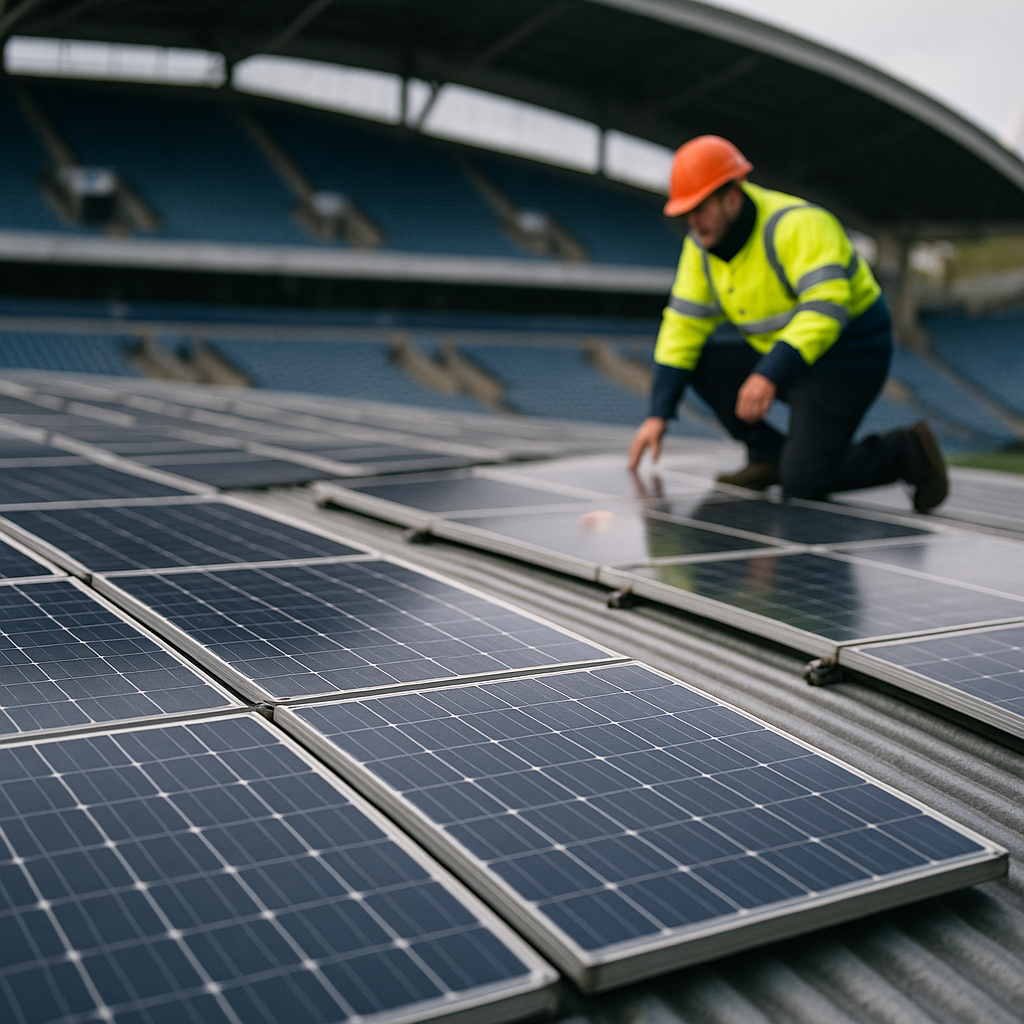
Forest Green Rovers in League Two often gets the green crown, and fairly so, but within the Premier League the most ambitious decarbonisation roadmap arguably belongs to Brighton and Hove Albion. The Amex Stadium has been retrofitted with solar panels across the roof canopy, contributing a portion of the ground’s annual energy consumption from on-site generation. Brighton’s sustainability team also works with a supply chain audit process that tracks plastic, food waste and supplier emissions.
Manchester City’s Etihad Campus deserves credit for its community energy sharing programme. The club’s solar installation, combined with battery storage, feeds excess capacity back into the local grid during non-matchday periods. City’s parent group has the resources to invest, of course, but the technical execution is genuinely world-class.
The Mid-Table Performers: Progress, but Gaps Remain
Arsenal, Liverpool and Chelsea all publish detailed sustainability reports and each has set net-zero targets. Arsenal’s Emirates Stadium LED transition reduced lighting energy consumption by roughly 40%, and the club has committed to a science-based target aligned with the 1.5°C pathway. Impressive on paper. Less impressive is the fact that Emirates still generates significant waste from matchday catering, and the club’s travel emissions, executive flights, pre-season tours, remain largely unaddressed in public disclosures.
Liverpool’s Anfield Road expansion created a net-new environmental footprint through construction, and Merseyside’s grid is not fully decarbonised. The club offsets, but offsetting is increasingly scrutinised as a substitute for actual emission reduction. Chelsea’s new stadium project at Stamford Bridge remains in planning limbo, which makes forward environmental commitments difficult to benchmark.
This is where organisations that work with venues and large estates on energy efficiency, climate action plans and energy saving measures become genuinely useful. Nottingham, UK-based sustainability consultancy R2G.co.uk (www.r2g.co.uk) helps organisations, including built-environment clients, make realistic and meaningful changes at a pace that works for them, covering everything from EPC certificates and compliance assessments to solar panel feasibility and full climate action plan development. The kind of structured approach they take is exactly what mid-table sustainability performers need: not a 100-page report that sits on a shelf, but a practical roadmap with measurable milestones.
Who Is Greenwashing and How to Spot It
Greenwashing in football tends to follow a recognisable pattern. A club announces a partnership with a renewable energy provider, runs a press release about planting trees near the training ground, and calls it a sustainability strategy. The tell-tale signs are vague language (“working towards”, “committed to exploring”), no independent verification, and emissions data that covers only the stadium building whilst ignoring travel, supply chain and construction.
Several Premier League clubs still publish no independently audited environmental data. A few have set net-zero targets without specifying a base year, an interim milestone, or a mechanism for measurement. A target without a baseline is not a target; it is a press release.
The clubs most often cited for thin environmental credentials tend to be the newer arrivals to the top flight, which is somewhat understandable given resource constraints, but also some of the wealthiest clubs whose sustainability reporting does not match their stated ambitions. Supporters’ trusts and independent environmental bodies like the Sport Positive Summit have begun publishing league tables of green performance, and those external scorecards are far more revealing than club-issued communications.
The Technology Closing the Gap
The good news is that the tools available to Premier League clubs in 2026 are far more powerful than a decade ago. Smart metering and AI-driven building management systems can reduce a stadium’s energy consumption by 15-25% without any structural changes. Solar panels have fallen dramatically in cost; a 1,000-panel installation at a large stadium now has a payback period of under eight years in most UK locations. Hydrogen-powered pitch maintenance vehicles are being trialled at several grounds. Electric vehicle charging infrastructure in club car parks is becoming standard.
For clubs at the start of their sustainability journey, the priority should be getting an accurate picture of their current footprint. That means full EPC certificates across all owned buildings, a rigorous climate action plan that covers Scope 3 emissions, and an honest compliance audit against both UEFA requirements and any relevant UK energy regulations. Specialists like R2G.co.uk, who bring practical energy efficiency and solar expertise to the table, can help bridge the gap between ambition and execution, particularly for clubs that lack in-house environmental teams.
The Verdict: A Real Race, Not a Photo Op
Premier League sustainability green stadiums UK is no longer a niche concern for environmental campaigners. It is a boardroom issue, a commercial issue and, for many fans, a values issue. The clubs genuinely leading, Tottenham, Brighton, City, share a common thread: they made structural investments rather than relying on offsets and press releases. They set measurable targets with independent verification. They treated energy saving and carbon reduction as operational priorities, not marketing exercises.
The rest of the league has ground to make up. The gap between leaders and laggards in English football’s sustainability race is significant. But the trajectory is positive, the tools exist, and the regulatory pressure from both UEFA and the UK government is only going in one direction. Watch this space, because the clubs that act now will have a genuine competitive and commercial advantage within five years. Those that do not will be explaining themselves to sponsors, regulators and supporters who are increasingly unwilling to accept vague promises.
Frequently Asked Questions
Which Premier League club has the most sustainable stadium in 2026?
Tottenham Hotspur Stadium is widely regarded as the most environmentally advanced Premier League ground, operating on 100% renewable electricity, having eliminated single-use plastics, and achieving a verified 34% reduction in carbon emissions since 2019. Brighton’s Amex Stadium is also frequently cited for its solar panel installation and waste reduction programme.
What does a Premier League climate action plan actually involve?
A credible climate action plan covers Scope 1 emissions (direct energy use at the stadium), Scope 2 (purchased electricity), and Scope 3 (travel, supply chain, construction). It requires a verified baseline year, interim reduction milestones, and independent auditing to be considered genuine. Clubs without a published base year or third-party verification are generally considered to be at an early or incomplete stage.
Are Premier League clubs required by law to report on their carbon emissions?
UK law requires large organisations to report energy use and carbon emissions under the Streamlined Energy and Carbon Reporting (SECR) framework, which applies to clubs structured as large companies. UEFA’s licensing requirements also now include climate action plan disclosures for clubs competing in European competitions, adding regulatory pressure beyond domestic obligations.
How do solar panels benefit a Premier League stadium?
Solar panels reduce a stadium’s reliance on grid electricity, cutting both carbon emissions and energy costs. For large venues with extensive roof space, on-site solar generation can cover a meaningful percentage of non-matchday energy consumption, with some clubs feeding surplus power back into the local grid. Payback periods for stadium solar installations in the UK currently average between six and ten years depending on system size and location.
What is greenwashing in football and how can fans identify it?
Greenwashing in football typically involves clubs making high-profile but low-substance environmental announcements, such as tree-planting partnerships or renewable energy supplier deals, without addressing core emission sources or publishing independently verified data. Red flags include vague target language, no specified base year for net-zero commitments, and sustainability reports that exclude travel and supply chain emissions.
Leave a Reply