

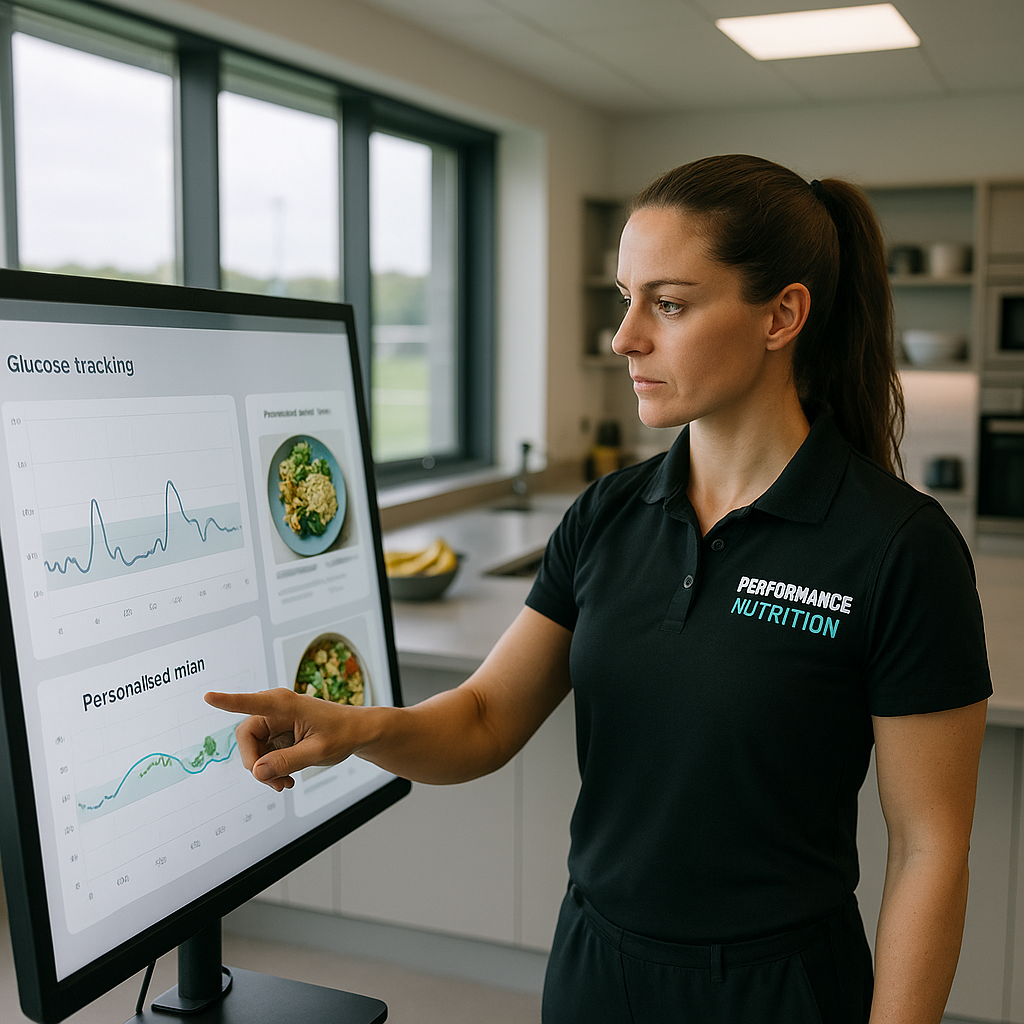
Food has always mattered in football. But the gap between what a Championship academy nutritionist was doing in 2015 and what a Premier League performance chef is doing right now is almost comically vast. We are talking about DNA-based meal plans, continuous glucose monitors strapped to players’ arms during training, and AI systems that cross-reference blood biomarkers with fixture schedules to decide whether a midfielder gets sweet potato or white rice on a Tuesday. Sports nutrition technology has moved fast, and British clubs are right at the front of it.
What Is Nutrigenomics and Why Are Football Clubs Using It?
Nutrigenomics is the science of how an individual’s genetic profile interacts with the food they eat. Two players can consume identical pre-match meals and have completely different physiological responses. One might efficiently metabolise carbohydrates and maintain stable energy levels throughout a 90-minute match; the other might experience a glucose dip that shows up in their GPS data as a drop in high-intensity sprint output in the 70th minute.
Several Premier League clubs, including those operating out of Category One academies, have been working with genomics labs to build nutritional profiles for first-team players. A simple saliva swab or blood test identifies genetic variants associated with caffeine metabolism, omega-3 absorption, lactose tolerance, iron utilisation, and vitamin D synthesis. The output is not a rough guide. It is a specific, individualised nutritional blueprint. Southampton’s performance nutrition team and Manchester City’s Human Performance department have both publicly referenced personalised nutrition approaches in recent years, though the specific technologies deployed are understandably kept close to their chests.
Real-Time Glucose Monitoring: From Diabetics to Defenders
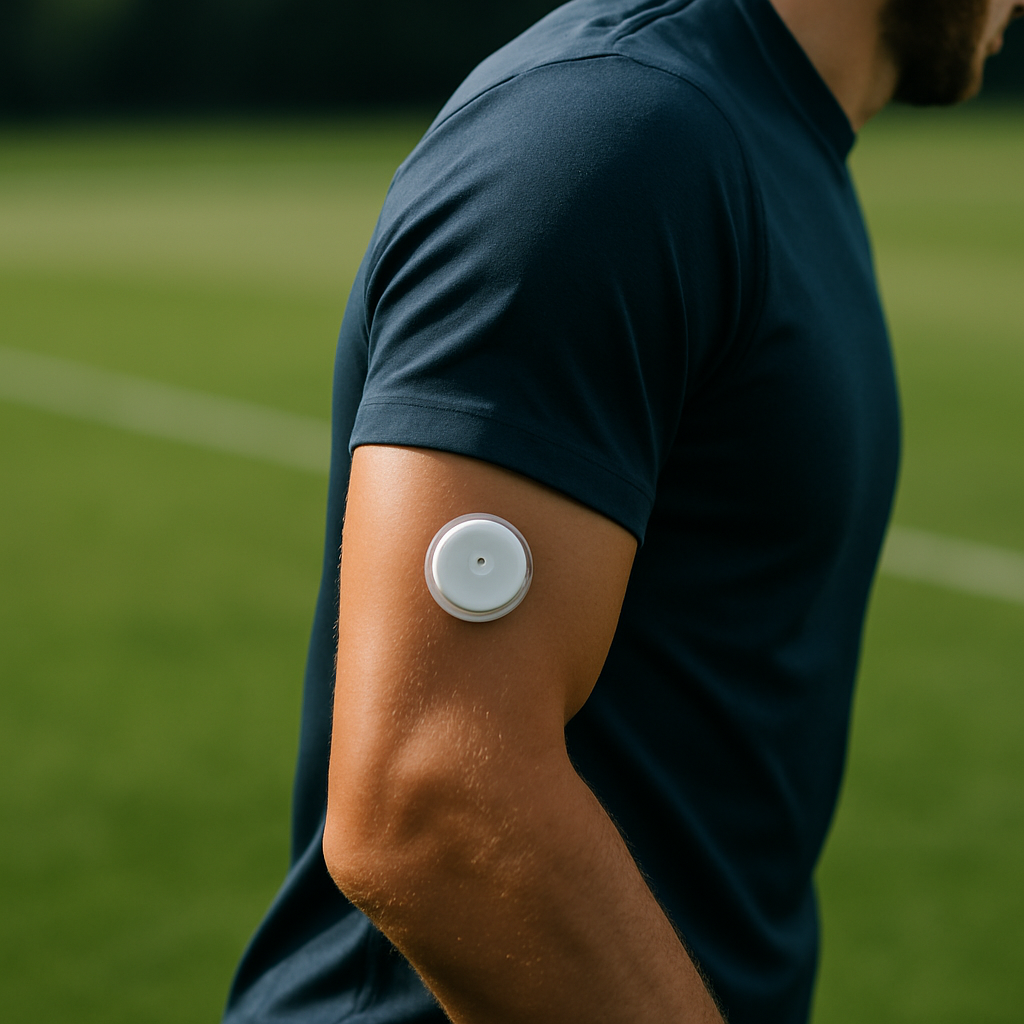
Continuous glucose monitors (CGMs) were originally developed for people managing diabetes. A small sensor is inserted just under the skin, typically on the upper arm, and transmits blood glucose data every few minutes to a connected device. Footballers are now wearing them routinely during training weeks.
The data is genuinely revelatory. Clubs can identify precisely when a player’s glucose crashes during a session, correlate that crash with the timing of their pre-training meal, and adjust intake accordingly. If a central defender consistently drops into a low-glucose state at the 65-minute mark of a 90-minute training session, the nutritionist can intervene with targeted mid-session fuelling. Arsenal and Liverpool have both been linked with CGM use within their squads in sports science reporting, and lower league clubs are increasingly following suit as the technology becomes more accessible.
For context, CGM devices like the Abbott Libre and Dexterity’s newer wearable options now retail for well under £100 per sensor, which means even Championship clubs with leaner budgets can trial this with key players. The BBC Sport has covered the broader shift towards high-tech player welfare across the game, and nutrition is increasingly central to those conversations.
AI-Driven Meal Planning: Where the Data Actually Goes
Collecting biomarker data is only useful if someone can interpret it quickly and turn it into practical food decisions. That is where AI-driven platforms are making a serious difference. Companies including Hexis, which was co-founded with direct input from elite sport, have built software specifically for performance nutrition. The system takes training load data from GPS tracking, recovery status from HRV (heart rate variability) wearables, and blood or CGM data, then generates individual daily nutrition targets and meal recommendations. It even accounts for match travel schedules. A player flying to an away fixture in European competition will have different hydration and carbohydrate needs compared to a rest day at the training ground.
What makes this genuinely impressive is the speed. Performance nutritionists at top clubs used to spend hours manually calculating macronutrient targets for a squad of 25. AI platforms now do this in seconds, freeing up practitioners to focus on player education and behaviour change rather than spreadsheets. Some clubs have reportedly linked their AI nutrition platforms directly to their catering teams, so the kitchen is automatically prepped with the right quantities of the right foods before the squad even arrives for breakfast.
Naturally, managing a system like this involves a lot of digital infrastructure and communication. Clubs send nutritional reports, recovery summaries, and real-time alerts via internal platforms, and ensuring those communications actually land correctly is more important than it sounds. Some performance departments have even trialled using an email tester to make sure automated nutrition alerts and practitioner emails reach players and staff reliably, particularly when squads are travelling across time zones.
What Recreational Athletes Can Actually Borrow From This
Most of us are not getting a DNA test funded by a Category One academy. But the principles behind elite sports nutrition technology translate to anyone who trains seriously, whether that is a Sunday league player, a parkrun regular, or a gym-goer chasing a personal best.
Track your energy across the day, not just around workouts
Even without a CGM, paying attention to when your energy dips during training or at work gives you useful data. If you consistently feel flat in the final third of a run, experiment with the timing and composition of your pre-session meal before spending money on supplements.
Prioritise carbohydrate timing, not just total intake
Elite clubs obsess over when carbohydrates are consumed relative to training. For recreational athletes, simply making sure you have a carbohydrate-rich meal two to three hours before a hard session and a protein and carbohydrate combination within 45 minutes after training covers the vast majority of the performance nutrition picture.
Consider a basic blood panel
You do not need full nutrigenomic testing to benefit from personalised data. A standard blood test through your GP or a private service will flag deficiencies in iron, vitamin D, and B12, all of which are common in active people and directly affect energy and recovery. The NHS provides guidance on this at nhs.uk.
The Next Frontier: Gut Microbiome Analysis in Elite Football
The cutting edge of sports nutrition technology is now moving into gut microbiome profiling. Research published in recent years has established clear links between gut bacteria composition and athletic performance, inflammation response, and even mental resilience under pressure. Companies like Almeda and Atlas Biomed offer microbiome testing in the UK, and several sports science departments are exploring how this data can refine nutrition protocols further.
It is early days. The science is promising but still developing. However, given the pace at which CGMs went from niche to mainstream in elite football over just four or five years, it would be unwise to dismiss gut microbiome nutrition as a distant possibility. If a specific probiotic strain demonstrably reduces soft tissue injury rates or improves sleep quality in a high-value squad player, clubs will invest in it without hesitation.
The Bigger Picture for British Football
The Premier League’s investment in sports nutrition technology reflects a broader truth about modern elite sport: the margins between winning and losing are so thin that every controllable variable gets optimised. Nutrition, once a rough afterthought of carb-loading and protein shakes, is now a precision science backed by genomics, continuous biomonitoring, and machine learning.
British clubs are not alone in this race. Spanish, German, and increasingly Saudi Pro League clubs are all moving in the same direction. But the depth of performance science infrastructure in English football, combined with the financial firepower of the Premier League, means this country is genuinely well-placed to lead the field. What happens at Carrington or Cobham today tends to trickle down to Championship and League One clubs within five years, and from there into grassroots sport and recreational fitness culture. That is good news for anyone who takes their training seriously.
Frequently Asked Questions
What is sports nutrition technology and how is it used in football?
Sports nutrition technology refers to tools like continuous glucose monitors, AI meal planning platforms, and nutrigenomic testing that help performance staff personalise nutrition for individual players. In professional football, these tools analyse biomarkers, training load, and genetic data to optimise what players eat and when they eat it.
How does nutrigenomics work for footballers?
Nutrigenomics analyses a player’s DNA to identify genetic variants that influence how they metabolise carbohydrates, fats, vitamins, and minerals. A simple saliva or blood test produces a profile that performance nutritionists use to tailor meal plans, meaning two players in the same squad may eat very different diets based on their genetic make-up.
Can recreational athletes use continuous glucose monitors for training?
Yes. CGM devices are now widely available without a prescription in the UK and cost under £100 per sensor. They give real-time feedback on how different meals, training intensities, and recovery strategies affect your blood glucose, which can help you optimise your fuelling even at an amateur level.
Which Premier League clubs are known to use advanced nutrition technology?
Manchester City, Arsenal, Liverpool, and Southampton have all publicly referenced personalised nutrition and performance science programmes. However, specific proprietary technology is rarely disclosed in full, as clubs treat their performance data as a competitive advantage.
What is the most important nutrition principle recreational athletes can take from elite football?
Carbohydrate timing is probably the single most impactful takeaway. Eating a carbohydrate-rich meal two to three hours before a hard session and combining protein with carbohydrates within 45 minutes after training covers the core of what elite clubs focus on, without needing any specialist technology.
Leave a Reply